
Kasogonagá: Kasogonagá is a Toba weather goddess known for her vivid, animal-like appearance and her ability to shoot lightning from her mouth.
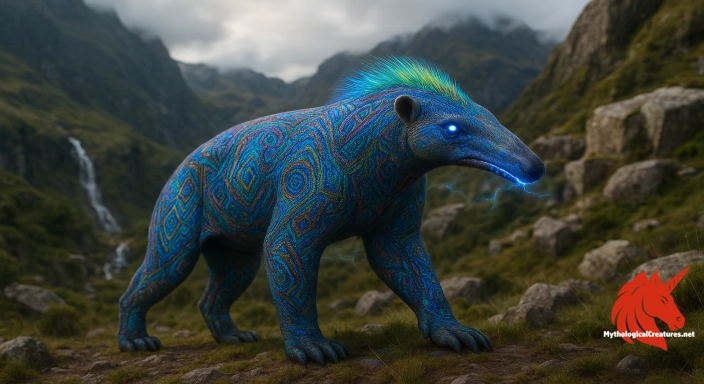
Kasogonagá
Kasogonagá - Kasogonagá serves as a potent symbol of natural weather phenomena and spiritual inspiration in Toba culture.
Origins & First Encounters
Kasogonagá emerges from a rich tapestry of Toba myth as a dynamic weather goddess whose presence has captivated indigenous imaginations for centuries. Her legend is rooted in the oral traditions of the Toba people, where her earliest attestations appear in the vivid visions granted to shamans. These visionary encounters, often induced by potent psychoactive plants, reveal her as an enigmatic being that bridges the natural and supernatural realms. She is celebrated as both a protector and a forerunner of change, with her dual nature embodying the benevolence and ferocity of the elements. In her most iconic form, Kasogonagá is depicted as a colourful animal with an extraordinary mouth that casts forth bolts of lightning, symbolising the raw power of nature. Her mythology is intimately connected with the high Andes, where the interplay of climate and culture has helped to shape her enduring significance. Revered as a transformative force, she weaves together cycles of destruction and regeneration that mirror the rhythms of the earth. Over time, her image has come to reflect the balance between nurturing benevolence and the unpredictable wrath of storms, making her a timeless emblem in Toba lore.
Source Texts & Tale Variants
The principal sources that recount the legend of Kasogonagá are found in the fragmented oral narratives of the Toba people, where the goddess appears in shamanic rituals and ceremonial visions. Early chroniclers, though limited in detail, mention her as a divine presence that deeply influences weather patterns in the highland regions. Over the generations, her myth has been enriched by countless retellings, each adding layers of symbolism and contextual meaning to her character. Indigenous accounts, passed down through ritual songs and recitations, offer multiple variants of her story, each emphasising different aspects of her power. Some versions portray her as a benevolent guide who brings nourishing rains, while others depict her as a formidable force that signals impending turmoil. The diverse accounts found in these early oral traditions are complemented by symbolic depictions in artefacts and rock art. Although there is a scarcity of unified textual sources, the multiplicity of narrative variants has contributed to a complex understanding of her role in Toba cosmology. These sources, in their variety, underline the transformative interplay between human experience and natural phenomena, ensuring that her myth remains vibrant and adaptable to changing cultural contexts.
Form & Powers
Visual depictions of Kasogonagá vividly capture her as an awe-inspiring creature whose appearance is as striking as it is symbolic. She is typically represented as a colourful animal, her body adorned with vibrant hues that mirror the dazzling palette of the Andean landscape. Her form is a composite of several animals, suggesting attributes of both agility and strength, with some accounts likening her to the grace of a jaguar or the fluidity of a serpent. The most remarkable feature in her portrayal is her unusual mouth, which is fabled to emit brilliant flashes of lightning that illuminate the darkest skies. Her eyes are often described as deep and compelling, reflecting an inner wisdom that transcends the ordinary. Intricate markings and natural motifs embellish her skin or scales, hinting at the sacred patterns of wind and water. Variations in size and form appear in different narratives, some depicting her as a creature of enormous stature while others suggest a more elusive, shifting presence. The detailed visual imagery associated with her not only reflects the beauty inherent in nature but also the dramatic power of the storm. Each artistic interpretation contributes to a layered understanding of her as a being who embodies both aesthetic splendour and elemental ferocity.
Regional Faces
Regional interpretations of Kasogonagá reveal a fascinating mosaic of cultural variations that have evolved over time. In certain Toba communities nestled amid the Andean foothills, her figure is interwoven with local agricultural rituals and revered as a guardian of the fertile earth. Some groups see her more as a nurturing maternal spirit, intertwined with the lore of rain and harvest, while others emphasise her fierce, almost wild nature that commands the forces of the sky. In these different settings, the goddess is referred to by a variety of names, each resonating with the local dialect and symbolic imagery unique to that area. Artistic expressions in murals, textiles, and pottery across different regions illustrate her with distinct regional attributes, whether it is through stylised lightning streams or uniquely patterned bodies. Among highland communities, the variations in her depiction often highlight a balance between creative force and natural warning, illustrating the dual roles she plays. The regional adjustments in both her appearance and her associated myths underscore how local cultures negotiate the power of nature in their daily lives. These diverse portrayals ensure that her legacy remains adaptable, firm in its universal appeal yet flexible enough to reflect local environmental conditions and societal values. In this manner, the cross-regional narrative of Kasogonagá forms a rich, evolving collage that continues to inspire reverence and awe.
Cultural Parallels
The myth of Kasogonagá invites comparisons with various other cultural embodiments of nature’s majesty and tempestuous power. Much like the North American Thunderbird, she personifies the raw elemental force of the sky through her ability to unleash lightning and command storms. Her striking depiction as a creature whose very mouth emits bolts of energy finds echoes in diverse mythologies, where deities or supernatural beings are often associated with sudden bursts of light and thunderous proclamation. In some Mesoamerican traditions, figures synthesise aspects of both beauty and elemental might, creating a tapestry of imagery that resonates with Kasogonagá’s vibrant form. Parallels can also be drawn with certain Celtic storm deities, where the merging of natural wonder and spiritual potency is a cornerstone of their mythos. These cross-cultural connections highlight a universal human inclination to revere the unpredictable forces of nature. By juxtaposing her vivid imagery with that of other storm-infused deities, it becomes clear that Kasogonagá’s narrative is part of a broader shared cultural phenomenon. Her multifaceted portrayal enriches our understanding of how various civilisation interpret celestial power and weather phenomena. This comparative analysis underscores the common themes of transformation, divine intervention, and the fusion of beauty and terror that pervade mythologies worldwide.
Legacy & Modern Evolution
Over time, the narrative of Kasogonagá has evolved from a series of mystical shamanic visions into a celebrated symbol of cultural and natural resilience. Early depictions focused on her role as a messenger and a potent weather deity, a theme that has not only endured but also deepened as modern interpretations emerge. With the advent of new media and a renewed interest in indigenous spirituality, her image has found fresh expression in contemporary art, music, and literature. Modern indigenous communities revere her both as an embodiment of ancestral wisdom and as a symbol of the living, dynamic force of nature. This evolution reflects broader changes in societal attitudes towards the environment and traditional knowledge systems. In academic and cultural circles, Kasogonagá is often discussed in the context of climate change, serving as a metaphor for nature’s unpredictable might and the delicate balance between creation and destruction. Contemporary festivals and cultural revivals now include ceremonies that honour her legacy, emphasising the ongoing dialogue between past and present. As a living myth, her story continues to inspire a deeper appreciation for the interconnection between human life and the natural world. Ultimately, the enduring image of Kasogonagá reminds us that myth is not static but is continually reinterpreted in response to changing cultural landscapes.
Interesting Fact
Kasogonagá uniquely blends divine characteristics with an animal form, making her one of the few deities who manifest elemental power in such a visually striking manner.
Support the directory
Promote your myth project and fund more research
Sponsor placements help keep this directory growing and free to use while giving your work a focused, relevant audience.
Learn how sponsorship worksQuick Creature Info
Origin:
Features:
Associations:
Our Mythic Legendary Rating:

Also Sometimes Known As:
Habitat:
Supernatural Powers:
Physical Attributes:
Abilities:
Behavior:
Lore:
References
Discover Another Mythical Legend You May Not Have Heard Of?
Uncover the mysteries of ancient folklore and expand your knowledge of legendary beings from cultures around the world.
Dare to Meet the Ichthyocentaur....

Curated by the Mythological Creatures Team
Series editor: Mythological Creatures Directory
Primary desk: Americas & Indigenous Traditions Desk
(rev. November 2025)