
Kingu: Kingu was a Babylonian god who served as the general of Tiamat's forces and bearer of the Tablet of Destinies.
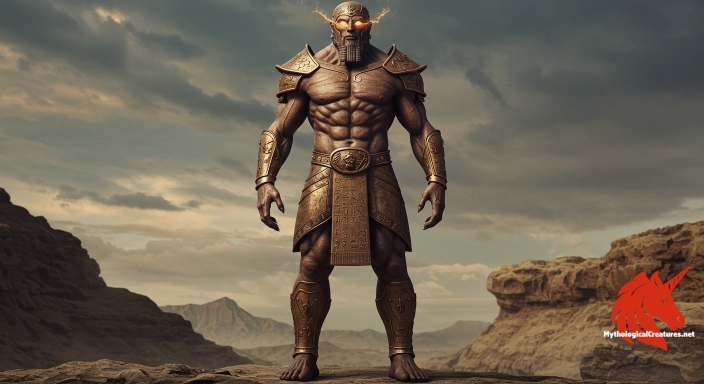
Kingu
Kingu - Kingu's defeat by Marduk and the subsequent use of his blood to create humans mark a turning point in Babylonian cosmology, reflecting the transition from primordial chaos to cosmic order
the legend in five swipes.
the legend in five swipes.
How did the legend of Kingu begin?
Kingu emerges as a complex figure within the fabric of Babylonian myth, embodying both the forces of cosmic order and primordial chaos. Born of the union of Abzu and Tiamat, his origins are deeply rooted in the early creation narratives that shaped Mesopotamian thought. His introduction into the mythological canon follows the dramatic upheaval marked by the murder of Apsu, which set the stage for divine retribution and renewal. Elevated by Tiamat as both consort and leader, Kingu was entrusted with the Tablet of Destinies—a symbol of cosmic authority that underscored his martial and divine credentials. His role as the general of Tiamat’s army highlights the interplay between ambition and fate that was central to ancient Babylonian cosmology. Throughout his narrative, themes of sacrifice, martial valor, and the transmission of divine power are interwoven with the broader mythic structure of creation and disruption. Attested primarily in foundational texts like the Enuma Elish, his early myth served as a cornerstone for understanding the dynamics of divine succession. The story of Kingu reflects the cultural emphasis on the cyclical process of chaos being overcome by order, a motif that resonated deeply with the Babylonians. Although his tale concludes with his defeat at the hands of Marduk, his dramatic journey continues to illuminate the ancient perceptions of fate and cosmic balance. Ultimately, Kingu’s myth encapsulates a rich tapestry of divine conflict and sacrificial transformation that has influenced both ancient ritual and later reinterpretations of myth.
How was the story of Kingu recorded?
The narrative of Kingu is most vividly preserved in the Enuma Elish, which remains the primary literary source detailing his fate and significance. Ancient Babylonian texts capture his role as the consort and military leader under Tiamat, providing insight into the tumultuous battles among the gods. Variations of his story emerge in assorted cuneiform tablets and ritual incantations, each offering subtle differences that reflect local oral traditions and evolving theological views. In some accounts, Kingu is portrayed with an enhanced emphasis on his leadership qualities, particularly when depicted wielding the Tablet of Destinies as a token of divine mandate. These textual sources not only highlight his martial prowess but also underscore his part in the sacrificial narrative that imbues his blood with creative power. As scribes transcribed and reinterpreted these myths, the details of Kingu’s persona adapted to various political and religious milieus. Alongside the canonical Enuma Elish, later retellings and fragmentary texts contribute to a layered, multifaceted understanding of his character. The diversity of sources emphasizes the fluidity of myth and the creative latitude exercised by ancient storytellers. Even where details diverge, a consistent theme emerges—Kingu’s pivotal role in the cosmic reordering of the universe. This multiplicity of variants has made his myth a fertile ground for scholarly debate and cross-cultural comparison in later studies.
What did Kingu look like?
Although myth often focuses on narrative symbolism rather than physical description, depictions of Kingu are imbued with iconographic features that evoke a formidable divine warrior. He is frequently imagined as possessing a robust and imposing stature, befitting his role as the general of Tiamat’s forces. Central to his iconography is the breastplate bearing the Tablet of Destinies, an emblem that underscores his ordained authority to shape fate and destiny. Artistic renditions suggest that his visage combined both human and superhuman elements, striking a balance between noble elegance and the raw power of combat. Certain reliefs and ancient illustrations hint at an aura of intensity around his eyes and expression, as if reflecting the profound weight of his divine responsibilities. Variations in his portrayal indicate that the artists of the ancient Near East sought to capture his dynamic role on the battlefield through expressive and sometimes abstract features. Some traditions even ascribe to him the attributes of a celestial figure, merging martial tradition with the mystery of cosmic order. These visual motifs provide a tangible dimension to his myth, transforming him from an abstract divine agent into a recognisable personification of chaos and power. His physical depiction, though not exhaustively detailed in surviving texts, carries enduring symbolic significance in the visual language of Mesopotamian art. Overall, the blend of physical and symbolic traits in Kingu’s representation continues to evoke both awe and a deep sense of mythic destiny.
How do regional versions of Kingu differ?
Kingu’s myth, though fundamentally Babylonian, has traversed regional boundaries and inspired unique reinterpretations among neighbouring cultures. Local adaptations have often amplified his role as a martial leader, aligning his persona with regional ideals of warfare and heroic defiance. In some Assyrian narratives, for instance, his tale is reframed to highlight the strategic aspects of divine conflict, thereby reinforcing the legitimacy of imperial might. Variations also emerge in contexts where the interplay between chaos and order is recast to mirror local political and social concerns. Certain regional traditions have modified aspects of his origins and his connection to the Tablet of Destinies, thereby weaving him into the broader tapestry of local myth. These reinterpretations serve to reflect the unique cultural and historical experiences of different communities within the ancient Near East. Whether emphasising his sacrificial role or his martial virtues, each regional variant contributes to a mosaic of meaning that transcends a single, homogenous retelling. The adaptability of Kingu’s myth illustrates how shared stories could be tailored to resonate with local audiences, imbuing them with contemporary relevance. In this way, the regional diversity of his narrative underscores both its universal appeal and its capacity to encapsulate distinct cultural identities. The fluidity of his myth speaks to the enduring power of ancient narratives to evolve and inspire across time and space.
Is Kingu unique, or found elsewhere?
The figure of Kingu invites intriguing comparisons with mythic characters across diverse cultural traditions, each echoing themes of divine sacrifice and cosmic reordering. His narrative, in which the life-giving power of his blood is harnessed to create humanity, resonates with the story of Ymir in Norse mythology, whose demise similarly gave rise to the world. Comparable echoes can be found in certain Mesoamerican myths, where the sacrifice of a divine being leads to the creation of life and the establishment of natural order. The dual nature of Kingu as both a formidable warrior and an unwitting progenitor underscores a recurring archetype found in various ancient cultures. His association with a divine tablet, symbolising the inscription of cosmic destiny, parallels other mythological motifs where physical objects confer the mantle of power upon deities. Furthermore, his tragic downfall and subsequent transformation into a creative agent bear a resemblance to sacrificial deities in both Near Eastern and Mediterranean traditions. These cultural parallels not only highlight shared human concerns about the origins of life and the nature of divine rule, but also reveal how ancient societies used myth to explain the transition from chaos to order. The recurring theme of the divine blood of a slain deity fertilising the world appears in multiple mythic canons, revealing a common narrative of renewal through sacrifice. Such cross-cultural connections deepen our understanding of how different peoples grappled with the mysteries of existence and fate. In comparing Kingu’s myth with other traditions, one can appreciate the universality of themes that transcend geographical and temporal boundaries.
Kingu: The Legend's Second Life
The myth of Kingu has undergone a significant evolution over time, transitioning from an ancient Babylonian schema of divine conflict to a modern symbol of sacrifice and transformative power. His story, once a central component of the Enuma Elish, has been re-examined through the lens of contemporary art, literature, and cultural studies. Early audiences viewed his defeat as a necessary act of cosmic reordering, while later interpretations have highlighted the poignancy and tragedy of his role as a sacrificial figure. In modern retellings, Kingu is frequently depicted as embodying the tension between inevitable fate and the possibility of renewal, rendering his myth both timeless and resonant. His narrative has served as fertile ground for creative reinterpretation, influencing visual art, theatre, and speculative fiction. Additionally, scholarly debates surrounding his significance underscore a broader interest in the dynamics of divine authority and the transformative nature of myth. The evolution of his portrayal mirrors changing cultural attitudes towards power, legitimacy, and the cyclical nature of creation and destruction. Today, Kingu is sometimes embraced as a cultural icon, representing the eternal struggle between order and chaos that continues to captivate modern audiences. His enduring legacy thus reflects not only the historical depth of Babylonian mythology but also its capacity to speak to universal themes that remain relevant in the modern world. As reinterpretations and academic inquiries persist, Kingu’s myth remains a profound testament to the enduring power of ancient narratives.
Interesting Fact
An intriguing aspect of Kingu is that his name translates to 'unskilled laborer', a stark and ironic contrast to his exalted status as a god and leader, reflecting the paradoxes often found in mythological narratives.
Mythological Treasures
Greek Myths: A field guide to the monsters of ancient Greece
Every monster here earned its place in legend, and each gets a full page of artwork and the story behind it.
Norse Sagas: A field guide to the beasts of the Viking world
Drawn from the saga accounts themselves, with the powers, weaknesses and doom of each being set out.
Egyptian Legends: A field guide to the gods and monsters of ancient Egypt
Guardians of the living and devourers of the dead, with the role each played in judgement.
the legend in five swipes.
Partner with Mythological Creatures
Bring your myth-based world into ours
From game settings to narrative worlds, we work with partners who treat myths with care. Share your project for a potential sponsor slot.
Partner with usQuick Creature Info
Origin:
Features:
Associations:
Our Mythic Legendary Rating:

Also Sometimes Known As:
Habitat:
Supernatural Powers:
Physical Attributes:
Abilities:
Behavior:
Weaknesses:
Lore:
References
Discover Another Mythical Legend You May Not Have Heard Of?
Uncover the mysteries of ancient folklore and expand your knowledge of legendary beings from cultures around the world.
Dare to Meet the Calyce....
-f078df30-c479-4b93-a13b-b6a5c1fc1b42_small.webp "Depiction of Calyce")
The Mythological Creatures Book Series
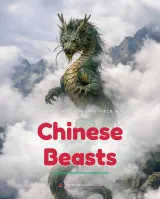
Yokai, Greek, Norse, Egyptian & Chinese. Five illustrated field guides to the creatures the old stories either warned or told you about.

Curated by the Mythological Creatures Team
Series editor: Mythological Creatures Directory
Primary desk: Hellenic & Ancient Mediterranean Desk
(rev. November 2025)