
Kitsunebi: Kitsunebi is an atmospheric ghost light renowned in Japanese folklore.
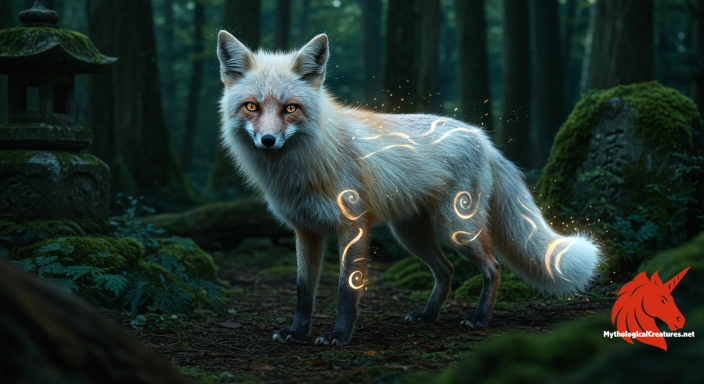
Kitsunebi
Kitsunebi - Represents the interplay between nature and the supernatural; often attributed to the mischievous actions of fox spirits.
Origins & First Encounters
Kitsunebi, a spectral fox-fire, has long captured imaginations across Japan, manifesting as an elusive and atmospheric ghost light beyond Okinawa Prefecture. This enigmatic phenomenon carries a distinctive allure and is interwoven with the rich tapestry of Japanese folklore. Its origins are steeped in ancient myth and are closely linked to the mystique of the kitsune, the fabled fox spirit known for its cunning and supernatural capabilities. Tales handed down through the generations recount mysterious lights that both guide and mislead travellers in the darkness. Historically, these ghostly flames have been known by various names, including hitobosu, hitomoshi, and rinka, reflecting regional linguistic nuances and cultural interpretations. The first attestations often emerged from oral traditions and local chronicles, blending natural observation with mystical belief. Embedded in the rural landscapes and storied backdrops of Japan, Kitsunebi has served as a bridge between the natural and the supernatural. The phenomenon not only inspires awe but also prompts reflection on the hidden realms that coexist with everyday life. Its layered identity mirrors the complexity of Japanese spirituality, where beauty and mystery coalesce in the natural world. Contemporary narratives continue to evoke a sense of wonder and caution regarding these flickering lights, preserving an ancient legacy in a modern context.
Source Texts & Tale Variants
Ancient writings, local records, and oral histories have all provided glimpses into the lore of Kitsunebi, offering multiple lenses through which to understand its spectral nature. While formal texts on the subject are sparse, traditional compendiums and regional gazetteers contain references that weave Kitsunebi into the fabric of local belief systems. Various folklore collections and setsuwa literature have preserved recountings of ghost lights that later became synonymous with this mystical phenomenon. In some narratives, the lights are portrayed with an air of playful ambiguity, while other accounts present them as solemn portents of misfortune. Local chronicles have sometimes depicted these lights amidst natural elements, linking them to seasonal changes and the caprices of nature. The layered interpretations across diverse regions reveal a rich diversity of storytelling, with each account adding its own nuance to the legend. These historical variants demonstrate the fluidity of myth as it adapts to changing cultural and environmental contexts. The multifaceted stories have contributed to an evolving narrative, where oral tradition and sporadic written records complement each other. Even where documentation is limited, the recurring motif of ethereal light underscores a deep communal awareness of the mysterious. Collectively, these sources form a mosaic that continues to intrigue scholars and enthusiasts alike.
Form & Powers
Kitsunebi is often described as a flickering orb of ethereal light, exhibiting a transient quality that defies straightforward explanation. Witnesses recount its radiant glow shifting in hue from a soft, ghostly blue to a deep, enigmatic red, evoking the splendour of a nocturnal fire. The appearance of these ghostly flames is marked by a delicate, almost fluid movement, as if the light were dancing on an unseen current of air. Variations in size are noted across different accounts, with some describing tiny, ephemeral sparks, while others recall larger, pulsating orbs that command the attention of onlookers. The lights seem to hover effortlessly, challenging conventional laws of physics, and they often disappear as mysteriously as they appear. Detailed observations reveal an almost spectral quality in the way Kitsunebi seems to merge with the dark landscape, blurring the line between fire and spirit. Some narratives even suggest that the phenomenon exudes a soft, inviting luminescence that enchants those who glimpse it. The interplay of shadow and glow creates an ambience that is both mesmerizing and unsettling. There is a quiet dynamism to its movement, as if the light itself is imbued with the subtle spark of life. Such vivid descriptions have contributed to its reputation as a bridge between the natural world and the realm of the supernatural.
Regional Faces
The lore of Kitsunebi varies markedly from region to region, each area colouring the phenomenon with its own cultural and environmental sentiments. In many parts of Honshu, these ghost lights are attributed to the playful and sometimes mischievous nature of fox spirits, believed to be guiding or deceiving wanderers. In northeastern regions, the lights are often interlaced with warnings of natural hazards, their appearance heralding impending storms or unfavourable omens. Western regions have embraced the Kitsunebi as a symbol of mysterious fertility and agricultural bounty, integrating the lights into local seasonal rituals. Coastal communities sometimes view the phenomenon as an extension of the sea’s own mystique, a reflection of ancient maritime legends and the caprice of nature. Such regional adaptations illustrate how folklore morphs in response to local geography and cultural priorities. Even within the Japanese archipelago, the emphasis on Kitsunebi’s benevolent or malevolent aspects shifts with the landscape, from verdant forests to urban fringes. This regional colouration enriches the overall myth, making each variant a unique blend of natural lore and human imagination. The adaptations ensure that while the underlying phenomenon remains consistent, its symbolic resonances are tailored to the sensibilities of each community. As a result, Kitsunebi persists as a diverse and dynamic emblem across Japan.
Cultural Parallels
The ethereal quality of Kitsunebi finds resonances in similar phenomena across disparate cultural mythologies, inviting a comparative exploration of spiritual light displays. In European folklore, the will-o'-the-wisp shares much in common with Kitsunebi, both being elusive and sometimes treacherous lights that appear in marshy or woodland settings. Like its Japanese counterpart, the will-o'-the-wisp is often associated with spectral misdirection and serves as a caution for wayward travellers. East Asian traditions, including certain Chinese ghost fire legends, also offer accounts of mysterious lights that enchant as well as warn observers of the supernatural. Similarities abound in the way these phenomena blur the boundaries between natural occurrence and mystical manifestation, each symbolising the unpredictable dance of nature and spirit. Despite these parallels, Kitsunebi retains its unique identity through the integration of fox spirit lore, setting it apart in its specific cultural context. Cross-cultural connections highlight the universal human fascination with light, mystery, and the invisible forces that stir the night. The interplay of folklore and natural wonder in these legends illustrates a shared human impulse to explain the inexplicable. Comparative analysis reveals both convergent themes and distinctive details that mark each tradition. In this light, Kitsunebi stands as a vibrant thread in the global tapestry of myth, bridging diverse interpretations of the supernatural.
Legacy & Modern Evolution
The depiction of Kitsunebi has evolved significantly over the centuries, reflecting broader shifts in cultural perception and artistic expression. In earlier eras, these ghost lights were often viewed with a mixture of awe and trepidation, their shimmering presence a tangible reminder of the spirit world’s proximity. During periods of social and cultural change, such as the Edo period, Kitsunebi became a rich source of inspiration in theatre, literature, and local festivals. With the advent of modern media, the spectral allure of Kitsunebi has been reimagined in films, anime, and manga, where it often symbolises the boundary between reality and the magical. Contemporary interpretations tend to emphasise both the beauty and the mystery of these lights, portraying them as emblematic of nature’s enduring enigma. Modern art installations and digital portrayals invite viewers to experience the ghostly glow in fresh, innovative contexts, thus extending the legend into the realm of modern creativity. The continued fascination with Kitsunebi underscores a collective yearning to reconnect with myth and mystery in an increasingly rationalised world. As cultural narratives shift and merge, this ancient symbol has adapted, retaining its profound impact on the collective imagination. Its legacy is a testament to the enduring power of folklore to capture the ephemeral moments where the natural and supernatural converge. Today, Kitsunebi stands as both a relic of historic myth and a living inspiration for contemporary storytelling, embodying the timeless charm of the unseen.
Interesting Fact
Kitsunebi's recurrent appearances in regional legends underscore its enduring role as a symbol of the mystical boundary between nature and the supernatural.
Mythology-aligned partners
Showcase your myth-friendly brand here
Run a store, studio, or platform that lives in the world of myth and folklore? A curated sponsor panel on these pages may fit.
Explore partnership optionsQuick Creature Info
Features:
Associations:
Our Mythic Legendary Rating:

Also Sometimes Known As:
Habitat:
Supernatural Powers:
Physical Attributes:
Abilities:
Behavior:
Weaknesses:
Lore:
Related Creatures, Tales or Lore
- WWill-o'-the-wisp
- IIgnis Fatuus
- LLampad
References
Discover Another Mythical Legend You May Not Have Heard Of?
Uncover the mysteries of ancient folklore and expand your knowledge of legendary beings from cultures around the world.
Dare to Meet the Kijimuna....

Curated by the Mythological Creatures Team
Series editor: Mythological Creatures Directory
Primary desk: Asian & Pacific Myth Cycles Desk
(rev. November 2025)