
Korean dragon: Korean dragons are legendary serpentine beings central to Korean mythology and folklore.
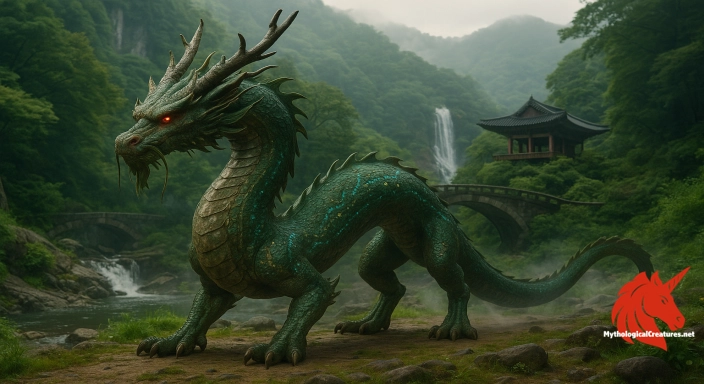
Korean dragon
Korean dragon - They symbolise benevolence, power, and protection in agriculture and nature.
Origins & First Encounters
Korean dragons are illustrious mythical beings that have long enchanted the cultural landscape of Korea. Born out of early Chinese influences, these dragons—known locally as yong or ryong—have been embraced and reshaped according to distinct Korean sensibilities. Their legendary presence appears in traditional art, literature, and oral folklore, echoing themes of benevolence, authority, and natural harmony. Historical records hint at their integration into royal symbolism and local celebrations, marking a blend of imported myth and indigenous creativity. The dragons are celebrated not merely as creatures of myth but as emblems of life, fortune, and cosmic order. Early depictions trace their outlines in ancient paintings and carvings, where they are often shown entwined with natural elements such as water and clouds. The fluidity of the dragon’s form symbolises both the unpredictable power of nature and the steady continuity of the seasons. Over time, these mythical creatures have served as guardians of the land and harbingers of good fortune throughout Korea. Their enduring role in both state rituals and community festivals speaks to a legacy that intertwines spirituality, art, and national identity.
Source Texts & Tale Variants
Ancient texts and oral traditions provide a diverse tapestry of narratives surrounding Korean dragons. Early records from compilations like the Samguk Yusa include mythical episodes where dragons emerge as mysterious agents influencing the fortunes of kingdoms and common folk alike. Traditional folktales passed down through generations vividly recount the dragon’s role in controlling rain patterns and ensuring bountiful harvests. In various royal chronicles, these creatures are interwoven with the destiny of the nation, often appearing as messengers of the divine. Buddhist scriptures and local legends further embellish the dragon’s character by linking it with quests for enlightenment and cosmic balance. Regional manuscripts sometimes diverge in their depictions, offering alternative versions that range from fearsome protectors to gentle water deities. Ritual narratives and folk plays have also perpetuated the dragon’s mystique, each retelling imparting subtle nuances unique to its cultural context. The multiplicity of ancient sources demonstrates that the dragon has been an integral part of Korean mythical lore long before modern documentation. Captivating both scholarly and popular imagination, these varied accounts have helped establish a permanent place for the dragon in the cultural consciousness of Korea.
Form & Powers
Korean dragons are typically portrayed as long, serpentine beings endowed with an arresting blend of elegance and might. Their anatomies combine sinuous, flexible bodies with a robust structure that embodies both grace and power. Adorned with intricately patterned scales, their skin shimmers in tones of jade, sapphire, and gold, reflecting the natural beauty of the elements they govern. Characteristic horn-like projections crown their heads, adding a noble dimension to their visage. Their eyes are commonly depicted as luminous and wise, evoking a sense of both mystery and benevolence. The body of the dragon is often accented with whisker-like tendrils and delicate fins, enhancing the impression of a creature born of both water and air. Multiple limbs, each ending in formidable claws, suggest an agility that belies their grand stature. The coiled, undulating form gives the impression of perpetual motion, as though the dragon is always in the midst of a celestial dance. Varied portrayals sometimes incorporate elements such as a flowing mane or decorative ridges along the spine, each detail enriching the dragon’s mythic aura. Altogether, the physical depiction of Korean dragons underscores a harmonious integration of natural beauty and supernatural grandeur.
Regional Faces
The visual and symbolic representation of Korean dragons varies significantly across different regions of the peninsula. In some areas, the dragons are more intimately associated with maritime themes, reflecting local communities’ deep connections to the sea and fishing traditions. In regions with rugged mountain terrains, dragons are often portrayed as guardians of high peaks and spring-fed rivers, each embodiment tailored to its natural environment. Local festivals and folklore in these areas may feature stylised depictions that highlight the dragon’s role as a divine water controller. Rural communities sometimes simplify the dragon’s form, imbuing it with local emblematic features such as specific colour schemes or distinctive facial markings. In contrast, court depictions in historic capitals have tended to lavishly ornament the dragon with regal, intricate details, emphasising its association with royal authority. Coastal regions may present dragons with streamlined, aquatic features that suggest a swift movement through the waves. Such regional adaptations illustrate how local customs and natural landscapes have continually reshaped the dragon’s image. The multiplicity of forms reveals a flexible mythological archetype that evolves to match its cultural surroundings. This dynamic regional variation not only enriches the traditional lore but also reinforces the dragon’s role as a mirror of local identity and values.
Cultural Parallels
The Korean dragon holds intriguing parallels with other legendary dragons found throughout East Asia, yet it maintains a unique character shaped by local lore. Both Chinese and Korean dragons share the serpentine form and are revered for their association with water, rain, and natural abundance, yet Korean depictions often stress benevolence and a nurturing balance with nature. While Chinese dragons are frequently linked with imperial power and celestial mandates, the Korean interpretation blends these aspects with an earthy, humanistic warmth that resonates with communal values. Japanese dragons, in contrast, sometimes adopt a more mystical or even fearsome aspect, highlighting the contrast between cultural temperaments. Similarities extend to the shared iconography in traditional art, where dragons serve as both protectors and symbols of vibrant life-force. The Korean variant, however, is particularly noted for its fluid grace and integration with indigenous shamanistic beliefs. Comparative analysis reveals that each tradition adapts the dragon motif to reflect local ethics, society, and environmental elements. The resemblances between these mythological creatures demonstrate a deep, historical interconnection across Asian cultures, while subtle distinctions underline a unique cultural imprint. These cross-cultural connections spark rich dialogues among scholars and enthusiasts regarding the evolution of myth in the region. Ultimately, the Korean dragon stands at the confluence of shared artistic heritage and distinctive national identity, bridging traditions in a remarkable manner.
Legacy & Modern Evolution
The journey of the Korean dragon from ancient myth to modern emblem is a narrative rich in transformation and enduring symbolism. Over centuries, its depiction has evolved, absorbing subtle influences from neighbouring cultures while continually echoing the wisdom of Korea’s indigenous traditions. During earlier eras, dragons were predominantly portrayed through the lens of courtly symbolism, often featured in royal artefacts and monumental architecture to signify supreme authority. As time progressed, local artists and storytellers reinterpreted the dragon, infusing it with softer, more benevolent characteristics that celebrate life and nature’s resilience. In recent times, modern media and popular culture have reimagined the dragon as a dynamic symbol that bridges the gap between Korea’s mythical past and its vibrant present. Contemporary illustrators and filmmakers, for instance, have capitalised on the dragon’s timeless allure to explore themes of environmental stewardship and cultural revival. Its image is visible in festivals, public monuments, and even commercial branding, where the dragon serves as an enduring icon of national pride and artistic ingenuity. The Korean dragon’s evolution mirrors the shifting tides of societal values, continually reinventing itself while maintaining a connection to ancient roots. Its legacy, therefore, is not confined solely to the realm of myth but continues to inspire modern narratives and cultural expressions. The dragon remains a vivid testament to Korea’s ability to blend tradition with innovation, embodying both historical continuity and future promise.
Interesting Fact
One fascinating aspect of Korean dragons is their depiction without wings, yet they are often shown flying, symbolising a mystical transcendence beyond physical constraints.
Curated sponsor space
One subtle banner. Thousands of myth lovers.
We offer a small number of curated sponsor spots for relevant books, courses, games, and art. No clutter, just well-matched partners.
Partner with usQuick Creature Info
Origin:
Features:
Associations:
Our Mythic Legendary Rating:

Also Sometimes Known As:
Habitat:
Supernatural Powers:
Physical Attributes:
Abilities:
Behavior:
Lore:
Related Creatures, Tales or Lore
References
Discover Another Mythical Legend You May Not Have Heard Of?
Uncover the mysteries of ancient folklore and expand your knowledge of legendary beings from cultures around the world.
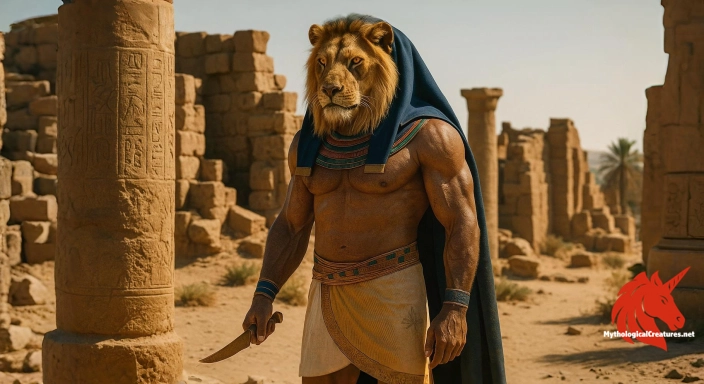
Dare to Meet the Maahes....
Curated by the Mythological Creatures Team
Series editor: Mythological Creatures Directory
Primary desk: Asian & Pacific Myth Cycles Desk
(rev. November 2025)