
Kymopoleia: Kymopoleia is a minor sea goddess in Greek mythology, known as the daughter of Poseidon and wife of Briareus.
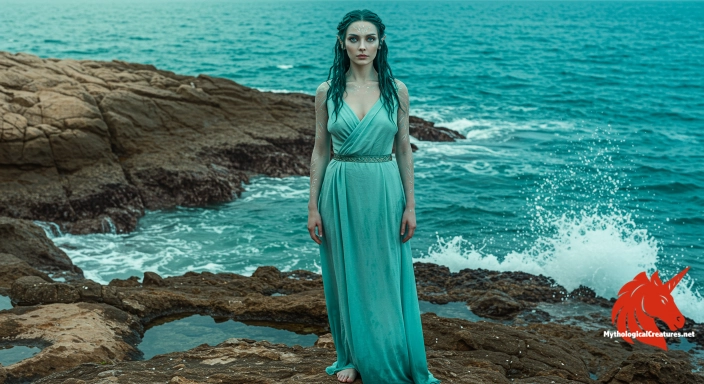
Kymopoleia
Kymopoleia - Embodies the unpredictable, formidable nature of the ocean and represents a divine facet of Poseidon's realm.
the legend in five swipes.
the legend in five swipes.
Kymopoleia: Where the Legend Started
Kymopoleia emerges from the mists of ancient myth as a fascinating embodiment of the sea’s volatile spirit. Born of Poseidon, her origins are deeply enmeshed with the elemental forces that govern the ocean, and she stands as a testament to the ancients’ desire to personify nature. Her brief mention in Hesiod’s Theogony places her within the elaborate tapestry of divine genealogy, linking her to the broader pantheon of water deities. As the wife of Briareus, one of the Hundred-Handers, she occupies a unique niche that bridges might and mystery. This connection not only underscores the potent allure of her lineage but also symbolises the turbulent interrelationships within the sea’s hierarchy. The cultural context in which she was conceived reflects an era that revered both the nurturing and destructive qualities of the ocean. Her narrative, though sparse, offers insight into the ancient Greek approach to interpreting natural phenomena through deity. The subtle presence of Kymopoleia in classical texts invites a broader contemplation of the forces behind maritime life and chaos. Today, she remains an emblem of the ever-changing, unpredictable nature of the sea.
What sources tell us about Kymopoleia?
The sole attestation of Kymopoleia is found in the Hesiodic Theogony, a seminal text that catalogues the vast network of divine beings in Greek mythology. This primary source, while laconic in its mention, firmly integrates her into the mythic lineage of Poseidon’s progeny. The brief reference in such an authoritative work has led later scholars to infer deeper symbolic meanings associated with her character. Despite this, the ancient record does not offer alternative versions or extended narratives detailing her exploits. Some later commentaries and fragmented texts hint at an expanded role for sea deities, suggesting that oral traditions may have once provided additional layers to her myth. The ambiguous nature of her portrayal has allowed for a variety of post-classical interpretations that explore the latent power of the ocean. While literary sources beyond Hesiod are scarce, this single mention has inspired modern reinterpretations that seek to flesh out her character. Variants of her story are occasionally woven into broader discussions of maritime divinity, reflecting the dynamic interplay between text and tradition. This isolated but potent reference continues to fuel discussions about the elusive nature of myth and the way ancient writers encapsulated the mysteries of the sea.
Kymopoleia: Form, Powers and Weaknesses
Although ancient sources do not provide explicit physical descriptions of Kymopoleia, later artistic reconstructions fill in the imagined details with rich, evocative imagery. It is easy to envision her as having an appearance that mirrors the restless, ever-shifting waves of the sea. Many depictions suggest she may have possessed a luminous complexion, with skin that shimmers like the surface of water in sunlight. Her hair is often imagined as cascading tendrils of sea foam, flowing in tandem with the motion of the tides. In visual representations, her eyes are described as deep and tempestuous, hinting at the unfathomable mysteries of the ocean’s depths. Some interpretations also imbue her with an ethereal grace, draped in flowing garments that evoke the fluidity of water and seaweed. The ambiguity inherent in her limited description allows modern artists to experiment with her form, sometimes portraying her as both delicate and formidable. Her physical presence is rendered with a sense of dynamism that captures the dual nature of the sea—simultaneously soothing and perilous. Such portrayals invite observers to reconcile her beauty with the inherent violence and unpredictability of the maritime realm.
How does Kymopoleia differ by region?
In the diverse and locally rich mythologies of the ancient Mediterranean, regional interpretations of Kymopoleia have subtly varied to reflect local maritime experiences. On many Aegean islands and coastal communities, the figure of Kymopoleia was adapted to symbolise both the life-giving and destructive impulses of the sea. Local seafarers and fishermen could see in her the unpredictable nature of stormy waters that both nurtured and imperilled their livelihoods. In some traditions, her attributes were merged with regional sea spirits, creating a composite deity that embodied local environmental concerns. Such adaptations provided a flexible canvas for communities to express reverence for the ocean’s might in both benevolent and ominous terms. Even though direct worship of her as a distinct figure appears limited, her essence was often intertwined with the broader cult of Poseidon and other local water deities. Artistic and ritual expressions sometimes incorporated elements of her myth, particularly in coastal festivals that celebrated the dual nature of the maritime world. These regional variations underscore the fluid boundaries between local legend and pan-Hellenic myth, allowing Kymopoleia’s character to evolve in ways that were culturally and environmentally specific. Her adaptability in regional narratives testifies to the universal human need to humanise and understand the natural world.
How does the Kymopoleia legend compare worldwide?
When set against the backdrop of global myth, Kymopoleia resonates with a number of deities who encapsulate the raw, untamed aspects of water. Her character shares thematic similarities with the Norse goddess Ran, whose dominion over the dangerous seas mirrors the dichotomy of beauty and peril found in Kymopoleia. Similar parallels are also drawn with various water spirits from Celtic and other Indo-European traditions, all of which personify the capricious and life-sustaining qualities of the ocean. In Greek mythology, her identity is sometimes compared to that of the Nereids, though she occupies a unique niche by virtue of her lineage and marital alliance. This comparative framework highlights a widespread cultural motif: the personification of natural forces in feminine form. Across different mythological systems, such deities serve as allegories for both the protective and destructive powers of water. This cross-cultural analysis enriches our understanding of how ancient societies conceptualised the mysterious and often unforgiving nature of the sea. The similarities and subtle differences among these deities reveal a shared human impulse to decipher and revere the unpredictable rhythms of nature. Such comparative reflections underscore the timeless appeal of the sea as a muse for myth and legend.
Kymopoleia: The Modern Legacy
Over the centuries, the faint outline of Kymopoleia’s myth has evolved from a brief divine mention into a symbol that continues to inspire modern creative expression. Initial appearances in classical texts were concise, yet they laid the groundwork for later reinterpretation by artists, writers, and scholars who imbue her with greater narrative complexity. During the Renaissance, the resurgence of interest in classical mythology helped transform such minor deities into allegorical figures representing the sublime power of nature. In contemporary art and literature, she occasionally appears as a personification of the tumultuous and ever-changing sea, symbolising both natural beauty and inherent danger. Modern reimaginings often incorporate fluid and dynamic visual motifs that echo the classic aesthetics of ancient Greek art while adding layers of environmental symbolism. As myth continues to serve as a bridge between the past and the present, Kymopoleia offers a lens through which the interplay of chaos and order is examined. Her legacy, while not as prominent as some other deities, invites a re-appraisal of ancient narratives in a modern context. Present-day depictions occasionally position her at the centre of ecological allegories, reflecting both humanity’s historical connection to and contemporary concerns about the ocean. In this way, her subtle mythic presence endures as an emblem of the eternal and enigmatic power of the sea.
Interesting Fact
Despite her minimal presence in surviving texts, Kymopoleia's connections to major figures like Poseidon and Briareus underscore her importance in representing the wild forces of the sea in Greek mythology.
Mythological Treasures
Greek Myths: A field guide to the monsters of ancient Greece
Every monster here earned its place in legend, and each gets a full page of artwork and the story behind it.
Norse Sagas: A field guide to the beasts of the Viking world
Drawn from the saga accounts themselves, with the powers, weaknesses and doom of each being set out.
Egyptian Legends: A field guide to the gods and monsters of ancient Egypt
Guardians of the living and devourers of the dead, with the role each played in judgement.
the legend in five swipes.
Partner with us
Sponsor this space
Reach thousands of mythology enthusiasts with a curated placement on our creature pages.
Learn about sponsorshipQuick Creature Info
Origin:
Features:
Associations:
Our Mythic Legendary Rating:

Also Sometimes Known As:
Habitat:
Supernatural Powers:
Physical Attributes:
Behavior:
Lore:
Related Creatures, Tales or Lore
- OOther marine deities in the Greek tradition (e.g., Phorcys, Ceto)
- MMinor sea deities such as Leucothea
References
Discover Another Mythical Legend You May Not Have Heard Of?
Uncover the mysteries of ancient folklore and expand your knowledge of legendary beings from cultures around the world.
Dare to Meet the Demon....
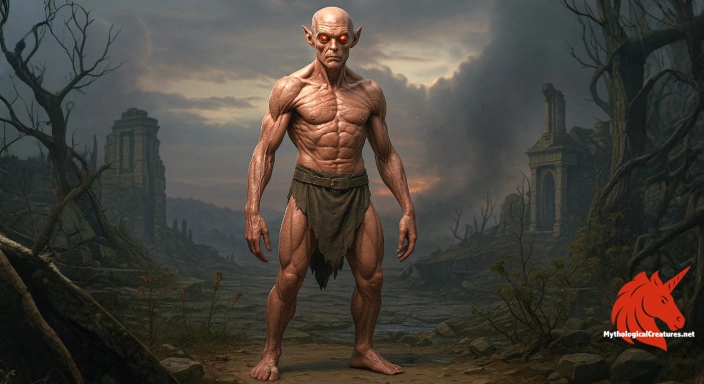
The Mythological Creatures Book Series
Yokai, Greek, Norse, Egyptian & Chinese. Five illustrated field guides to the creatures the old stories either warned or told you about.

Curated by the Mythological Creatures Team
Series editor: Mythological Creatures Directory
Primary desk: Hellenic & Ancient Mediterranean Desk
(rev. November 2025)