
Laʻa Maomao: La‘amaomao is a revered Hawaiian wind deity known for wielding a magical gourd that contains all the winds.
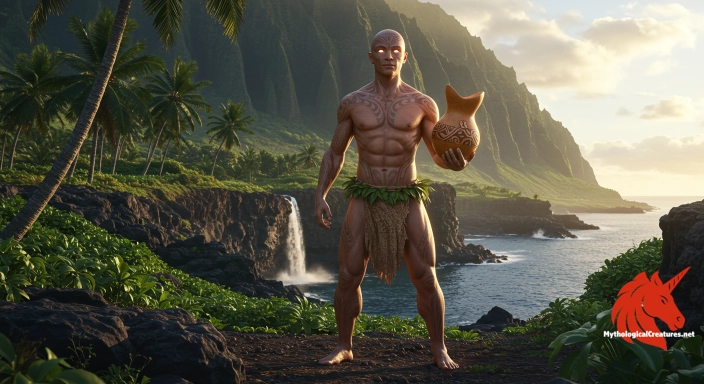
Laʻa Maomao
Laʻa Maomao - La‘amaomao plays a key role in controlling the winds and symbolising forgiveness and benevolence in Hawaiian culture.
Origins & First Encounters
Laʻamaomao emerges from Hawaiian mythology as a captivating wind deity whose origins and legacy weave a rich tapestry of cultural significance. Born of ancient cosmic forces, this enigmatic figure is associated with a sacred gourd said to contain all the winds of Hawaiʻi, a possession that symbolises both power and mystery. Over time, Laʻamaomao has been portrayed in multiple forms, sometimes as a goddess and at other times as a god, reflecting the fluid nature of mythic identities. The deity’s name, which can be interpreted as 'distant sacredness', hints at a deep connection to the transcendent realms of nature and spirituality. Early accounts of this wind divinity are interlaced with genealogical lore and ceremonial traditions that underscore its integral role in the natural order of the islands. Its story is entwined with legendary figures such as Paka‘a and Ku-a-Paka‘a, each generation inheriting both the power and responsibilities of the winds. The myth encapsulates a balance between awe-inspiring natural force and benevolent care, highlighting themes of forgiveness and renewal. In essence, Laʻamaomao stands as both a guardian of the natural world and a symbol of the transformative spirit that has shaped Hawaiian cultural identity through the ages.
Source Texts & Tale Variants
The narrative of Laʻamaomao is preserved in a variety of ancient texts, oral traditions, and ceremonial chants that have been passed down through generations. One notable version is found in the tale of 'The Triple Marriage of Laa-Mai-Kahiki', where the deity is depicted in a context that highlights its multifaceted nature. Early manuscripts and genealogical records reveal that the story was transmitted both through written accounts and the vibrant oral tradition of the Hawaiian people. Ritual chants that invoke the powers of the wind further underscore the significance of the sacred gourd and the climatic forces it commands. Multiple story variants exist, with some traditions emphasising a female identity while others accord the deity a masculine form. This divergence in gender representation reflects evolving cultural norms and regional influences over time. Local lore, especially from places like Hale-o-Lono on Molokaʻi, strengthens the depiction of Laʻamaomao as an ʻaumakua, a revered family deity and protector. The diversity of sources, from evolving folktales to carefully recorded legends, offers a fascinating insight into the adaptability and enduring nature of this mythic figure.
Form & Powers
Imagery of Laʻamaomao often conjures an ethereal being whose very form seems to be sculpted from the winds and shifting mists. Traditional depictions render the deity as adorned in flowing, diaphanous garments that mimic the movement of air currents and storm clouds. A central attribute of this wind divinity is the intricately carved gourd, richly decorated with native motifs, which is believed to contain the essence of every breeze in existence. Some artistic renditions merge human features with the intangible quality of the wind, creating an appearance that is both graceful and otherworldly. The eyes of the deity are sometimes portrayed as deep and reflective, mirroring the vast expanse of the sky and the mysteries it holds. In other interpretations, the deity’s hair cascades like wisps of cloud, evoking the transient beauty of a clear Hawaiian morning. There is a notable variation in size and presence, with some images emphasising a powerful, larger-than-life figure and others suggesting a more delicate and fleeting form. Such elaborate physical descriptions contribute to an aura of both mysticism and reverence, symbolising the wind’s unpredictable yet nurturing character.
Regional Faces
Across the Pacific, the depiction of Laʻamaomao exhibits fascinating regional variations that speak to the diverse interpretations of wind deities in Polynesia. In the Hawaiian tradition, the deity is uniquely intertwined with local genealogies and is sometimes depicted as a benevolent female, while other nearby cultures tend consistently towards a male representation. In the Society Islands, the wind god is known as Raʻa, in the Cook Islands as Raka, and in New Zealand as Raka-maomao, each variant echoing similar themes of wind and transformation. Local adaptations have led to distinct iconographies, with some communities emphasising the connection to celestial phenomena and others focusing on the practical aspects of wind for seafaring and navigation. The ritual significance of the deity also shifts with geography, as seen in Molokaʻi where Laʻamaomao was revered as an ʻaumakua at Hale-o-Lono. Environmental influences, such as coastal weather patterns and island topography, further colour the regional portrayals of this divine figure. These local narratives often incorporate unique symbols and motifs that reflect specific ecological and cultural contexts. Ultimately, such regional adaptations offer a rich mosaic of interpretations that underscore the dynamic and evolving nature of myth-making across Polynesia.
Cultural Parallels
When compared with wind deities from other mythological traditions, Laʻamaomao stands out for its intricate symbolism and multi-dimensional nature. In Greek mythology, Aeolus similarly presides over the winds, though his narrative centres more on the distribution of temperamental breezes rather than a sacred object like the gourd. Comparable to certain aspects of Japanese Fujin, Laʻamaomao embodies both the creative and the destructive potentials of air, highlighting nature’s duality. Cross-cultural connections emerge in the way that these deities are often associated with transformation, renewal, and the regulation of elemental forces. The metamorphosis of Laʻamaomao’s gender over time is not unique; many ancient cultures display a fluidity of divine attributes that adapts to societal changes and natural cycles. Furthermore, the method of controlling the winds through a tangible object, like the ornate gourd, parallels mythic motifs found in other traditions where physical artefacts are imbued with cosmic power. The element of forgiveness attributed to Laʻamaomao also distinguishes this deity, adding a moral dimension to the control over nature. This comparative analysis not only illuminates the universal human fascination with the wind and its mysteries but also underscores the distinct cultural imprint carved by the Polynesian tradition.
Legacy & Modern Evolution
The depiction of Laʻamaomao has undergone considerable evolution from its early mythic incarnations to its modern cultural manifestations. Historically, the deity’s dual portrayal as both a wind bearer and a symbol of forgiveness has invited reinterpretation as societal values and artistic expressions evolved over time. In contemporary times, this ancient figure is celebrated in literature, art, and performance, symbolising the enduring power of nature and the importance of harmonious living. Modern Hawaiians and Polynesians alike have embraced Laʻamaomao as a cultural icon, often incorporating the myth into narratives that stress environmental stewardship and a respectful coexistence with nature. Creative reinterpretations have led to a renewed interest in the deity, influencing everything from community festivals to academic discourse on indigenous spirituality. This adaptability is further evidenced by the reimagining of its fluid gender identity, which resonates with broader discussions on inclusivity and the celebration of multiplicity in modern art. The symbolic gourd, a focal point in older narratives, now finds new life in installations and visual arts that explore natural cycles and renewal. In sum, Laʻamaomao continues to inspire and invigorate the cultural landscape, offering a timeless message of resilience, balance, and the transformative power of the wind.
Interesting Fact
The conflicting portrayals of La‘amaomao as both a female goddess and a male god illustrate the dynamic evolution of myth in Hawaiian tradition, reflecting broader changes in cultural narratives over time.
For serious mythcraft
Your project belongs among the legends
If your work deepens how people understand, play with, or teach mythology, a sponsor placement here keeps it in front of the right readers all year.
Submit a sponsorship enquiryQuick Creature Info
Origin:
Features:
Associations:
Our Mythic Legendary Rating:

Habitat:
Supernatural Powers:
Physical Attributes:
Abilities:
Behavior:
Lore:
Related Creatures, Tales or Lore
- AAeolus (Greek wind god)
- FFūjin (Japanese wind god)
- RRaka-maomao (New Zealand wind deity)
References
Discover Another Mythical Legend You May Not Have Heard Of?
Uncover the mysteries of ancient folklore and expand your knowledge of legendary beings from cultures around the world.
Dare to Meet the Tabinshwehti....
Curated by the Mythological Creatures Team
Series editor: Mythological Creatures Directory
Primary desk: Asian & Pacific Myth Cycles Desk
(rev. November 2025)