
Leanan sídhe: Leannán sídhe is a legendary Irish fairy spirit known for her enchanting beauty and fatal influence on her mortal lovers.
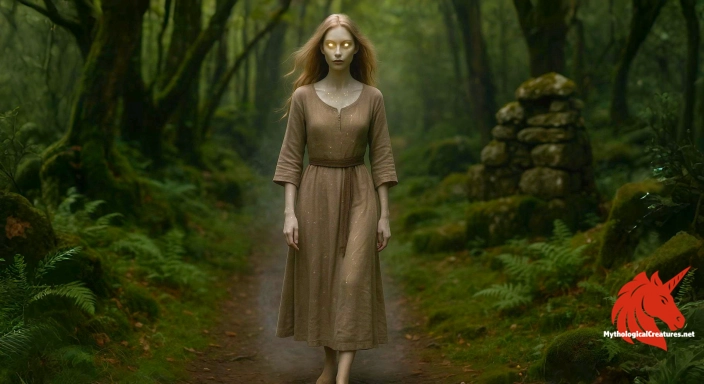
Leanan sídhe
Leanan sídhe - Represents the perilous intersection of artistic inspiration and fatal passion, serving as a cautionary symbol in Irish mythology
Origins & First Encounters
The leanan sídhe is a beguiling figure from Irish folklore that captivates with her dual nature as both an inspiring muse and a dangerously malignant enchantress. Emerging from the rich tapestry of Gaelic mythos, she is closely linked with the Aos Sí – the people of the fairy mounds – and embodies an otherworldly allure that defies mortal convention. Her origins lie in ancient Celtic oral traditions before being reshaped during periods of literary revival, where her role evolved into a complex interplay of beauty, inspiration, and inevitable decline. Held as a symbol of ephemeral artistic brilliance, she seduces mortals with promises of transcendent creativity, only to drain their life force. Her legend is a study in contrast: enchanting yet perilous, seductive yet destructive. This poignant duality mirrors the ever-present human struggle between creative passion and the inevitability of mortality. The narrative of the leanan sídhe reverberates deeply within Gaelic folklore, resonating with themes of love, loss, and the high cost of artistic genius. Over the centuries, her tale has become a timeless allegory for the transformative yet treacherous nature of inspiration. Her enduring presence reflects not only the mystique of fairy lore but also the complex emotions that arise when mortal creativity meets the supernatural.
Source Texts & Tale Variants
Primary written sources and evolving oral traditions have together sculpted the modern image of the leanan sídhe. Her earliest literary mentions appear in the context of Irish folklore, and she gained renewed prominence during the Celtic Revival. Works such as Jane Wilde’s 1887 compendium, Ancient Legends, Mystic Charms and Superstitions of Ireland, played a significant role in introducing her to a broader audience. Later, W. B. Yeats reimagined her character, emphasising a vampiric vitality that both inspires and consumes. Through these diverse renditions, she is alternately portrayed as a benevolent muse and a sinister predator of life. Some narrative strands even allude to a male form of the entity, revealing a fluidity in her gender representation across different accounts. Oral storytelling traditions passed down through generations further enriched her myth with local colour and lyrical embellishments. These layered sources, both written and spoken, have ensured that her legend continues to evolve while maintaining its essential, haunting character. The variety in story variants underscores the dynamic dialogue between tradition and creative reinterpretation, making her narrative as multifaceted as the cultures that cherish it. Each retelling invites listeners and readers to behold the fine line between transcendent beauty and its inherent, fatal cost.
Form & Powers
The leanan sídhe is consistently depicted as the epitome of ethereal beauty, possessing features that seem almost sculpted by moonlight and ancient magic. Her eyes, often described as shimmering pools of starlight, hold an enigmatic allure that captivates and bewilders those who dare to meet her gaze. Flowing hair, rendered in hues of silver or gold, cascades with a natural grace that mirrors the gentle movement of a twilight breeze. Her complexion, luminous and pale, evokes the delicate radiance of mist on a dewy morning. Poetic accounts often highlight the graceful curvature of her form, blurring the lines between mortal elegance and otherworldly perfection. Draped in robes or garments that appear woven from the gossamer strands of mist and light, her attire enhances the sense of mystery surrounding her. Despite the overwhelming softness of her appearance, an undercurrent of predatory intensity lingers, suggesting that her beauty conceals a dangerous force. In rare variations of the myth, a male leanan sídhe is portrayed with equally compelling charm, marked by refined features and an air of tragic longing. The careful juxtaposition of fragility and latent menace in her physical depiction serves as a potent reminder of the cost of sublime artistic inspiration. Each detail of her appearance is a testament to the belief that beauty, in its purest form, can both heal and harm.
Regional Faces
Across the Gaelic-speaking regions, the leanan sídhe acquires distinct local flavours that mirror the cultural nuances of each community. In the heart of Ireland, she is predominantly celebrated as a fairy muse whose ethereal beauty is intertwined with the natural landscape and ancient mysticism. Scottish traditions often reframe her narrative, emphasising an elusive, almost spectral quality that reinforces her otherworldly origins. On the Isle of Man, her counterpart—the lhiannan shee—carries subtle differences in name and character, reflecting local folklore traditions and linguistic variations. Some regional accounts render her as a gentle guardian of poetic talent, while others caution against her dangerously seductive allure that drains the life force of those enamoured by her. As her story traverses different geographical borders, local storytellers incorporate unique elements, blending the universal themes of inspiration and doom with indigenous beliefs and customs. Rural communities might depict her as a spectral warning against untamed passion, whereas urban narratives often focus on her entrancing mystique. Festivals and local lore continue to celebrate and reinterpret her legend, adapting her mythos to reflect contemporary values and ancient superstitions alike. Each regional variant contributes a mosaic of interpretations that enrich the overall tapestry of her mythological identity. The regional diversity in her portrayal underscores the adaptive nature of folklore and its capacity to speak to the distinctive spirit of every locale.
Cultural Parallels
The leanan sídhe shares intriguing similarities with numerous figures across world mythologies, all of whom embody the seductive interplay between beauty and peril. Her role as both a muse and a life-draining entity finds echoes in the enchanted sirens of Greek legend, whose irresistible songs lure mortals to their doom. Like the succubi that populate various European traditions, she exerts a potent, almost predatory, influence that blurs the line between inspiration and destruction. Parallels can also be drawn with the Welsh Tylwyth Teg, whose ethereal beauty and enigmatic presence captivate the imagination. These cross-cultural connections reveal a common narrative thread where supernatural seduction is deeply intertwined with artistic or existential cost. In each culture, the figure who offers divine inspiration is also a harbinger of inevitable decline. This duality highlights a universal theme in folklore: the risky allure of engaging with forces that lie beyond human comprehension. The recurring motif of a fatal love affair with a mystical being underscores a shared warning against overreaching ambition and unbridled passion. Comparative analysis of these myths enriches our understanding of how societies interpret the intersection of creativity and destruction. Ultimately, the leanan sídhe stands as a compelling example of how ancient images of beauty and danger continue to resonate in various cultural narratives.
Legacy & Modern Evolution
The legacy of the leanan sídhe is one of enduring allure and evolving symbolism that bridges the ancient and the modern. Originating in the murmurings of Gaelic oral tradition, her myth has transitioned from a local fairy tale to a widespread cultural archetype through a series of literary reinventions. The Celtic Revival played a pivotal role in transforming her image; writers like Jane Wilde and W. B. Yeats recast her as both a muse and a malevolent force, setting the stage for her modern identity. Today, she continues to inspire artists, poets, and novelists who see in her the embodiment of creative passion tinged with inevitable tragedy. Her story is frequently revisited in contemporary literature and visual arts, where the tension between transcendent inspiration and its consuming price is a recurring theme. Modern adaptations often explore her dual nature, leveraging gothic imagery and nuanced character studies that reflect contemporary values and anxieties. As digital media and global cultural exchanges amplify her mythos, the leanan sídhe remains a potent emblem of both beauty and caution. Her image is reimagined across multiple platforms, from film and television to graphic novels, ensuring her place in the collective modern consciousness. The evolution of her legend illustrates the timeless appeal of folklore, which can be endlessly reinterpreted and rediscovered. Ultimately, the leanan sídhe endures as a multifaceted icon whose narrative continues to invite reflection on the complex relationship between inspiration, passion, and the human condition.
Interesting Fact
Leannán sídhe uniquely merges the roles of muse and life-draining entity, making her an enduring emblem of the paradox that great artistic inspiration can sometimes come at a fatal price.
For serious mythcraft
Your project belongs among the legends
If your work deepens how people understand, play with, or teach mythology, a sponsor placement here keeps it in front of the right readers all year.
Submit a sponsorship enquiryQuick Creature Info
Features:
Our Mythic Legendary Rating:

Also Sometimes Known As:
Habitat:
Supernatural Powers:
Physical Attributes:
Abilities:
Behavior:
Weaknesses:
Lore:
References
Discover Another Mythical Legend You May Not Have Heard Of?
Uncover the mysteries of ancient folklore and expand your knowledge of legendary beings from cultures around the world.
Dare to Meet the Mahishi....
-4a99faf2-cc71-4ada-9d41-c99f1e02f042_small.webp "Depiction of Mahishi")
Curated by the Mythological Creatures Team
Series editor: Mythological Creatures Directory
Primary desk: Northern & European Folklore Desk
(rev. November 2025)