
Leraie: Leraie is a formidable demon known as the Great Marquis of Hell.
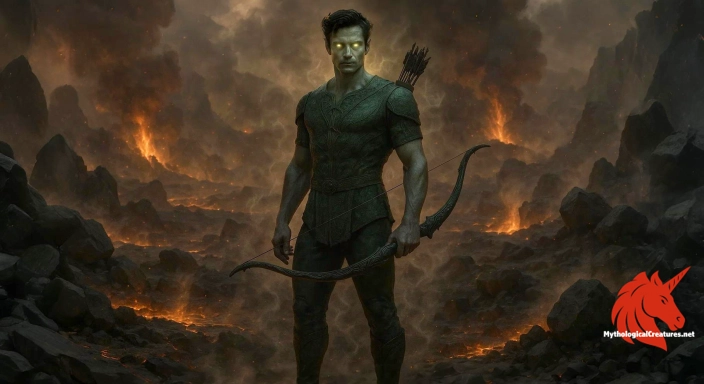
Leraie
Leraie - Leraie is renowned for inciting conflicts and manipulating the fates of lovers, reflecting the chaotic forces of Hell.
Origins & First Encounters
Leraie emerges as a formidable and enigmatic demon from the rich tapestry of infernal lore, recognised as a Great Marquis of Hell commanding a formidable thirty-three legions of demons. His origin is steeped in the medieval occult tradition, where mysterious manuscripts and esoteric practices gave shape to his notorious reputation. Early attestation of his existence appears in influential grimoires that have long shaped the study of the supernatural. In these texts, he is credited with igniting fierce battles and provoking discord, a manifestation of chaos in both the realms of love and conflict. His role extends to manipulating human passions, as he is fabled to draw lovers together as readily as he drives them apart. The depiction of Leraie as a gallant, handsome archer clad in resplendent green underlines both his martial prowess and his alluring charm. His multiple names—including Leraje, Leraikha, and Loray—speak to the diversity of cultural interpretations that have continually reshaped his legend. His enduring presence in demonological studies bridges the gap between ancient occult traditions and modern fascination with the infernal. This multifaceted figure encapsulates the eternal human intrigue with forces that blur the boundaries between order and chaos.
Source Texts & Tale Variants
Ancient demonological grimoires form the backbone of Leraie’s myth, with seminal works such as the Lesser Key of Solomon, Johann Weyer's Pseudomonarchia Daemonum, and Jacques Collin de Plancy's Dictionnaire Infernal offering early glimpses into his character. These manuscripts present him as a commanding marquis with a vast host of demons at his disposal. The variations in his name and attributes across these texts underscore the fluid nature of his myth and the challenges of establishing a singular narrative. Some accounts focus on his martial prowess and his ability to incite formidable disputes on the battlefield, while others hint at his subtle influence over personal relationships. The literary tradition surrounding Leraie interweaves themes of warfare and passion, reflecting a duality that has only deepened with time. Over the centuries, additional folklore and supplementary grimoires have enriched his story, layering his image with additional nuance and symbolism. Multiple narrative strands suggest that his power permeates both the physical and the emotional, marking him as a catalyst for both bodily harm and inner turmoil. The convergence of these diverse traditions creates a complex mosaic, ensuring that Leraie remains an enduring and multifaceted figure in the study of demonological lore.
Form & Powers
Leraie is consistently portrayed as a striking and elegant archer whose physical presence effortlessly melds beauty with menace. His visage is often described as both handsome and solemn, with refined features that evoke an otherworldly nobility. The renowned image of him clad in a vivid green attire symbolically bridges the realms of nature and the supernatural. His outfit, adorned with intricate embellishments, speaks to a martial heritage interwoven with a sense of mystical artistry. The bow he wields is not merely a weapon but a potent emblem of his dual power over conflict and the fluctuations of love. His quiver, reputed to contain arrows capable of inflicting gangrenous wounds, adds an extra layer of sinister allure to his persona. Variations in his depiction sometimes reveal subtle shifts in stature or build, suggesting that his form adapts to the narrative needs of different accounts. His eyes are occasionally described as glowing with an unearthly light, emphasising his deep connection to the infernal. Every detail, from the distinctive hue of his garments to the elaborate ornamentation on his weaponry, contributes to a visually arresting and richly symbolic image. The synthesis of elegance and dread in his appearance cements his status as a uniquely multifaceted figure within the realm of demonology.
Regional Faces
The myth of Leraie has been adapted by various cultures, resulting in a spectrum of interpretations that reflect regional nuances. In European demonology, particularly in medieval and renaissance texts, he is portrayed as a noble yet fearsome daemon whose elegant features belie a capacity to incite violent disputes. In certain Central and Eastern European traditions, local folklore interweaves his narrative with themes of social discord and tumultuous romantic entanglements. Mediterranean interpretations often accentuate his visual splendour, with particular emphasis on his elaborate green attire and expert archery reinforcing local aesthetic values. In some regional adaptations, his story is reframed to mirror the societal and political conflicts specific to those areas, blending myth with historical context. Such variations highlight that while his core attributes remain consistent, the manner of his influence and representation can vary markedly. Certain local traditions even imbue him with additional responsibilities, such as overseeing bouts of personal or communal strife. This geographically contingent evolution of his lore underlines the adaptability and enduring appeal of his character. Overall, the regional adaptations of Leraie reveal how universal themes of conflict, love, and power can be interpreted through myriad cultural lenses.
Cultural Parallels
When examining Leraie’s myth against the broader backdrop of mythological figures, several intriguing parallels come to light. His dual influence over both conflict and affection invites comparisons with archetypal deities that straddle the realms of creation and destruction. Much like the ancient narratives where war and love interweave, Leraie embodies a delicate balance between noble allure and latent menace. His portrayal as the gallant archer draws subtle parallels with legendary figures celebrated for their martial prowess, while his infernal origins set him apart from more benevolent counterparts. The complexity of his dual roles reflects a unique position among multifaceted spirits and deities, each evoking both admiration and apprehension. Cross-cultural traditions often feature supernatural figures who govern the unpredictable nature of human passions, and Leraie’s myth resonates with these themes on multiple levels. His presence in demonological texts aligns him with a lineage of powerful and paradoxical entities that traverse various cultural mythologies. These comparisons emphasise that the interplay between attraction and aggression is a recurring motif in ancient lore. In juxtaposing Leraie with his cultural counterparts, one gains a deeper appreciation of both his singular attributes and the universal fascination with dualistic forces.
Legacy & Modern Evolution
Modern interpretations of Leraie have unveiled a fascinating evolution from his grim origins in medieval demonology to a more complex character thriving in contemporary popular culture. His depiction has branched out beyond the confines of arcane manuscripts, inspiring vibrant artwork, evocative literature, and contemporary occult practices that reimagine his legendary traits. The transition from a strictly demonic marquis to a symbol of the eternal struggle between love and conflict mirrors the broader societal shifts in understanding moral duality and internal turmoil. Contemporary portrayals often highlight his eclectic blend of charm and danger, reflecting modern audiences’ appreciation for nuanced, multilayered characters. This evolution demonstrates how ancient mythological figures continue to adapt to new cultural narratives and artistic expressions. His iconic green attire and the ever-present bow and quiver have become recurring motifs in visual media, reinforcing his status as a timeless emblem of duality. Modern occult circles sometimes invoke his image as a metaphor for internal battles and the transformative power of passion. As interest in historical demonology persists, Leraie remains a subject of both scholarly enquiry and popular fascination. The dynamic evolution of his legacy underscores the capacity of classical myth to persist and transform in response to changing cultural landscapes. His enduring influence is a testament to the timeless interplay between love, war, and the human spirit. This transformation cements his place as a lasting embodiment of the delicate balance between beauty and brutality, ensuring that his myth continues to evolve with society.
Interesting Fact
Despite his fearsome reputation as a demon of conflict, Leraie’s portrayal as a dashing, charismatic archer offers a striking contrast to the typical monstrous depictions of infernal beings.
For indie creators
Give your myth project a permanent home
Indie authors, artists, small studios, and makers can secure an annual, non-intrusive sponsor slot that meets readers where they explore.
Obtain more informationQuick Creature Info
Associations:
Our Mythic Legendary Rating:

Also Sometimes Known As:
Habitat:
Supernatural Powers:
Physical Attributes:
Abilities:
Behavior:
Lore:
References
Discover Another Mythical Legend You May Not Have Heard Of?
Uncover the mysteries of ancient folklore and expand your knowledge of legendary beings from cultures around the world.
Dare to Meet the Grimhild....
Curated by the Mythological Creatures Team
Series editor: Mythological Creatures Directory
Primary desk: Hellenic & Ancient Mediterranean Desk
(rev. November 2025)