
Leucippe: Leucippe is a multifaceted figure in Greek mythology, appearing as a water-nymph, queen, priestess, and heroine across various narratives.

Leucippe
Leucippe - The many figures named Leucippe exemplify the richness of Greek myth, reflecting themes of beauty, grace, and the interplay between the mortal and divine.
Origins & First Encounters
Leucippe is a name steeped in Greek myth, resonating with multiple layers of meaning and diverse traditions. Her name, meaning ‘white horse’, evokes an image of ethereal grace and purity that has intrigued storytellers for generations. Many figures in ancient tales share this name, ranging from water-nymphs of the Oceanids to royal consorts in Trojan legends. As a figure associated with both divinity and mortality, Leucippe embodies the fluid boundaries between the human and the supernatural. Her earliest attestation is woven into the fabric of early myth-making, where she appears in narratives that celebrate the beauty and the mystique of nature. Over time, various versions of her story have emerged, each adapting her character to the cultural and religious ideals of the era. Her roles span from a companion of a goddess during divine abductions to a queen whose lineage shapes heroic destinies. The multiplicity of her identity demonstrates the dynamic nature of myth, where one name can encapsulate numerous archetypal energies. This enigmatic figure continues to be a symbol of beauty, resilience, and the interplay between fate and free will.
Source Texts & Tale Variants
The accounts of Leucippe are preserved in an array of ancient texts and literary compositions, each offering a distinct perspective on her identity. Early mythographers and poets alluded to her presence among the myriad deities and mortal heroines of Greek lore. Her mention as one of the Oceanids appears alongside other nymphs, underscoring her divine connection with water and nature. Other narratives place her as a Trojan queen or a royal consort, expanding her role into the political and heroic spheres of myth. In works such as the mythological compilations and later commentaries, different story variants highlight her complex genealogy and varied functions. The classical novel The Adventures of Leucippe and Cleitophon by Achilles Tatius adds another dimension, portraying her as a heroine whose experiences blur the line between myth and romance. Plato’s writings on Atlantis also invoke her name, indicating how her myth traveled across different genres and cultural boundaries. This collection of sources not only reflects the diversity of her portrayals but also the interpretative challenges that come with a mythic figure of such breadth. Her story variants continue to stimulate debate among scholars and enthusiasts alike, serving as a nexus of ancient narrative artistry.
Form & Powers
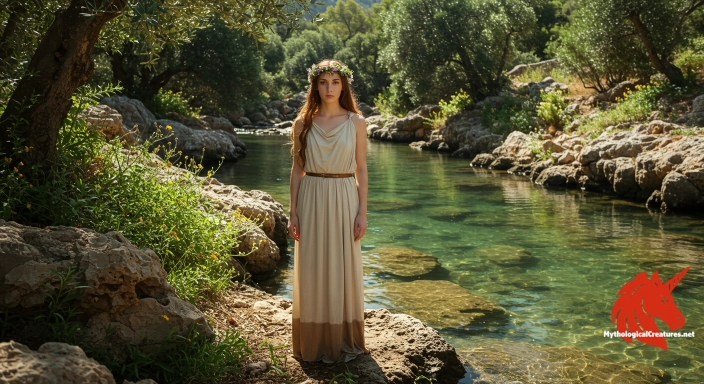
Although detailed physical descriptions of Leucippe are sparse in the surviving texts, her very name suggests an association with luminous beauty and equine grace. Classical imagery often hints at a figure whose presence is as striking as a pristine white steed, symbolising both purity and dynamic strength. In artistic representations inspired by her tales, she is imagined with a radiant complexion and flowing, soft hair that seems to mirror the gentle undulations of water. There is an undercurrent of divinity in the way she is depicted, with graceful features that blend mortal charm with an otherworldly allure. Some sources imply that her form carried both delicate femininity and a robust, heroic bearing, reflective of her diverse mythological roles. The iconography surrounding her sometimes incorporates elements such as a diadem or subtle references to equine motifs, enhancing her connection to themes of light and speed. Even when her exact appearance is left to the imagination, classical art and literature provide evocative clues that she embodied an ideal of refined natural elegance. Her visage, as much as it is recounted through verse as it is through fragmented visual depictions, continues to evoke a sense of serene majesty. The evolution of these portrayals underscores how myth can paint a composite image that is ever open to artistic interpretation.
Regional Faces
Local traditions across the Greek world have embraced Leucippe with variations that reflect their own cultural and geographical nuances. In the coastal regions and among communities closely tied to water, she is often celebrated as a nurturing water nymph whose divine influence ensured the fertility of the land and sea. In certain inland narratives, she emerges as a queen tied to royal lineages, symbolising the union between divine ancestry and mortal rule. Particularly in the tales of Trojan origins, her role adapts to incorporate local Anatolian elements, merging the myth with regional historical memory. Communities in central Greece sometimes portray her as a patroness whose presence in festivals and local cults reaffirms the sacredness of water and seasonal change. In contrast, eastern traditions have occasionally recast her as a figure of poignant tragedy, where her struggles mirror the natural hardships of the surrounding environment. These regional adaptations often reflect localized interpretations of purity, heroism, and divine intervention, allowing her myth to resonate in varied societal contexts. Local iconography, be it on pottery or in small shrines, frequently integrates symbols of water and horses, reinforcing her connection to nature. Such adaptations illustrate the dynamic and malleable character of myth, where the core identity of Leucippe is enriched by the colours of place and time.
Cultural Parallels
The diverse incarnations of Leucippe invite comparison with several other mythological figures whose identities straddle both divine and mortal realms. Her multifaceted nature is reminiscent of other water deities like the Naiads and Oceanids, who embody the mystery and fertility of nature. In a similar vein, her portrayal as a royal consort in Troy finds echoes in the stories of legendary figures such as Europa and Andromeda, whose beauty and tragic fates also bridge the gap between myth and history. The ambiguity in her character mirrors broader themes seen in figures like Persephone, who simultaneously encapsulate life’s cyclical nature and the inevitability of change. Comparative mythology reveals that her representation is not confined to Greek legends; connections can be drawn with Near Eastern myths where divine consorts often play pivotal roles in the cosmic order. Moreover, her adaptability as both a spiritual and romantic figure is paralleled in various European folklore traditions that celebrate the mystique of a ‘white’ or luminous female archetype. This rich tapestry of parallels underscores the common human fascination with symbols of purity and transcendence. Across cultures, the recurring motifs associated with Leucippe demonstrate how different societies articulate similar archetypes through their own visual and narrative lexicons. The cross-cultural connections highlight the universal power of myth to address themes of transformation, beauty, and destiny.
Legacy & Modern Evolution
The evolution of Leucippe’s myth through the ages mirrors the broader shifts in narrative style and cultural values from antiquity to the modern era. In earlier times, her character served as an emblem of divine beauty and tragic fate, woven into the fabric of oral tradition and early literary works. The classical romance of The Adventures of Leucippe and Cleitophon marks a significant moment where her identity was reimagined as a nuanced literary figure, whose journey explores themes of love and adventure. Over time, the mutable aspects of her myth have allowed later artists and writers to project contemporary concerns onto her ancient form. In modern interpretations, she is often re-evaluated as a symbol of both feminine resilience and the enduring allure of mythic archetypes. Contemporary visual artists, novelists, and theatre practitioners have drawn inspiration from her varied depictions, reinventing her story to address issues such as identity, power, and transformation in modern society. Her legacy is celebrated not only in academic discourse but also in cultural festivals and artistic exhibitions that seek to reconnect with classical heritage. The reinterpretation of Leucippe’s myth in modern literature has opened a dialogue between the ancient and the contemporary, showcasing the timeless nature of myth. As the boundaries of classical and modern thought continue to blur, Leucippe remains a compelling figure whose narrative embodies the constant reinvention of cultural identity and artistic expression.
Interesting Fact
The recurrence of the name Leucippe across disparate mythological traditions underscores how Greek mythology often recycles names to embody diverse archetypes, uniting themes of nature, royalty, and heroism under a single evocative epithet.
Reach myth fans
Connect your myth-driven brand with this audience
Our readers are writers, educators, gamers, and collectors who care about mythology. Enquire about a limited sponsor placement on creature pages.
Enquire about sponsorshipQuick Creature Info
Origin:
Associations:
Our Mythic Legendary Rating:

Also Sometimes Known As:
Habitat:
Supernatural Powers:
Physical Attributes:
Abilities:
Behavior:
Lore:
References
Discover Another Mythical Legend You May Not Have Heard Of?
Uncover the mysteries of ancient folklore and expand your knowledge of legendary beings from cultures around the world.
Dare to Meet the Amnisiades....
Curated by the Mythological Creatures Team
Series editor: Mythological Creatures Directory
Primary desk: Hellenic & Ancient Mediterranean Desk
(rev. November 2025)