
Luwr: Luwr is a legendary female wildduck from Turkic and Nivkh mythologies, celebrated as the creator of wild ducks.

Luwr
Luwr - Represents the creative force in myth, being the progenitor of wild ducks.
the legend in five swipes.
the legend in five swipes.
Where does Luwr come from?
Luwr is a celebrated legendary wildduck from both Turkic and Nivkh mythologies, imbued with a creative spirit that transcends the natural world. Emerging from ancient oral traditions, she is portrayed as a divine force who played a pivotal role in the genesis of life. Her origins intertwine with the elemental forces of water and sky, forging a bond between the earthly realm and the cosmos. In these narratives, she is not merely an animal but a powerful symbol of fertility, transformation, and wisdom. Early attestations of her myth can be traced to the rich pastoral cycles of the Turkic peoples and the shamanistic traditions of the Nivkh. The stories of Luwr have been passed down through generations, echoing in chants and ritual celebrations that highlight her nurturing influence. Her myth captures a timeless dialogue between the forces of nature and the creative energy that pulses through all life. As a creator wildduck, she is revered for instilling order into the chaotic forces of the natural world. Each retelling of her tale deepens the cultural significance embedded in the landscapes and seasonal rhythms of her people. Even today, Luwr’s enduring image invites reflection on the dynamic and interwoven cycles of creation and renewal.
Luwr in the Historical Record
The narrative of Luwr has been primarily preserved through oral traditions rather than formal written records, making her story a tapestry of evolving folklore. Early Turkic epic poems and traditional songs contain fragments of her legend, often portraying her as a celestial being emerging from sacred waters. In several accounts, she is depicted as descending from the heavens to cultivate life, imbuing the environment with divine energy. Among the Nivkh, her story has been integrated into folklore with emphasis on the mystical interplay between water, ice, and the ethereal spirit. Some variants describe a time when Luwr guided ancestral wildducks to form natural communities, thereby establishing a cosmic order. These oral sources offer a range of interpretations—from a proactive creator at the centre of the universe to a subtle influence acting behind the scenes. While early manuscripts are rare, later efforts at transcription during cultural revivals have helped safeguard her myth. Researchers have noted that the multiplicity of her story reflects both the diversity of regional traditions and the fluid nature of oral transmission. Modern folklorists continue to collect and compare these variants, ensuring that her vibrant myth endures in the collective memory. Such layered interpretations reveal a living tradition where narrative flexibility mirrors the ever-changing world of nature.
The Described Form of Luwr
Luwr is depicted as an extraordinary wildduck whose appearance captures both natural beauty and otherworldly grace. Her feathers shimmer with an iridescent blend of deep blues, vibrant greens, and hints of golden light, suggesting a celestial origin. The expansive wings she possesses are not only instruments of flight but symbols of expansive creative power. Legends describe her eyes as radiant orbs, reflecting ancient wisdom and the relentless passage of time. Each plume is said to echo the rippling surface of a tranquil lake, interwoven with streaks that hint at hidden cosmic patterns. Her delicate, slightly curved beak is portrayed as an emblem of gentle determination and the subtle art of creation. Some traditions even suggest that the patterns on her feathers contain fleeting images of the cosmos, connecting her to celestial cycles. Although her size is comparable to that of an ordinary wildduck, the aura she projects is undeniably majestic and imbued with mystique. Her lithe silhouette and fluid, graceful movements have made her a living emblem of harmony and dynamic natural beauty. In every detail, Luwr is rendered as a being who bridges the gap between the mundane and the divine.
Luwr: Local Variations in the Story
Across different cultural landscapes, Luwr’s depiction has been shaped to reflect the distinct environments and values of the Turkic and Nivkh peoples. In Turkic traditions, she is often celebrated as a symbol of abundant fertility and the vast, open expanses of the steppe, where clear lakes mirror the endless sky. Her presence in these narratives is intertwined with themes of seasonal transitions and the cyclical nature of migration. In contrast, among the Nivkh, her image takes on a more enigmatic and introspective tone, echoing the austere beauty of the icy rivers and ancient forests. Nivkh storytellers accentuate her role as a guardian of nature, someone who preserves the balance amid harsh environmental conditions. This local adaptation frequently incorporates elements of shamanistic spirituality, where Luwr mediates between the human world and the spirit realm. The contrasting depictions emphasize her flexibility as a symbol, capable of embodying both exuberant fertility and the quiet resilience of the wild. Despite these regional variations, both traditions honour her as an eternal custodian, whose myth serves to unite communities with the rhythms of nature. Such diversity in portrayal highlights how local ecological and cultural contexts can mould a single myth into a multitude of resonant images. Her story continues to evolve, reflecting the unique relationships that each community fosters with the natural world.
What makes Luwr different from similar figures?
Luwr’s narrative finds compelling echoes in a variety of global myths where birds assume the role of life-givers and cosmic mediators. Her function as a creator and nurturer bears similarities to waterfowl revered in Native American, Siberian, and other Eurasian traditions. In some indigenous stories, birds have been celebrated as messengers that guide the people through cycles of renewal and rebirth, much like Luwr does in her mythos. Comparisons can be drawn with other avian symbols such as the mystical swan or goose, which are often associated with purity, transformation, and the seamless merging of heaven and earth. Her myth also invites parallels with the phoenix, albeit her softer, aquatic nature offers a gentler counterpoint to the fire-driven cycles of rebirth. Across many cultures, birds have historically symbolised hope, continuity, and creative potency, and Luwr stands as a unique embodiment of these ideals. This cross-cultural resonance underscores the universal appeal of avian deities in symbolising the genesis of life and the renewal of energy. The recurring motif of a divine fowl governing the natural order indicates a shared human desire to understand and celebrate the cycles of creation. Luwr’s legend, therefore, not only enriches the mythologies of her own cultures but also contributes to a global dialogue about the sacred forces that underlie our existence. In this light, her narrative serves as a bridge connecting disparate cultural expressions of nature’s eternal vitality.
How is Luwr remembered today?
Throughout the centuries, the myth of Luwr has evolved while retaining the core essence of creation and fertility. Her tale, once transmitted exclusively through oral tradition, was gradually embraced by written folklorists and cultural historians, ensuring that her legacy reached wider audiences. Early depictions of her emphasised her role as a nurturer and generator of life, mirroring the agricultural and pastoral lifestyles of her communities. With the passage of time, modern reinterpretations have recast her as a symbol of female empowerment and resilience in the face of change. Contemporary artists, writers, and filmmakers frequently draw on her myth to explore themes of transformation, ecological stewardship, and the delicate balance between progress and tradition. Exhibitions and cultural festivals celebrating indigenous heritage have reintroduced her narrative into the mainstream, fostering a renewed appreciation for ancient wisdom. Modern scholarly work has also deepened our understanding of her role, reexamining her story through the lenses of environmental and gender studies. Luwr’s presence in modern art and literature speaks to a continued enchantment with the motifs of rebirth and natural harmony. Her image has grown to represent not only the mysterious forces of creation but also the ongoing dialogue between humanity and nature. In essence, the evolution of her myth mirrors the dynamic interplay between past and present, inviting each new generation to rediscover the timeless power of myth.
Interesting Fact
Luwr uniquely bridges diverse cultural mythologies, evidenced by her recognition in Turkic, Nivkh, and Hungarian narratives, highlighting the universal appeal of avian creation myths.
Mythological Treasures
Greek Myths: A field guide to the monsters of ancient Greece
Every monster here earned its place in legend, and each gets a full page of artwork and the story behind it.
Norse Sagas: A field guide to the beasts of the Viking world
Drawn from the saga accounts themselves, with the powers, weaknesses and doom of each being set out.
Egyptian Legends: A field guide to the gods and monsters of ancient Egypt
Guardians of the living and devourers of the dead, with the role each played in judgement.
the legend in five swipes.
Curated sponsor space
One subtle banner. Thousands of myth lovers.
We offer a small number of curated sponsor spots for relevant books, courses, games, and art. No clutter, just well-matched partners.
Partner with usQuick Creature Info
Features:
Associations:
Our Mythic Legendary Rating:

Also Sometimes Known As:
Habitat:
Supernatural Powers:
Physical Attributes:
Abilities:
Behavior:
Lore:
References
Discover Another Mythical Legend You May Not Have Heard Of?
Uncover the mysteries of ancient folklore and expand your knowledge of legendary beings from cultures around the world.
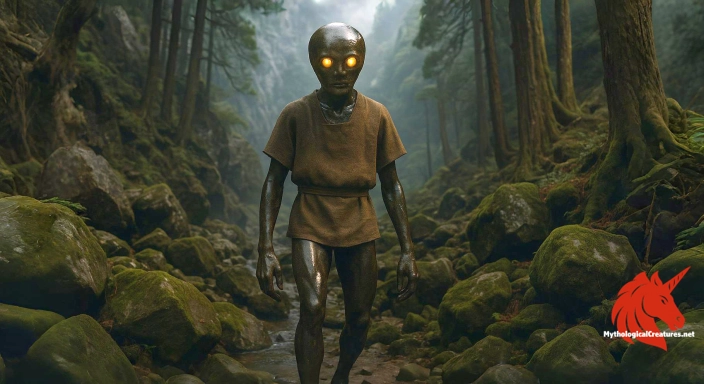
Dare to Meet the Abura-sumashi....
The Mythological Creatures Book Series
Yōkai, Greek, Norse, Egyptian & Chinese. Five illustrated field guides to the creatures the old stories either warned or told you about.
Curated by the Mythological Creatures Team
Series editor: Mythological Creatures Directory
Primary desk: Asian & Pacific Myth Cycles Desk
(rev. November 2025)