
Lycaon: Lycaon, a king of Arcadia in Greek mythology, is infamous for his impious act of serving his son Nyctimus as a meal to Zeus.

Lycaon
Lycaon - A cautionary tale of impiety and the origin of lycanthropy, as well as the founder of important cultural traditions in Arcadia.
the legend in five swipes.
the legend in five swipes.
Where does the story of Lycaon begin?
Lycaon stands as one of the most intriguing and controversial figures in Greek mythology, representing a fusion of barbarism and cultural innovation. His tale, rooted in the rugged landscape of Arcadia, recounts both his notorious transgressions and his unexpected role as a founder of civic life. Born into the lineage of Arcadian kings, his legacy is marked by an act of unspeakable cruelty that challenged the divine order. In his infamous deed, he dared to test the omniscience of Zeus by serving human flesh, a sacrilege that irrevocably altered his fate. This singular moment of hubris resulted in his transformation into a wolf—a metamorphosis that bears deep symbolic weight in myth. Yet, beyond the horror, certain traditions regard him as a culture hero who established sacred institutions and festivals. His contributions, such as founding the city of Lycosura and initiating the Lycaean Games, illustrate the dual nature of his myth. The narrative of Lycaon captures the tension between innate savagery and the civilising impulses of ancient society. His enduring story continues to serve as a powerful parable about the consequences of defying divine authority.
Lycaon: Manuscripts, Texts and Variants
Ancient texts and oral traditions provide a rich, albeit varied, account of Lycaon’s story, offering multiple layers of interpretation. Classical writers such as Pausanias and Hyginus have immortalised his tale by recounting both his gruesome act and his role in founding important cultural rites. Some versions of the myth emphasise the horror of his act—serving a meal crafted from his own son—while others underline his contributions to the establishment of societal customs. The narrative has been passed down through generations, each storyteller adapting details to resonate with local values. In certain accounts, his transformation into a wolf is depicted as a divine punishment, a visual metaphor for the unleashing of primal instincts. Alternate story variants pivot on his civic achievements, such as ushering in religious festivals and dedicating temples to major deities. These diverse portrayals reflect the fluid nature of myth, where moral lessons and cultural pride intermingle. The multiplicity of sources enriches our understanding, revealing that Lycaon’s myth was as much a cautionary tale as it was a celebration of early cultural endeavours. Each version contributes to a composite picture of a man whose legacy defies simple categorisation.
What was Lycaon believed to be capable of?
Visual representations of Lycaon often capture a striking duality that mirrors his complex nature. In his human form, depictions tend to show him as a robust and imposing figure, exuding the authority of Arcadian royalty. Artists have frequently rendered his face with harsh, intense features that hint at the latent savagery within him. There is an undercurrent of unease portrayed in the furrow of his brow and the steely gaze that seems to foresee his looming transformation. When envisioned as a wolf, his form becomes a powerful blend of ferocity and wild majesty, featuring a thick, coarse coat and eyes that burn with a primitive light. The animalistic aspect underscores the notion that beneath the veneer of civilisation lies a repressed, untamed force. Some artistic traditions even incorporate subtle humanistic traits into his lupine depiction, suggesting the persistence of his royal identity. Sculptures and ancient vase paintings frequently juxtapose his noble physique with grotesque transformations, reinforcing the moral weight of his myth. Throughout the ages, his portrayal has evolved, yet the visual motif of a man torn between humanity and beast remains a compelling constant.
What do different regions call Lycaon?
In Arcadia, the myth of Lycaon is interwoven with local identity, reflecting a blend of fear, reverence, and cultural pride. Regional storytellers often recount not only his atrocious act but also his role in founding the city of Lycosura, imbuing his legend with a sense of origin and continuity. Local traditions tend to highlight the civilising aspects of his story, celebrating the establishment of religious rituals and festivals that bore his name. In some parts of Greece, the darker aspects of his myth are muted, with emphasis placed on his contributions to early cultural and civic order. Meanwhile, other areas preserve a more visceral remnant of his savage deed, using his story as a warning against impiety and moral decay. Variations in the myth across regions illustrate how collective memory adapts to reinforce local values and social structures. In these diverse renditions, Lycaon is sometimes depicted as a tragic hero rather than a mere villain, embodying both the promise and peril of unrestrained power. The regional adaptations reveal a remarkable spectrum where the boundaries between civilising innovation and brutal transgression are constantly re-examined. Thus, Lycaon’s myth serves as a versatile symbol, reflecting the multifaceted cultural landscape of ancient Greece and beyond.
What figures resemble Lycaon?
Lycaon’s narrative resonates with themes found throughout various mythological traditions, positioning him alongside other figures of divine retribution and transformation. His horrific test of the gods bears similarities to the tale of Tantalus, where impious humans suffer eternal consequences for challenging divine order. The motif of turning a transgressor into an animal—a man transformed into a wolf—finds echoes in many cultures, underscoring universal concerns about the limits of human behavior. Such metamorphoses not only serve as a punishment but also symbolise the inherent potential for savagery within all humans. Cross-cultural comparisons also reveal parallels with legends that involve familial betrayal and the shattering of societal norms, further establishing a broad mythic pattern. In some European folklore traditions, the theme of lycanthropy similarly captures the tension between human rationality and animal instinct. The story of Lycaon, therefore, contributes to a larger narrative where acts of hubris are met with equally dramatic, supernatural responses. His myth invites reflection on the duality of man and the constant interplay between civilisation and natural primal forces. Through these comparative lenses, his tale emerges as not merely a local cautionary story but as part of a universal dialogue about the nature of humanity and the divine.
Lycaon: Then and Now
Over time, the figure of Lycaon has transcended his ancient origins to become an enduring symbol of both moral warning and cultural ingenuity. Early depictions in classical art and literature emphasised his monstrous qualities as a paradigm of divine punishment for human transgression. As scholarly perspectives have evolved, so too has the interpretation of his legacy, with modern narratives often exploring the psychological dimensions of his transformation. Contemporary retellings delve into the internal conflict between sophistication and primal savagery, reflecting broader human concerns about identity and morality. His connection to lycanthropy has left an indelible mark on popular culture, influencing portrayals of werewolves in literature, film, and beyond. Even today, Lycaon’s myth sparks creative reinterpretations, appearing in modern media as a complex character caught between rage and regret. The enduring appeal of his story lies in its capacity to convey timeless themes of accountability, retribution, and the dual nature of human existence. His contributions to cultural rites, such as the Lycaean Games, further cement his status as a foundational figure whose legacy continues to provoke thought and inspire festivals of cultural remembrance. In its layered complexity, the myth of Lycaon remains a testament to the enduring power of ancient stories to transcend time and offer insight into the human condition.
Interesting Fact
An enduring aspect of Lycaon’s myth is its connection to the origin of the term 'lycanthropy,' highlighting the deep-rooted human fascination with transformation and the dual nature of man.
Mythological Treasures
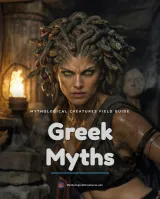
Greek Myths: A field guide to the monsters of ancient Greece
Every monster here earned its place in legend, and each gets a full page of artwork and the story behind it.
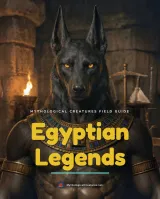
Egyptian Legends: A field guide to the gods and monsters of ancient Egypt
Guardians of the living and devourers of the dead, with the role each played in judgement.
Chinese Beasts: A field guide to the dragons and demon kings of Chinese myth
From river dragons to demon kings, with the legends that shaped five thousand years of storytelling.
the legend in five swipes.
Advertising opportunity
Showcase your mythology project
We offer limited sponsor placements for books, courses, games, and creators aligned with our audience.
View partnership optionsQuick Creature Info
Origin:
Features:
Associations:
Our Mythic Legendary Rating:

Habitat:
Physical Attributes:
Behavior:
Lore:
References
Discover Another Mythical Legend You May Not Have Heard Of?
Uncover the mysteries of ancient folklore and expand your knowledge of legendary beings from cultures around the world.
Dare to Meet the Morag....

The Mythological Creatures Book Series
Yōkai, Greek, Norse, Egyptian & Chinese. Five illustrated field guides to the creatures the old stories either warned or told you about.


Curated by the Mythological Creatures Team
Series editor: Mythological Creatures Directory
Primary desk: Hellenic & Ancient Mediterranean Desk
(rev. November 2025)