
Maia: Maia is a nymph in ancient Greek mythology, famed as one of the Pleiades and as the mother of Hermes.

Maia
Maia - Maia is revered as one of the Pleiades and as the mother of Hermes, establishing an essential link in the divine genealogy of the Olympian gods.
the legend in five swipes.
the legend in five swipes.
How did the legend of Maia begin?
Maia emerges as a quietly influential figure in the ancient Greek pantheon, renowned both for her celestial lineage and her intimate role in the divine family. Born among the illustrious Pleiades, she is often identified as the eldest daughter and the subtle force behind the nurturing of future greatness. Her origins, interlaced with the cosmic splendor of stars and the grounding essence of earthly nature, set her apart as a bridge between the heavens and the human realm. The earliest mentions of Maia in Greek tradition evoke a sense of mystery and delicate reticence, which has intrigued audiences for millennia. Her life is marked by a careful balance of seclusion and profound influence, notably as the mother of Hermes, whose cleverness and agility resonate across mythic narratives. Even as she maintains a low profile amidst titanic dramas, Maia represents the understated power of nature and fertility. Her quiet character invites reflection on the roles that seemingly minor figures play in shaping divine events. Over time, her story has been laden with rich symbolism relating to maternal care, secrecy, and the natural cycles of growth. The enduring allure of Maia lies in her ability to inspire awe without ostentation, and her myth continues to captivate those who seek depth and nuance in divine genealogy.
Maia: The Written Sources
The whispers of ancient texts form the bedrock of Maia’s myth, where fragments of Hesiodic lore and later mythographers gently illuminate her character. Various accounts, though sparse and sometimes ambiguous, consistently portray her as a pivotal yet modest figure in the intricate tapestry of divine relationships. Traditional literature recounts tales where the clandestine relationship between Zeus and Maia is recounted with a blend of elegance and enigma. Different story variants surface in the rich oral traditions that surrounded early Greek religion, each emphasising her reserved nature and the almost secretive circumstances of her life. In some narrations, her secluded existence within hidden natural sanctuaries is highlighted, adding an aura of mystique to her myth. Over the centuries, artistic and literary reinterpretations have expanded on these threads to craft a more layered portrait of her. The variability in her depiction across sources speaks to the evolving cultural engagement with her character. While concrete details may remain few, the cumulative cultural memory anchored in scattered verses and local lore has ensured her presence endures. Literary retellings, from antiquity through the Renaissance, have all contributed layers of interpretation that both honour and transform her original image.
What could Maia do?
Visual depictions of Maia suggest a form that is both ethereal and intimately connected to the natural world. She is often imagined as a slender, graceful maiden whose visage balances the subtle radiance of starlight with the gentleness of earth’s bloom. Classical artistic renditions, though few and far between, hint at a serene countenance adorned with soft, flowing hair that seems almost to glow with an inner light. Her eyes are sometimes described as reflecting the deep mystery of the night sky, sparkling with a quiet wisdom that betrays her celestial nature. Although ancient texts provide little explicit physical detail, later interpretations have imbued her with an understated beauty marked by modest adornments and flowing garments. Her appearance is rendered with a simplicity that belies a deeper, symbolic connection to both the cosmos and the fertile lands of Greece. Such portrayals often combine a delicate human frailty with glimpses of otherworldly grace, enhancing her enigmatic character. Over successive eras, visual representations continue to shift, yet consistently capture a likeness that is both humble and luminously divine.
How far did the story of Maia spread?
The portrayal of Maia varies significantly across regional traditions, each reflecting local cultural nuances while preserving her central mythic attributes. In mainland Greece, she is often celebrated as a reclusive guardian of pastoral landscapes, a spirit who finds solace in secluded groves and quiet mountain retreats. These local variants accentuate her role as a nurturer of the land and a discreet protector of the cycle of growth and renewal. In contrast, certain island traditions intertwine her celestial identity with broader astronomical lore, honouring her as one of the shining Pleiades that grace the night sky. Each region adapts her myth to resonate with local environmental features, whether emphasising the bounty of agrarian life or the mystical allure of a starlit cosmos. Such adaptations frequently blend her identity as a maternal figure with the seasonal rhythms and natural phenomena specific to the area. Festivals and local cult practices have sometimes incorporated Maia’s characteristics, reinforcing her connection to both nature and the heavens. The regional diversity in her iconography underscores the flexibility of myth as it transcends geographical boundaries while remaining rooted in the shared human experience of nature’s wonder.
Maia: Cross-Cultural Comparisons
Across various mythological traditions, Maia’s character resonates with figures who embody the quiet yet potent forces of nature and fertility. Her role as a nurturing mother who operates on the periphery of major divine dramas finds parallels in other cultural contexts, such as the Roman aspect of Maia who presided over the rejuvenative month of May. This cross-cultural similarity underscores a universal archetype of the earth-bound goddess whose subtle influence fosters growth and transformation. Much like the nymphs and minor deities of different pantheons, her understated presence is noted as essential in balancing the cosmic order. Comparative mythology reveals that many ancient societies venerated similar figures who symbolised the transition between the fertility of nature and the rigour of divine warfare. Such analogies are particularly evident in traditions where lesser-known deities serve as conduits between the mortal and celestial realms. The common thread of reclusive maternal power and the understated attributes of nurturing has made Maia a figure of enduring interest in broader mythological studies. By comparing her to analogous entities across cultures, one can discern a shared narrative of hidden strength and grace that transcends specific mythic traditions.
Maia: How the Legend Lives On
Through the passage of time, Maia has evolved from a modest figure within fragmented ancient texts to a symbol rich in artistic and cultural resonance. Her mythic narrative, anchored in the mystery of her secret union with Zeus and her profound role as the mother of Hermes, has inspired countless reinterpretations across epochs. Modern scholars and creative artists have embraced her as an emblem of quiet endurance and the hidden reservoirs of power that lie in understated origins. Contemporary adaptations often highlight her dual connection to the stars and the earth, symbolising both the expansive universe and the intimate dynamics of familial lineage. Her evolving depiction attests to the enduring appeal of myth, where even the most subtle divine figures can inspire wide-ranging artistic expression. In literature, visual arts, and even popular media, Maia has been portrayed as a muse for those seeking to explore themes of rebirth, secrecy, and perennial beauty. The metamorphosis of her image over the centuries reveals the dynamic nature of myth-making, where reinterpretation allows ancient narratives to retain relevance. Ultimately, Maia’s legacy is a testament to the timeless allure of myth, bridging the sacred past with modern cultural sensibilities while continuing to evoke wonder and contemplation.
Interesting Fact
An intriguing aspect of Maia’s myth is her dual association with both a secluded earthly haven and the expansive celestial realm, reflecting the ancient Greek vision of an interconnected universe.
Mythological Treasures
Greek Myths: A field guide to the monsters of ancient Greece
Every monster here earned its place in legend, and each gets a full page of artwork and the story behind it.
Norse Sagas: A field guide to the beasts of the Viking world
Drawn from the saga accounts themselves, with the powers, weaknesses and doom of each being set out.
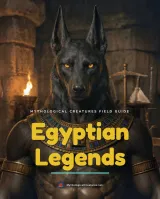
Egyptian Legends: A field guide to the gods and monsters of ancient Egypt
Guardians of the living and devourers of the dead, with the role each played in judgement.
the legend in five swipes.
For indie creators
Give your myth project a permanent home
Indie authors, artists, small studios, and makers can secure an annual, non-intrusive sponsor slot that meets readers where they explore.
Obtain more informationQuick Creature Info
Origin:
Associations:
Our Mythic Legendary Rating:

Also Sometimes Known As:
Habitat:
Supernatural Powers:
Physical Attributes:
Abilities:
Behavior:
Lore:
References
Discover Another Mythical Legend You May Not Have Heard Of?
Uncover the mysteries of ancient folklore and expand your knowledge of legendary beings from cultures around the world.
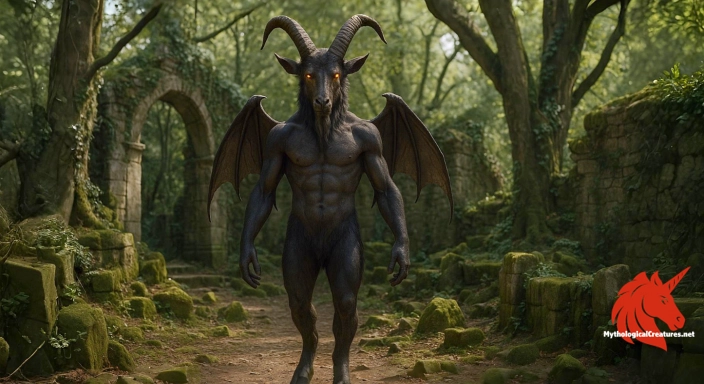
Dare to Meet the Baphomet....
The Mythological Creatures Book Series
Yokai, Greek, Norse, Egyptian & Chinese. Five illustrated field guides to the creatures the old stories either warned or told you about.
Curated by the Mythological Creatures Team
Series editor: Mythological Creatures Directory
Primary desk: Hellenic & Ancient Mediterranean Desk
(rev. November 2025)