
Melchom: Melchom is a lesser demon originally worshipped as the unholy king of the Ammonites.
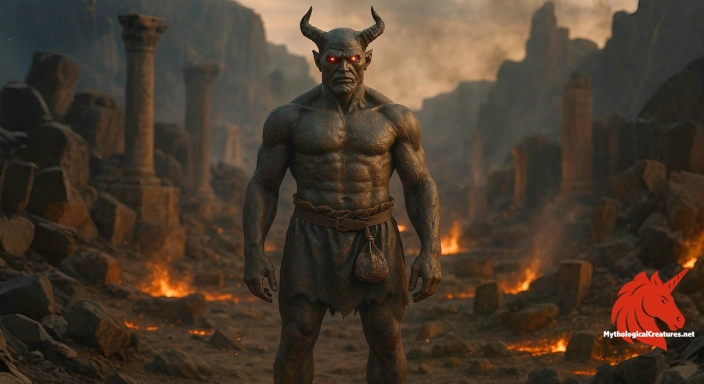
Melchom
Melchom - Represents the demotion of a pagan deity into a demon, symbolising the clash between idolatry and monotheistic authority.
Origins & First Encounters
Melchom is an enigmatic figure whose origins lie in the ancient religious practices of the Near East, emerging as both a revered idol and a later demon. His name, echoing the Hebrew word for king, hints at a once-sacred authority now twisted into an unearthly reign. He was initially venerated by the Ammonites, whose cultural tapestry interwove regal worship and the fear of supernatural retribution. The early attestations of his lore, found in texts such as the Dictionnaire Infernal, reflect a complex interplay between divine majesty and infernal degradation. As societies shifted towards monotheistic values, the unholy king of the Ammonites gradually became recast as a malevolent spirit. His story is marked by the dramatic overthrow of his idolic throne after the arrival of monotheistic forces, symbolising a broader transition in religious power. The evolution of Melchom from a god-like figure to a demon encapsulates the dynamic tensions between past pagan traditions and emerging theological doctrines. Ultimately, his legend offers a fascinating insight into how ancient customs could be transformed into potent symbols of doom and moral decay.
Source Texts & Tale Variants
The textual roots of Melchom’s narrative are primarily found in the pages of the Dictionnaire Infernal, where his dual identity is vividly explored. This source lays out the framework of his former status as an idol of the Ammonites, as well as his later incarnation as a lesser demon. Complementing this, the Jamieson-Fausset-Brown Bible Commentary provides a perspective that intertwines biblical history with demonological reinterpretation. Various ancient manuscripts and commentaries have referred to him under different names, including Milcom, Moloch, and Melech, highlighting his far-reaching impact across cultures. Through different story variants, his identity morphs from a potent symbol of earthly kingship to a subordinate force in the hierarchy of hell. The narratives capture the moment of his downfall, where his crown is metaphorically taken, echoing the shift from divine reverence to infernal servitude. Multiple medieval and Renaissance texts add layers to his myth, offering alternative views that enrich his character’s complexity. In each account, the consistent theme of his descent underscores the cultural and theological conflicts of his era. These diverse sources collectively paint Melchom as a figure caught between worlds, embodying both lost grandeur and emergent corruption. The resultant mosaic of interpretations continues to intrigue scholars and enthusiasts alike.
Form & Powers
Artistic depictions of Melchom often reveal a striking blend of regal elegance and demonic distortion. He is frequently portrayed wearing a tarnished crown that symbolises his fallen status and former divine glory. His eyes are depicted as burning with an infernal light, lending an intensity that reflects both his past majesty and current malevolence. The visage of Melchom is rendered with smooth, aristocratic features that are simultaneously marred by subtle, otherworldly deformities such as curved horns or an eerie, luminescent aura. In many illustrations, he holds symbolic objects—a sceptre or a purse—that serve as visual metaphors for his authority over both celestial wealth and the infernal bureaucracy. His stature is typically shown as commanding and imposing, straddling the realm of the corporeal and the spectral. Despite the lack of a single canonical image, the recurring theme is one of a being who once emanated divine power now repurposed into a harbinger of moral decay. This composite appearance, where regal attributes clash with grotesque features, captures the internal discord of a figure who has been deposed and repurposed. Every detail of his portrayal is charged with symbolism, from the worn edges of his crown to the haunting gaze that seems to pierce the soul, encapsulating the duality of his existence. Such descriptions invite viewers to contemplate the transient nature of power and the inevitable corruption that accompanies a fall from grace.
Regional Faces
Melchom’s depiction varies significantly across different cultural and regional traditions, reflecting the diverse spiritual landscapes of the ancient world. In the Levant, he is primarily remembered as the potent Ammonite deity whose rulership was intertwined with local notions of kingship and sacrificial rites. Here, his identity is often linked with elemental fire and the harsh realities of divine retribution, offering a stark contrast to the more refined divine images of neighbouring cultures. Moving into later Christian interpretative frameworks, his image is transformed into that of a subordinate demon, a stark repudiation of his earlier, venerated status. Mediterranean sources, influenced by a fusion of pagan and emerging monotheistic beliefs, sometimes present him as a hybrid figure whose traits merge both celestial and infernal qualities. In more eastern traditions, his attributes are occasionally absorbed into the lore of other deities, emphasizing themes of lost authority and the inevitable decay of once-sacred symbols. These regional adaptations reflect local socio-political dynamics and the evolving character of religious thought over time. The variance in his portrayal is a testament to the fluid nature of myth, whereby a single figure can embody multiple and sometimes contradictory cultural ideals. Through these regional lenses, Melchom serves as a mirror to the shifting fortunes of the communities that once worshipped him. Ultimately, the intensity of his regional portrayals underscores the profound impact of geographical and cultural contexts on myth-making.
Cultural Parallels
When viewed through a comparative lens, Melchom shares intriguing parallels with several mythological figures whose roles have transitioned over time. Much like Moloch and Milcom, other deities of ancient origin experienced a dramatic recharacterisation, shifting from objects of veneration to embodiments of demonic traits. The narrative of a divine being cast down to a realm of darkness is a recurring motif in many ancient mythologies, where the fall from grace symbolises both a loss of power and an inherent warning against hubris. Similar transformations can be found in various Near Eastern and Mediterranean traditions, where exalted figures are reimagined as cautionary demons within the cosmology of later religious contexts. This shared evolution underscores the broader tendency to demonise former gods in the wake of emerging monotheistic ideologies. In many respects, Melchom’s evolution mirrors that of other legendary figures who have become ensnared in the dichotomy between celestial supremacy and infernal inevitability. His iconography, complete with regal regalia now tarnished by sinister elements, is reminiscent of other hybrid figures whose images straddle the divide between divine and diabolic. Moreover, cross-cultural comparisons reveal that the motifs of dethronement and moral corruption are not unique to his story but are part of a universal mythological language. These analogies invite us to explore common human concerns about the ephemeral nature of power and the dangers of spiritual pride. In this light, Melchom emerges as a powerful archetype, encapsulating the timeless narrative of lost divinity and the persistent influence of myth.
Legacy & Modern Evolution
Over the centuries, the portrayal of Melchom has undergone a profound metamorphosis, evolving from an object of venerable worship to a symbol of moral and spiritual decay. Once honoured as the unholy king of the Ammonites, his fall from divine favour was integrated into narratives that served to validate emerging monotheistic ideologies. The moment when his crown was taken—a metaphorical overthrow by a superior, theocratic power—became a foundation myth for his subsequent life as a demon. In medieval and Renaissance iconography, he came to embody the dangers of unchecked authority and the inevitable corruption that follows hubris. Artistic and literary depictions throughout history have reinterpreted his image with gothic flourishes and dark allegories, often portraying him as a bureaucrat within the infernal hierarchy. Modern occult literature and esoteric traditions have further elaborated his role as a keeper of dark funds, reinforcing his reputation as the paymaster of hellish minions. This evolution reflects not only shifts in theological thought but also changing attitudes towards power and morality over the ages. Contemporary scholarship and artistic expression continue to channel his legacy, transforming him into a potent emblem of ancient cautionary tales. Melchom’s enduring legacy is a reminder of the complex interplay between cultural memory and myth, capturing the perpetual tensions between divine authority and moral transgression. His myth remains a dynamic canvas upon which modern interpretations can project both historical remorse and the timeless allure of forbidden power. Ultimately, his legacy endures as a symbol of the dangers inherent in the misappropriation of power and the timeless nature of myth-making.
Interesting Fact
Melchom's epithet 'he who carries the purse' hints at a unique role in the infernal hierarchy, combining financial acumen with demonic authority.
Sponsor this space
Tasteful, fixed-fee placements for myth projects
No bidding wars or flashing banners. We offer simple placements for a small set of creators and brands aligned with our readers.
Request further detailsQuick Creature Info
Origin:
Our Mythic Legendary Rating:

Also Sometimes Known As:
Habitat:
Supernatural Powers:
Abilities:
Behavior:
Lore:
Related Creatures, Tales or Lore
- MMoloch
- MMilcom
- MMelech
References
Discover Another Mythical Legend You May Not Have Heard Of?
Uncover the mysteries of ancient folklore and expand your knowledge of legendary beings from cultures around the world.
Dare to Meet the Bodach....

Curated by the Mythological Creatures Team
Series editor: Mythological Creatures Directory
Primary desk: Hellenic & Ancient Mediterranean Desk
(rev. November 2025)