
Meretseger: Meretseger is an ancient Egyptian cobra goddess known for her role as the fierce guardian of the Theban Necropolis.

Meretseger
Meretseger - Embodies divine protection over the tombs of the pharaohs and symbolizes retributive justice against desecration.
Origins & First Encounters
Meretseger emerges as a vivid embodiment of the protective spirit that graced ancient Theban society. Associated with the necropolis at Thebes during the New Kingdom era, she holds a revered position among Egyptian deities. Her role as a cobra goddess defined her as both a symbol of divine wrath and compassionate guardianship over the departed. Emerging in an era marked by grand funerary practices and monumental tomb construction, her presence underscored the sacred interplay between life and death. Ancient attestations reveal that her dual capacity was intended to protect the resting places of royalty and punishing those who dared to profane these sacred spaces. She was celebrated in both state rituals and popular narratives, which depicted her as a formidable yet essential guardian of the necropolis. The rich cultural milieu of New Kingdom Egypt, focused on the journey to the afterlife, provided fertile ground for her cult to flourish. Her enduring image in temple reliefs and tomb inscriptions served to remind worshippers of the invisible but ever-present force guarding the threshold between mortality and eternity. As a sentinel of the Valley of the Kings, she was central to rituals that sought to secure the safe passage of souls to the beyond. Her myth, interwoven with themes of justice, retribution, and renewal, continues to captivate modern enthusiasts of ancient Egyptian lore.
Source Texts & Tale Variants
Ancient Egyptian inscriptions, temple reliefs, and tomb paintings provide the foundational sources for understanding Meretseger’s myth. Ceremonial texts carved into the walls of Theban tombs repeatedly echo her association with protection and divine retribution. Sacred papyri from the New Kingdom include ritual instructions and offerings that honour her formidable presence. Hieroglyphic records discovered in the necropolis reveal details of her role as a guardian against desecration. Localised oral traditions further enriched her narrative, painting her as a vigilant force against those who dared disrupt the sacred repose of the dead. Variations in these sources illustrate how official temple records and popular cult practices both contributed to the evolving legend of Meretseger. The surviving inscriptions often underline her dual capacity to both nurture the passage of souls and to mete out punishment. Archaeological finds, including statues and amulets, offer visual corroboration of her myth, reinforcing the textual evidence. Some texts even hint at miraculous interventions where her presence altered the fates of those who tried to violate tomb sanctity. This layered tapestry of scriptural and pictorial evidence continues to provide scholars with insights into her multi-dimensional character.
Form & Powers
Artistic depictions consistently present Meretseger with the distinctive features of a cobra mixed with human grace. Her form is most notably marked by a regal cobra hood, elegantly rendered with intricate hieroglyphic motifs and symbols that denote her divine status. Sculptures and reliefs show a sinuous body that seamlessly blends human contours with serpentine elements, reflecting both beauty and lethal power. The detailed carving of her scales, often highlighted in vibrant hues of gold and ochre, suggests meticulous craftsmanship intended to capture her mystic allure. Her eyes, rendered with an intense and almost luminescent quality, evoke both wisdom and an indomitable spirit. In some portrayals, she is depicted as entirely anthropomorphic, while other representations emphasise her serpentine lower half coiled in a protective manner. Elaborate jewellery and ceremonial regalia further accentuate her elevated role within the pantheon of deities. The interplay of delicate features with the raw, wild curves of a cobra symbolizes her dual nature of nurturance and retribution. Her poised stance in decrepit tombs and temple reliefs speaks to her ever-alert vigilance over the realms of the dead. Such varied physical portrayals have ensured that her image remains both enigmatic and instantly recognisable, captivating the imagination of those who behold her form.
Regional Faces
Regional interpretations of Meretseger reveal a diverse array of local adaptations rooted in the spiritual landscape of Thebes. In the heart of the Theban Necropolis, she was portrayed as a vigilant guardian whose image graced both formal temple carvings and modest local shrines. In areas adjacent to Thebes, her attributes were sometimes merged with those of other local serpent deities, creating a syncretic figure that embodied a broader spectrum of protective qualities. Certain communities emphasised her punitive aspects, venerating her for protecting sacred burial sites from robbers and defilers. Artistic depictions in rural regions often accentuated her raw and untamed serpentine features, reflecting a more elemental interpretation of her power. In contrast, the urban cult centres of Thebes adopted a more refined iconography that aligned with the state-sponsored religious doctrines. These regional variations highlight how local communities adapted her myth to resonate with specific social and moral values. Despite these differences, core themes of protection, divine justice, and renewal consistently characterise her depiction across Egypt. The adaptability of her image is a testament to the fluidity of Egyptian religious practice, where local tradition and official ideology intermingled. Each regional portrayal contributes to the rich mosaic of her myth, making her a universal figure of guardianship within the ancient Egyptian worldview.
Cultural Parallels
Meretseger’s myth finds intriguing parallels across various cultures where serpentine beings serve as guardians and agents of transformation. Her role as both a protector and enforcer of divine order resonates with other Egyptian deities, notably Wadjet, who similarly embodies the protective qualities of a sacred cobra. Beyond Egypt, South Asian traditions honour the mystical naga, serpentine entities revered for their dual capacity to nurture and to exact retribution. In the ancient Near East, mythic snakes often symbolised the delicate balance between creation and destruction, a theme also intrinsic to Meretseger’s character. These cross-cultural echoes underscore a universal archetype: the serpent as a conduit between the mortal and divine realms, embodying both danger and deliverance. Comparative narratives reveal that while the specific rituals and iconographies may differ, the symbolism of the snake as a guardian of sacred spaces is remarkably consistent. Modern artistic and literary interpretations continue to draw on such imagery, highlighting the enduring appeal of the serpentine guardian. This intertextual dialogue between cultures enriches our understanding of Meretseger as more than a local deity, but as a representative of universal concepts of protection and transformation. The recurring motif of the snake that sheds its skin to be reborn parallels her myth of preserving and renewing the sanctity of the necropolis. These cultural comparisons contribute to a broader appreciation of how ancient peoples across regions responded to the mysteries of life and death.
Legacy & Modern Evolution
Throughout millennia, the image of Meretseger has evolved from an ancient necropolis guardian into a symbol of enduring myth and cultural resilience. Her legacy was once captured solely in the monumental tombs and sacred inscriptions of New Kingdom Egypt, but now her story inspires a wide range of modern artistic expressions. Contemporary portrayals often reimagine her as a figure of feminine strength and the eternal cycle that bridges life and death. Films, novels, and visual arts frequently invoke her iconic cobra form, using her as a metaphor for protection and rebirth. Modern scholarly research has revitalised her myth, integrating new archaeological insights with enduring traditional motifs. Her image, reinterpreted through modern media, continues to spark discussions on the nature of divine guardianship and the interplay between myth and identity. Exhibitions and cultural festivals celebrate her as an emblem of Egypt’s rich religious heritage and as a connection to the mysteries of the ancient world. Public interest in her story is sustained by ongoing archaeological discoveries that shed fresh light on her cult practices. Through each modern reinterpretation, Meretseger acts as a bridge linking ancient spiritual traditions with contemporary explorations of identity and mortality. The enduring allure of her myth stands as a testament to the perpetual power of ancient narratives, inspiring both reverence and creative reinterpretation. Her legacy proves that the myths of old can continue to influence and shape modern understandings of protection, rejuvenation, and the enigmatic forces of the divine. In this way, Meretseger remains a vibrant and integral figure in the ongoing dialogue between the past and the present.
Interesting Fact
Meretseger is uniquely associated with a specific geographic region—the Theban Necropolis—underscoring the localized nature of ancient Egyptian religious practices, where deities often embodied the spirit of a particular place.
Support the directory
Promote your myth project and fund more research
Sponsor placements help keep this directory growing and free to use while giving your work a focused, relevant audience.
Learn how sponsorship worksQuick Creature Info
Origin:
Features:
Associations:
Our Mythic Legendary Rating:

Also Sometimes Known As:
Habitat:
Supernatural Powers:
Physical Attributes:
Abilities:
Behavior:
Lore:
Related Creatures, Tales or Lore
- WWadjet
- NNehebkau
- RRenenutet
References
Discover Another Mythical Legend You May Not Have Heard Of?
Uncover the mysteries of ancient folklore and expand your knowledge of legendary beings from cultures around the world.
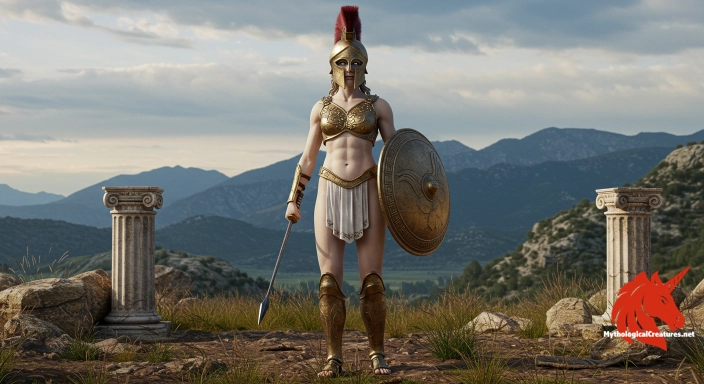
Dare to Meet the Athena....
Curated by the Mythological Creatures Team
Series editor: Mythological Creatures Directory
Primary desk: Hellenic & Ancient Mediterranean Desk
(rev. November 2025)