
Nehebkau: Nehebkau is the primordial snake god of ancient Egyptian mythology.
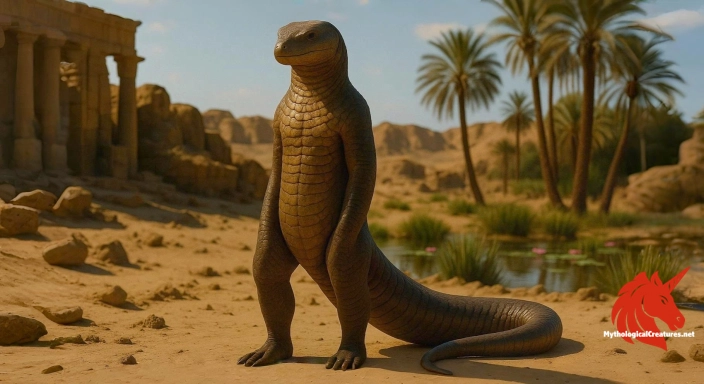
Nehebkau
Nehebkau - Nehebkau embodies the transformation from malevolence to benevolence, safeguarding the life-force (ka) of the deceased and representing the balance between death and the cosmic order.
Origins & First Encounters
Nehebkau emerges as a central figure in ancient Egyptian mythology, embodying a complex interplay between primordial chaos and protective benevolence. His origins are deeply rooted in the early religious landscape of Egypt where he was originally regarded as a dangerous, malevolent spirit. Over time, his character evolved into a guardian of the afterlife, a transition that underscores the dual nature of many ancient deities. Early depictions etched into temple walls and inscribed on funerary papyri capture his formidable presence and hint at his role as an assessor in the moral order of death. His involvement in judging the dead and providing the vital ka for souls reflects the intricate spiritual beliefs of ancient Egyptian society. The integration of Nehebkau into rituals and festivals, particularly during the Middle and New Kingdoms, highlights the fluidity of divine roles in response to changing theological paradigms. His association with both the destructive and the protective aspects of the cosmos illustrates the Egyptian penchant for duality and balance. This enduring mythological figure continues to be a symbol of the complex journey between danger and salvation in the afterlife.
Source Texts & Tale Variants
Ancient records, including temple inscriptions and funerary texts, offer valuable insights into the myth of Nehebkau. Stories featuring him can be found in a variety of papyri and tomb reliefs where his presence serves as a mediator between the mortal realm and the divine. Diverse spell texts and incantations reveal variations in his character that were adapted to suit different ritual purposes and regional practices. Some accounts depict him as a terrifying force to be appeased, while others celebrate him as an essential protector during the journey to the underworld. Literature such as the Book of the Dead lends him a place among the divine assessors who judge the deceased, intertwining his destiny with that of other major deities. His narrative is interspersed with elements of folklore that imbue his story with both mysticism and practical ritual function. Over successive generations, scribes and priests refined his image, ensuring that his myth adapted to the evolving religious and cultural needs of the society. These primary sources not only reflect the layered complexities of his character but also reveal how his myth was continuously reshaped over time.
Form & Powers
Artistic portrayals of Nehebkau consistently highlight his serpentine form, which serves as a visual metaphor for transformation and eternity. Ancient reliefs frequently depict him as a sinuous, winding snake, often embellished with intricate scale patterns and subtle iconographic details that imply divine power. In some artistic renditions, hints of human attributes appear, suggesting an ambiguous blend of earthly and supernatural qualities. His eyes, often shown as luminous and all-seeing, further evoke the notion of a guardian endowed with mystical wisdom. Variations in his size and form exist across different periods, with some depictions presenting him as a modest serpent while others portray him as an imposing figure capable of instilling awe. The fluid lines and dynamic curves of his body in artistic media symbolise both the danger inherent in his early depictions and the protective nature he later acquired. Occasional elements such as ornamental headdresses or symbols associated with the sun god Ra enhance his depiction, underlining his multifaceted nature. Together, these physical descriptions capture a deity whose evolving image bridges the realms of fear and protection, transcending simple categorisation.
Regional Faces
The portrayal of Nehebkau exhibits notable regional variations that underscore the diversity of religious practice across ancient Egypt. In Upper Egypt, his image was often interwoven with local deities and accentuated in funerary rites, which underscored the region’s emphasis on the mysteries of the afterlife. Communities in Lower Egypt, on the other hand, celebrated his more benevolent aspects, often linking him with the life-giving power of the sun. Localised festivals and temple rituals frequently adapted his myth to reflect the unique cultural and spiritual priorities of each region. Artistic styles and symbolic motifs varied from one locale to another, resulting in subtle differences in the way he was depicted and revered. In some regions, inscriptions specifically highlight his protective role, while in others his earlier, more intimidating features are more pronounced. These regional adaptations reveal how Nehebkau's identity was both flexible and deeply resonant, allowing him to be integrated into a variety of local religious frameworks. Overall, the regional variations in his myth underscore the rich tapestry of Egyptian belief systems and the ability of a single deity to embody multiple facets of divinity.
Cultural Parallels
Nehebkau’s mythological narrative offers intriguing parallels with serpent deities and transformative figures found in various cultural traditions around the world. Much like other snake gods who oscillate between roles of destruction and protection, his character embodies the universal motif of duality seen in myths from the Near East and Mesoamerica. For instance, his journey from a malign force to a benevolent guardian resonates with tales of deities who undergo profound transformations to assume protective roles in the afterlife. Similar themes are found in the myths of figures like Quetzalcoatl and even in Greek traditions where serpentine beings are both feared and revered. This juxtaposition of dangerous and healing powers in serpent figures underscores a broader cultural recognition of the snake as a symbol of cyclical renewal. Comparative mythology reveals that many cultures have ascribed similar qualities to snakes, using them as mediators of life, death, and rebirth. His evolution mirrors a common mythological trend in which what was once considered evil is reinterpreted as necessary for restoring balance and order. These cross-cultural comparisons not only enrich our understanding of Nehebkau’s role within the Egyptian pantheon but also highlight the universal nature of transformational symbolism in myth.
Legacy & Modern Evolution
Over the centuries, the depiction of Nehebkau has undergone significant transformation, mirroring the shifts in religious and cultural thought within ancient Egypt. Initially feared as a dangerous snake spirit, he was gradually reimagined as a powerful guardian who assisted in the safe passage of souls during the journey to the afterlife. This evolution reflects a broader trend in Egyptian theology where deities often transcended simple moral categories to embody more complex existential truths. The integration of his myth into the rituals of the Middle and New Kingdoms cemented his role as both a reviewer of souls and a protector against malevolent forces. In modern times, scholars and enthusiasts have reinterpreted his character, often depicting him as a symbol of transformation, balance, and the interconnection between life and death. His image appears in various contemporary media, including literature, art, and even film, where the mystique of ancient Egypt continues to inspire fascination. The modern legacy of Nehebkau demonstrates not only the enduring allure of ancient mythological symbols but also the capacity of age-old narratives to adapt and remain relevant. His story, which bridges the gap between fear and protection, continues to capture the imaginations of both academic circles and popular culture, ensuring that his enigmatic presence lives on.
Interesting Fact
An intriguing aspect of Nehebkau is his dramatic transformation from a menacing spirit to a revered guardian, reflecting the dynamic nature of myth-making in ancient Egypt.
Advertising opportunity
Showcase your mythology project
We offer limited sponsor placements for books, courses, games, and creators aligned with our audience.
View partnership optionsQuick Creature Info
Origin:
Features:
Associations:
Our Mythic Legendary Rating:

Also Sometimes Known As:
Habitat:
Supernatural Powers:
Physical Attributes:
Abilities:
Behavior:
Lore:
Related Creatures, Tales or Lore
- AApep
- QQuetzalcoatl
- JJörmungandr
References
Discover Another Mythical Legend You May Not Have Heard Of?
Uncover the mysteries of ancient folklore and expand your knowledge of legendary beings from cultures around the world.
Dare to Meet the Charun....
Curated by the Mythological Creatures Team
Series editor: Mythological Creatures Directory
Primary desk: Hellenic & Ancient Mediterranean Desk
(rev. November 2025)