
Mictlanpachecatl: Mictlanpachecatl is the Aztec god of the North wind.
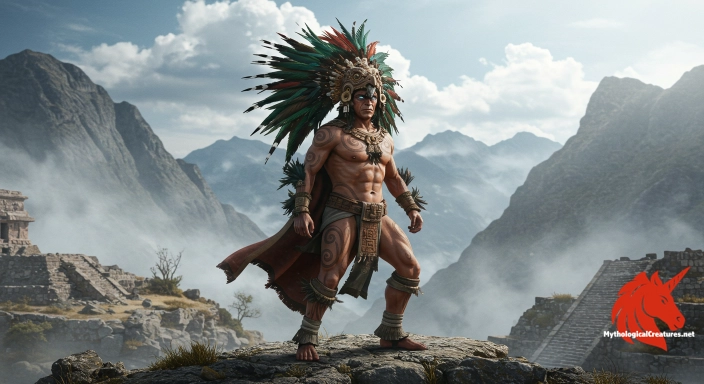
Mictlanpachecatl
Mictlanpachecatl - Represents the north wind and its essential role in Aztec cosmology.
Origins & First Encounters
Mictlanpachecatl is venerated as the north wind deity within the rich pantheon of Aztec mythology. Emerging from a tradition where the forces of nature and the spiritual world intertwined, he embodies the mystique of the chill northern breeze that carries the secrets of life and death. His origins can be traced back to ancient codices in which the cardinal directions were each presided over by a divine spirit, highlighting the importance of cosmic balance. Bearing a name that subtly alludes to the underworld of Mictlan, his identity is a bridge between the earthly realm and the enigmatic domain of the dead. He is frequently associated with the seasonal transitions that invoke both renewal and decay, mirroring the unpredictable temperament of nature. The deity’s presence in ritual ceremonies underscored the Aztec understanding of natural forces as both nurturing and potentially devastating. In myth, his power was reputed to be influential during times of environmental and spiritual change, reinforcing the link between the natural and the supernatural. His narrative is interwoven with that of his siblings, each representing winds from different cardinal points, which further emphasises the unity of the natural world. The enduring legacy of Mictlanpachecatl speaks to the sophisticated cosmological views of the Aztec civilisation. His myth continues to inspire interpretations that reflect the timeless interplay of creation and destruction within the elements.
Source Texts & Tale Variants
Primary accounts of Mictlanpachecatl can be found within several indigenous codices and post-conquest manuscripts that capture the essence of Aztec cosmology. Ancient documents such as the Codex Borbonicus and visual illustrations in the Florentine Codex offer subtle allusions to his character, despite providing only fragmented narrative detail. Oral traditions have preserved a range of story variants in which his persona is expanded to include roles as a messenger between the living and the dead. Some accounts describe him as an essential intermediary in rituals aimed at invoking the benevolent aspects of the north wind. Although written sources are limited in scope, the iconographic evidence found in temple murals and codices provides rich visual cues to his divine attributes. Spanish chroniclers, whilst attempting to understand the Aztec world, noted his existence alongside other wind deities, even if their descriptions were sometimes conflated. Variations in narrative detail across regions suggest that local storytellers adapted his myth to fit their cultural and environmental context. The surviving codices, though not exhaustive, offer a window into the revered status of the wind deities in the Aztec spiritual system. Over time, these diverse sources have contributed to a composite understanding of his role within the natural order. In this way, his myth, though partially obscured by the passage of time, continues to be a subject of scholarly and cultural interest.
Form & Powers
Artistic depictions of Mictlanpachecatl offer a glimpse into the visual language of Aztec spirituality, capturing an aura of ethereal dynamism that mirrors the shifting nature of the north wind. He is often portrayed with fluid, sweeping lines that evoke the sense of motion inherent in a powerful gust. Some illustrations imbue him with a spectral quality, featuring a pallid complexion and features that seem both human and otherworldly. Elaborate garments appear in his depictions, flowing in patterns that suggest swirling mists and the transient forms of the wind. His attire frequently includes intricate headdresses with feathered embellishments, symbolising the freedom and force of the aerial domain. Elements of skeletal or underworld motifs are sometimes interwoven into his visual representation, reinforcing his connection with Mictlan, the land of the dead. The combination of translucent, dynamic forms and rich, symbolic ornamentation creates an impression of a deity possessed of both gentleness and formidable power. Variations in his portrayal across different codices hint at an adaptable iconography that allowed artists to reflect the variable intensity of the north wind. His eyes and facial features are rendered with a thoughtful intensity that suggests both wisdom and the chill of a northern night. Overall, these depictions merge the tangible and the metaphysical, inviting contemplation of the mysterious forces that shape the natural world.
Regional Faces
Across Mesoamerica, the character of Mictlanpachecatl has been subject to intriguing regional reinterpretations that reflect local environmental and cultural influences. In the heartland of central Mexico, he is firmly established as the personification of the north wind, his attributes closely linked to the harsh and foreboding aspects of winter. Local artisans and storytellers have adapted his imagery to suit unique geographical features, sometimes blending his identity with local spirits associated with protection and transformation. In northern settlements, where climatic rigour is a tangible memory, his representation is often further imbued with qualities of resilience against harsh natural forces. Communities have also interwoven his myth with regional agricultural rites, thereby accentuating his role in the cycles of sowing and reaping. Artistic renditions in these areas might employ distinctive colours and stylistic motifs that diverge from canonical Aztec depictions yet retain the central essence of the north wind. Regional festivals occasionally feature ceremonial re-enactments and symbolic iconography that celebrate his influence over life and death. Such local adaptations underscore the flexibility of Aztec deities, demonstrating how core mythological themes can be reshaped by different cultural contexts. Despite variations, the fundamental character of the north wind remains constant—a dynamic force that is both capricious and vital. This interplay between local tradition and broader Aztec cosmology enriches the monumentality of his myth.
Cultural Parallels
Comparative mythology reveals intriguing parallels between Mictlanpachecatl and wind deities from diverse cultural traditions, highlighting universal themes of transformation and elemental power. Unlike the Greek deity Aeolus, who governs winds in a general sense, Mictlanpachecatl is singularly identified with the north, underscoring the specificity of directional forces in Aztec thought. His embodiment of both nurturing breezes and destructive gales finds resonance in the rugged mythology of Norse culture, where the north wind is similarly associated with harshness and the approach of winter. East Asian traditions also celebrate the wind as a transformative energy, drawing subtle comparisons with his dualistic nature in maintaining life and heralding decay. The blend of life-affirming and life-taking attributes in his character aligns with broader narratives found across indigenous mythologies. Just as many cultures have revered wind as a mediator between the physical and the divine, Mictlanpachecatl stands as a unique personification of this elemental bridge. His myth invites comparisons with other deities who command respect for the unpredictable forces of nature. Such cross-cultural analysis deepens the understanding of how human societies have historically explained and revered the power of the wind. The universal language of elemental forces also serves as a reminder that, despite local differences, many mythologies share common motifs. In this way, his role as the north wind deity reflects a shared human impulse to decipher the mysteries of nature through divine personification.
Legacy & Modern Evolution
The evolution of Mictlanpachecatl from an ancient wind deity to a symbol of cultural identity illustrates the dynamic legacy of Aztec mythology. Historically, his worship was deeply entwined with the rhythms of nature and the cycles of life and death as understood within the Aztec worldview. The turbulence of the Spanish conquest gradually obscured the overt practice of indigenous rituals, yet the essence of his myth has endured in the collective memory of descendant communities. In recent decades, modern interpretations have rekindled interest in his enigmatic persona, positioning him as a symbol of resilience and natural mystery. Contemporary artists and cultural activists frequently draw on images of the north wind to evoke the enduring spirit of pre-Columbian traditions. His visual and thematic motifs have been reimagined in literature, visual arts, and festivals, blending traditional iconography with modern artistic expressions. Academic and popular discourse alike now celebrates him as an emblem of the interplay between nature, life, and the transcendent. The reinterpretation of his myth speaks to an ongoing cultural revival, where ancient symbols are continually reworked to address contemporary environmental and existential questions. His modern legacy reflects both a nostalgic reconnection with indigenous heritage and a forward-looking celebration of nature’s enduring power. As new archaeological insights and creative reinterpretations emerge, Mictlanpachecatl remains a potent reminder of the timeless connection between human experience and the elemental forces of the world.
Interesting Fact
Mictlanpachecatl is uniquely positioned among wind deities, with his specific assignment to the north complementing a system where each cardinal direction is governed by a distinct divine force.
Support the directory
Promote your myth project and fund more research
Sponsor placements help keep this directory growing and free to use while giving your work a focused, relevant audience.
Learn how sponsorship worksQuick Creature Info
Origin:
Associations:
Our Mythic Legendary Rating:

Habitat:
Supernatural Powers:
Physical Attributes:
Abilities:
Lore:
References
Discover Another Mythical Legend You May Not Have Heard Of?
Uncover the mysteries of ancient folklore and expand your knowledge of legendary beings from cultures around the world.
Dare to Meet the Rakshasa....
Curated by the Mythological Creatures Team
Series editor: Mythological Creatures Directory
Primary desk: Americas & Indigenous Traditions Desk
(rev. November 2025)