
Mitama: Mitama are revered spiritual entities in Japanese Shinto, representing the honored soul of a kami or a deceased individual.
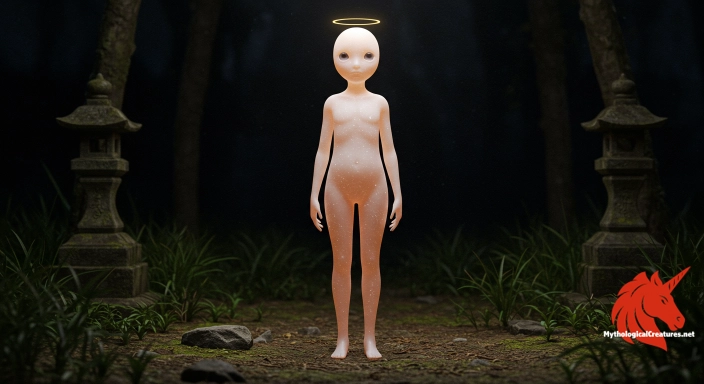
Mitama
Mitama - Mitama represent the honored soul of deceased individuals and kami, playing a crucial role in Shinto rituals and the veneration of ancestors.
Origins & First Encounters
Mitama represents a revered and subtle spiritual presence within the Japanese Shinto tradition, embodying both the sacred essence of a kami and the honoured soul of a departed individual. Born from ancient beliefs that celebrated nature and ancestral wisdom, the idea of Mitama has long been interwoven with the rituals that uphold community and continuity. Its early attestation can be traced to the formative mythologies and ceremonial records of Japan, where the spirit was seen as both protector and guide. The concept is enriched by the cultural emphasis on harmony, respect, and the mystical bond between the living and the divine. Deep-rooted legends describe Mitama as a beacon of serene benevolence, offering comfort and guidance in times of transition. This spirit has been intrinsic to the way local traditions honour the spirits of the past, affirming the importance of memory and legacy. Communities have traditionally revered Mitama not only for its ethereal beauty but also for its role in maintaining balance and sanctity. Over time, the flowing narrative of Mitama has found resonance in various rites and celebrations, symbolising an enduring link between ancient practices and contemporary faith. Its presence continues to inspire both solemn rituals and festive remembrances throughout Japan.
Source Texts & Tale Variants
Ancient chronicles and ritual texts provide the earliest glimpses into the multifaceted nature of Mitama. Historical records such as those found in classical compilations hint at the profound spiritual reverence accorded to these honoured souls. Over time, local manuscripts and shrine records have contributed additional layers to the narrative, each variant reinforcing the timeless significance of the spirit. Folklore passed down orally across generations often recasts the standard account with local embellishments and unique interpretations. Diverse textual sources have transformed Mitama from a mere abstract concept into a dynamic element woven into the fabric of community life. Slight differences in narrative detail reflect the evolving perception of what it means to engage with such a sacred presence. Ritual inscriptions and ceremonial accounts reveal glimpses of how both divine and ancestral spirits are invoked during sacred events. The rich tapestry of traditional texts assures that, while the references may be brief, the spirit of Mitama is both multifaceted and enduring. These historical documents continue to be a wellspring of inspiration, offering varying perspectives on the delicate boundary between mortal existence and divine intervention.
Form & Powers
Given its nature as a spiritual entity, Mitama is not defined by a fixed physical form, yet artistic and ritual depictions provide a suggestive glimpse into its essence. Rendered with soft, ethereal brushstrokes, the spirit is often portrayed as emanating a gentle, luminous glow that seems to shift and ripple with unseen energy. In some depictions, Mitama appears as a vaguely humanoid figure draped in flowing, translucent garments that sparkle with subtle colours. Its form is occasionally intermingled with abstract symbols such as orbs, mists, or streams of light, each rendered in a manner that evokes both simplicity and mystery. The impermanence of its artistic depictions speaks to the transient nature of the spirit, suggesting that it is more a state of being than a concrete outline. Variations in size and style across shrine and temple decorations indicate an adaptive iconography, tailored to the spiritual needs of different communities. The interplay of light and shadow in these artworks conveys a sense of movement and transformation that is fundamental to the essence of Mitama. Artists have long used delicate colour gradients and soft contours to symbolise the blend of humanity and divinity inherent in this spirit. Even in abstraction, the rendered form of Mitama captures a beauty that is both elusive and deeply resonant.
Regional Faces
Across Japan, the interpretation of Mitama is coloured by local tradition, resulting in regional adaptations that mirror the diverse cultural landscapes. In some rural communities, the spirit is celebrated as an ancestral guardian closely connected to the land and its bounties. Local shrines may depict Mitama with elements that highlight regional natural phenomena, such as the gentle flow of rivers or the whisper of the wind in ancient forests. In certain coastal areas, the revered spirit is intertwined with the rhythm of the tides, symbolising both protection and the cyclical nature of life. Mountain villages sometimes recount tales of a wandering Mitama whose presence is felt during the quiet, misty dawns that define their highland retreats. These regional expressions are often shaped by unique historical events, local legends, and the environmental character that distinguishes one area from another. Observances and festivals in different parts of Japan have incorporated specific customs that pay homage to the local manifestation of Mitama. This geographical variance underscores the flexibility of the concept, allowing communities to adapt the sacred spirit into the fabric of their daily spiritual practice. The rich diversity of regional interpretations ultimately enhances the overall tapestry of Japanese spiritual belief.
Cultural Parallels
Exploring the concept of Mitama in a wider cultural context reveals intriguing parallels with revered spiritual entities from other traditions. Similar to the veneration of ancestral spirits in East Asia, Mitama underscores the universal human impulse to honour those who have transcended the mortal realm. Its role mirrors that of the Chinese shen, where divine or spiritual presences continue to influence daily life and instil a sense of continuity. Across Korea, traditions of ancestral worship evoke a respect for the departed that is conceptually akin to the veneration of Mitama. In European folklore, one can observe nods to guardian spirits and the benevolent guidance often attributed to ancestors, resonating with the protective qualities ascribed to Mitama. The comparative analysis highlights how cultures around the world seek to bridge the gap between the tangible and the transcendent. Such cross-cultural motifs signify a shared aspiration to maintain a dialogue with the spiritual realm, ensuring that the wisdom of the past is neither lost nor isolated. These analogous traditions, while manifested differently, collectively affirm the enduring human need to connect with forces beyond the visible world. In this interplay of myth and memory, Mitama stands as a symbol of the universal legacy of reverence for the unseen. The shared iconography across cultures enriches our understanding of how humanity perceives and venerates the spiritual continuum.
Legacy & Modern Evolution
The legacy of Mitama has evolved over the centuries, reflecting both enduring traditions and innovative reinterpretations. Early ritual practices and shrine iconographies laid the foundation for a rich heritage that continues to influence contemporary spiritual thought. Over time, the depiction of Mitama has shifted from subtle, traditional symbolism to dynamic portrayals in modern artistic media. Contemporary cultural products, including films, anime, and literature, now frequently incorporate aspects of Mitama as a symbol of endurance and transformation. Modern festivals and communal rituals, such as those celebrated during Obon, highlight the fusion of age-old reverence with today's creative expression. The continuous evolution of its imagery demonstrates how traditional beliefs can adapt to new cultural narratives while remaining deeply rooted in history. Urban shrines and rural sanctuaries alike have embraced Mitama as a reminder of the precious continuity between past and present. This dynamic legacy captures the spirit’s capacity to inspire both solemn reflection and festive celebration. As the narrative of Mitama continues to be reimagined, it reaffirms a timeless connection between memory, identity, and the search for transcendent meaning.
Interesting Fact
An intriguing aspect of the mitama is its dual representation as both a revered ancestral spirit and a divine force, highlighting the complex interplay of life, death, and the supernatural in Japanese culture.
Reach myth fans
Connect your myth-driven brand with this audience
Our readers are writers, educators, gamers, and collectors who care about mythology. Enquire about a limited sponsor placement on creature pages.
Enquire about sponsorshipQuick Creature Info
Our Mythic Legendary Rating:

Also Sometimes Known As:
Habitat:
Supernatural Powers:
Physical Attributes:
Abilities:
Behavior:
Lore:
References
Discover Another Mythical Legend You May Not Have Heard Of?
Uncover the mysteries of ancient folklore and expand your knowledge of legendary beings from cultures around the world.
Dare to Meet the Giantess....

Curated by the Mythological Creatures Team
Series editor: Mythological Creatures Directory
Primary desk: Asian & Pacific Myth Cycles Desk
(rev. November 2025)