
Mótsognir: Mótsognir is a prominent dwarf in Norse mythology, revered as the ruler of all dwarves.
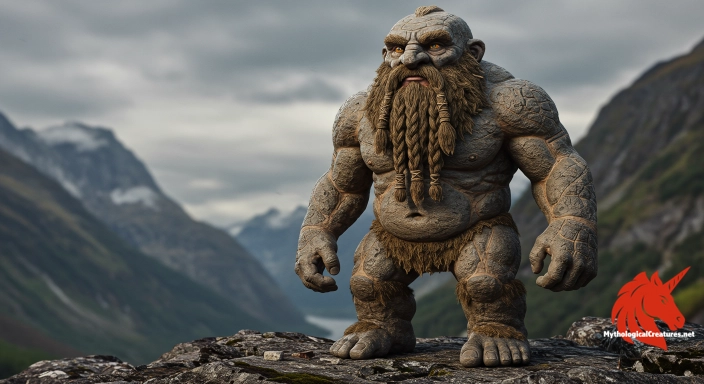
Mótsognir
Mótsognir - Significant as a primordial being among dwarves, his existence marks the transformation of the dwarven race from formless matter into intelligent, master craftsmen.
Origins & First Encounters
Mótsognir emerges as a compelling figure in Norse mythology, embodying both might and a unique resilience that sets him apart. His very name, which translates to 'he who drinks in might' or 'he who drinks in courage', reflects the ethos of strength and endurance central to his character. He is revered as the ruler of the dwarves, a race celebrated for their extraordinary craftsmanship and deep-rooted connection to the earth. The earliest references to his power appear in the poetic verses of Völuspá, where he is hailed as the lord of all dwarves. His origins are intimately linked with the creation myths of the Norse tradition, where even the formless parts of the cosmos are imbued with purpose. In these narratives, the transformation of dwarves from lifeless elements into sentient beings is both miraculous and symbolic. The myth of Mótsognir reflects the ancient understanding of nature as a force that breathes life into the raw material of existence. Over time, his story has not only solidified his administrative role among dwarven kin but also established him as a symbol of the transformative power of divine strength. His enduring legacy continues to illuminate the intricate interplay between might, wisdom, and the essence of creation in Norse myth.
Source Texts & Tale Variants
The primary attestations of Mótsognir’s legend are found within the rich corpus of Norse mythological texts, the most notable being the Völuspá, where he is acclaimed as the supreme leader of the dwarves. His story is further elaborated in Snorri Sturluson’s Gylfaginning, a prose work that provides a detailed commentary on the poetic verses and delves into the transformation of the dwarven race from inanimate matter to sentient beings. In this narrative, the dwarves’ unusual genesis from the flesh of the primordial giant Ymir is intertwined with the divine intervention that brought them to life. Additional manuscript traditions, such as the variant form of his name found in the Hauksbók, enrich our understanding by offering alternative perspectives on his character. These literary sources, although sparse in biographical detail, underscore his centrality as a leader and his enduring role in the cosmic order. The nuances between the names Mótsognir and Móðsognir highlight the fluidity and variability within the oral and written traditions of Norse lore. Through these interconnected sources, a mosaic of interpretations is constructed that paints him as both a powerful ruler and an emblem of the hidden forces of nature. The surviving texts continue to inspire modern retellings and scholarly interpretations, ensuring that his myth remains both relevant and intriguing.
Form & Powers
While direct physical descriptions of Mótsognir are scarce in the ancient texts, later mythological interpretations have afforded him a vivid, almost tangible appearance. He is often envisioned as a compact and muscular figure, his diminutive stature belying an inner strength that is both formidable and awe-inspiring. His face is portrayed as weathered and resolute, with a stern gaze that hints at a lifetime steeped in the mysteries of the subterranean realm. Artistic renditions depict him with a dense, intricately braided beard that symbolises the age-old wisdom of the earth. His eyes, imagined to be deep-set and glinting with an otherworldly light, seem to reflect the storied history of his race. In many modern illustrations, he is adorned in rugged attire that is reminiscent of the rugged landscapes and mineral-rich caverns over which he rules. Armour and accoutrements, often rendered with ornate runic designs, evoke the iconic metalwork for which dwarves are celebrated. The melding of raw natural elements with refined craftsmanship in his depiction serves to underline his dual nature as both a creation of the earth and a master of its secrets. These imaginative portrayals, although largely influenced by later artistic traditions, capture the essence of a leader who is as much a product of myth as he is a symbol of enduring power.
Regional Faces
Mótsognir’s myth is deeply rooted in Norse tradition, yet his portrayal exhibits notable variations across different Nordic regions and cultural narratives. In Icelandic lore, he is sometimes imbued with additional layers of wisdom, reflecting a blend of martial authority and shamanistic insight that bridges the gap between the mortal and divine. Norwegian and Swedish traditions often emphasise his role as a guardian of subterranean secrets, intertwining his identity with local legends of mysterious, hidden treasure troves. Variations in his name, such as the appearance of Móðsognir in certain manuscripts, signal subtle regional adaptations that have customised his myth to suit local sensibilities and cultural values. In some Scandinavian ballads, his attributes are expanded to include mystical powers beyond mere leadership, underscoring a broader narrative of transformation and elemental control. These regional adaptations highlight how communities have interpreted his myth in ways that resonate with their unique environmental and cultural contexts. As the lore of dwarves spread and evolved, local storytellers enriched his legend with regional motifs, from the art of metal forging to the sacred rites of earth-bound deities. In each locale, the figure of Mótsognir serves as a testament to the adaptability of myth, reflecting the diverse ways in which ancient cultures sought to explain the mysteries of life and nature.
Cultural Parallels
Across the vast panorama of world mythologies, figures akin to Mótsognir often appear as small but remarkably potent embodiments of earthbound power. His status as the ruler of the dwarves finds parallels in elements of other Germanic legends, such as the fabled Alberich, who is similarly associated with the treasures and craft of the underground world. Like his counterparts in broader European folklore, Mótsognir is depicted not solely as a diminutive creature but as a sovereign whose role transcends his physical size. Similar mythic beings appear in Celtic traditions, where the secretive craftsmen and guardians of the natural world are celebrated for their uncanny abilities and profound connections to the mystical forces of the earth. This cross-cultural motif underscores a widespread belief that the most inscrutable and potent forces are often hidden beneath the surface, waiting to be revealed. His portrayal also invites comparison with figures in later fantasy traditions where dwarven kings embody perseverance, expert craftsmanship, and an inherent link to nature. Furthermore, the dynamic of transformation involved in the emergence of conscious dwarves resonates with universal themes in myth – that life and wisdom can arise from the humblest beginnings. Comparative analysis reveals that such archetypes consistently symbolise the transformative power of nature, a theme echoed throughout various cultural narratives. In this light, Mótsognir not only occupies a central place in Norse myth but also reflects a universal archetype that celebrates the magic inherent in the earth itself.
Legacy & Modern Evolution
Throughout the ages, the figure of Mótsognir has evolved from a relatively obscure mythic character into an enduring symbol of the rich tapestry of Norse lore. In the medieval period, his story was largely confined to the esoteric texts and oral traditions that preserved the ancient wisdom of the North. With the revival of interest in myth and legend during the modern era, his image has been reinterpreted by a variety of artistic and literary movements, ensuring that his legacy remains vibrant and relevant. Contemporary fantasy literature, video games, and films have increasingly drawn upon the archetype of the dwarf king, with Mótsognir often serving as an inspirational source for characters embodying resilience and secret knowledge. This modern reinterpretation not only celebrates his role as a master of the subterranean realms but also highlights the dichotomy of his nature – both ancient and timeless. Scholars and enthusiasts have re-examined his myth in an effort to understand the enduring appeal of dwarven imagery and the broader themes of transformation and power. His depiction has also come to symbolise the deep connection between human creativity, the natural world, and the transformative potential inherent in myth. As modern narratives continue to blend tradition with innovation, Mótsognir stands as a testament to the evolving dialogue between ancient mythic ideals and contemporary cultural expression. His legacy, enriched by centuries of reinterpretation, offers a window into the ways in which myth continues to inspire and inform our understanding of both nature and the human spirit.
Interesting Fact
The dual epithet of Mótsognir, referring to both might and courage, highlights the ideal virtues celebrated in Norse myth and reflects the transformative power bestowed upon the dwarven race.
For authors, artists, and makers
Created something from the realm of myth?
If your book, deck, game, or artwork draws from legendary creatures and lore, you can showcase it here in a tasteful, year-round placement.
Share your projectQuick Creature Info
Origin:
Features:
Associations:
Our Mythic Legendary Rating:

Also Sometimes Known As:
Habitat:
Supernatural Powers:
Physical Attributes:
Abilities:
Behavior:
Lore:
References
Discover Another Mythical Legend You May Not Have Heard Of?
Uncover the mysteries of ancient folklore and expand your knowledge of legendary beings from cultures around the world.
Dare to Meet the Vaivasvata Manu....
Curated by the Mythological Creatures Team
Series editor: Mythological Creatures Directory
Primary desk: Northern & European Folklore Desk
(rev. November 2025)