
Mussie: Mussie is a legendary lake creature from Canadian folklore said to inhabit Muskrat Lake in Ontario.
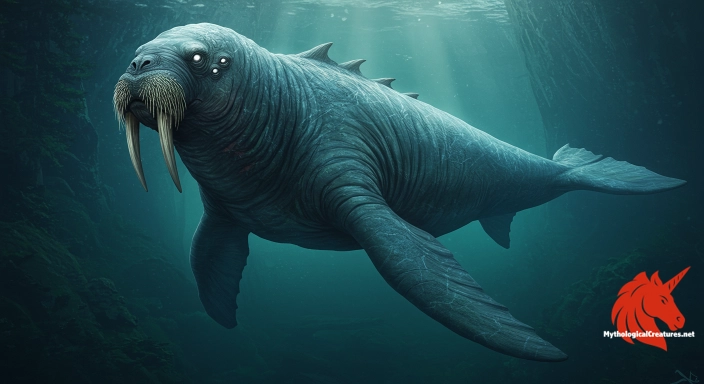
Mussie
Mussie - Mussie plays a key role in local tourism and embodies the mysterious allure of Canadian lake legends
Origins & First Encounters
Mussie is a captivating figure whose presence graces the folklore of Ontario, Canada, and whose legend has intrigued locals and visitors alike for over a century. It is reputed to haunt the murky expanse of Muskrat Lake, where twilight and mystery merge. Early modern references date its more popular legends to around 1916, though whispers of its existence even evoke stories from the era of Samuel de Champlain. The fusion of historical speculation with modern accounts highlights a fascinating interplay of fact and myth. Over time, Mussie has emerged as a symbol of the untamed spirit of the Canadian wilderness. Its ambiguous nature—oscillating between a walrus-like being and a creature reminiscent of the famed Loch Ness Monster—adds to its mystique. The lore reflects the community's deep connection to the natural world and its capacity for wonder. The creature has thus become a focal point in local narratives, serving as a bridge between historical conjecture and contemporary storytelling. Today, Mussie stands as a testament to the enduring power of myth in shaping cultural identity and collective imagination.
Source Texts & Tale Variants
Early written accounts and local oral traditions provide the primary foundation for Mussie’s legend. Diverse sources, including travelers’ journals and regional newspaper clippings, have stoked interest and detailed encounters with this elusive creature. Some narratives assert that Mussie has been a part of Indigenous folklore, although these stories are sometimes overshadowed by later European-inspired accounts. Variants of the story appear in pamphlets and tourism brochures which embellish its mysterious traits. Local guides and storytellers have enriched the legend with dramatic sightings and eerie descriptions that evolve with every retelling. The creature’s portrayal has been documented in regional folklore anthologies, intertwining personal accounts with speculative narratives. Occasional references in early explorers’ writings have sparked debates about the creature’s historical authenticity. Over succeeding decades, Mussie has featured in a variety of media—from local folklore compilations to documentaries exploring Canadian cryptids. Each source, whether steeped in fact or fantasy, contributes to the layered mythology that surrounds Mussie.
Form & Powers
Mussie is often depicted as a creature of striking contrasts, embodying both the robust features of a walrus and the mysterious allure of a legendary lake monster. Witness accounts have described it as bearing a bulky, streamlined body that hints at an aquatic lifestyle, with a robust torso and powerful flippers hinting at graceful yet formidable movement in the water. The creature’s head is perhaps its most captivating feature, accented by an unusual third eye that has fueled endless speculation about supernatural perception or heightened awareness. Some descriptions focus on its weather-beaten skin that appears mottled with shades of grey and hints of earthy brown, evoking the rugged terrain of its lake habitat. Its tusk-like appendages and pronounced snout further deepen its enigmatic visage, merging elements of both mammalian and mythic qualities. Variations in size have been noted, with some narratives emphasising an imposing, gargantuan presence, while others describe a more modest figure lurking in shadowy depths. The physicality of Mussie seems to defy traditional zoological classification, adding layers to its mystery and spectral charm. Subtle aquatic attributes combined with mythical elements have made Mussie an embodiment of nature’s inexplicable wonders. Each physical description, though differing in detail, converges on the portrayal of a creature that is both formidable and mesmerizing.
Regional Faces
The tale of Mussie is particularly vibrant in the regions surrounding Muskrat Lake, where local culture breathes fresh interpretations into its legend. In this area, the creature is often depicted with local landmarks in the background, lending a geographical identity to its myth. Regional storytellers sometimes incorporate aspects of Indigenous myth, blending European and First Nations elements to create a unique narrative tapestry. Different communities have adjusted the creature’s features according to local natural phenomena, such as fog-laden mornings and shimmering, reflective waters. Tourism initiatives in Ontario have further tailored Mussie’s image, crafting a version that is as much a marketing icon as it is a mythological enigma. In some parts of the region, Mussie is celebrated through annual festivals and local art exhibits, where its visage is reinterpreted in modern and traditional styles. The creature’s portrayal varies from one lakeside community to another, reflecting the nuances of local dialect and environmental influences. These regional variations underscore the dynamic relationship between local geography and folklore. In essence, Mussie has become a chameleon of myth, adapting its narrative to resonate with regional identities and artistic expressions.
Cultural Parallels
Mussie is not an isolated phenomenon but rather sits alongside a host of legendary lake monsters and cryptids found in mythologies around the world. Its elusive nature evokes comparisons to the fabled Loch Ness Monster of Scotland, believers of both mysteries revel in tales of enigmatic lake entities. Likewise, similarities can be found with Ogopogo from British Columbia, another aquatic creature whose accounts are steeped in local lore and cultural symbolism. The peculiar addition of a third eye to Mussie’s description further differentiates it and invites comparisons to other mythological beings that possess extra sensory appendages. This cross-cultural dialogue of monster myths highlights recurring themes of nature’s unpredictability and humanity’s innate fascination with the unknown. In different cultures, lake monsters serve as metaphoric guardians of ancient, hidden realms, and Mussie fits snugly within this tradition. Such comparative analysis underscores how natural landscapes inspire imaginative narratives, blending local history with global mythic archetypes. The parallels between Mussie and other legendary entities offer a rich tapestry of symbolism that transcends geographical boundaries. Ultimately, Mussie’s story illustrates how universal themes of mystery, culture, and nature’s power find expression in myriad forms across the world.
Legacy & Modern Evolution
The legacy of Mussie has evolved remarkably from its murky beginnings to its current status as an emblem of local folklore and cultural identity. Over the decades, encounters and tales have swirled into a modern myth that continues to capture the public imagination. The creature’s depiction has adapted to audiences of the digital age, where social media and online forums amplify every reported sighting and theory. Local communities have embraced Mussie as a figure of regional pride, incorporating its image in festivals, merchandise, and local art. Over time, tourism around Muskrat Lake has capitalised on this enduring legacy, with guided tours and events centred on the creature’s mysterious allure. Mussie has also found a place in popular culture, where its ambiguous nature invites reinterpretation in films, literature, and even music. The blending of historical accounts with contemporary storytelling methods has enriched its narrative, ensuring that the legend remains both timeless and responsive to modern values. Artistic reimaginings have emphasised its role as a guardian of local lore and the natural world. Consequently, Mussie serves as a living symbol of how folklore can transform through the ages, reflecting both a respect for the past and an embrace of present-day creativity.
Interesting Fact
A notable aspect of Mussie's legend is the claim that Samuel de Champlain documented its existence in the early seventeenth century, a detail that blurs the lines between historical record and modern folklore.
For indie creators
Give your myth project a permanent home
Indie authors, artists, small studios, and makers can secure an annual, non-intrusive sponsor slot that meets readers where they explore.
Obtain more informationQuick Creature Info
Origin:
Features:
Associations:
Our Mythic Legendary Rating:

Habitat:
Physical Attributes:
Abilities:
Behavior:
Lore:
Related Creatures, Tales or Lore
References
Discover Another Mythical Legend You May Not Have Heard Of?
Uncover the mysteries of ancient folklore and expand your knowledge of legendary beings from cultures around the world.
Dare to Meet the Thor....
Curated by the Mythological Creatures Team
Series editor: Mythological Creatures Directory
Primary desk: Americas & Indigenous Traditions Desk
(rev. November 2025)