
Nidbai: Nidbai is an uthra (angelic guardian) in Mandaeism, tasked with protecting Piriawis, the heavenly yardna in the World of Light.
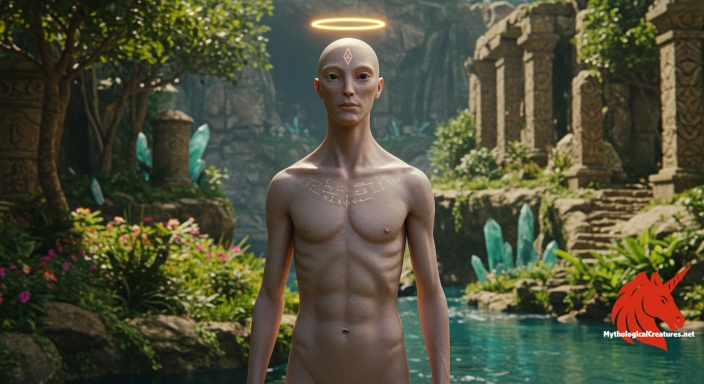
Nidbai
Nidbai - Nidbai is revered as one of the two guardian spirits overseeing Piriawis, symbolising divine protection and the sanctity of light and water in Mandaean spirituality.
Origins & First Encounters
Nidbai emerges as a central figure within the luminous tapestry of Mandaean belief, embodying divine guardianship and celestial wisdom. His ancient name, rendered in Classical Mandaic, reflects a deep-rooted legacy that dates back to eras when sacred language and mystical narratives shaped spiritual life. Within the intricate cosmology of Mandaeism, he is revered as an uthra, a guardian spirit tasked with preserving the sanctity of divine realms. His role is specifically highlighted as one of the two protective entities charged with overseeing Piriawis, the heavenly yardna that symbolises the flow of life in the World of Light. Early attestations in foundational texts such as the Ginza Rabba and Qulasta underscore his prominence in the spiritual hierarchy of the tradition. His character embodies themes of purification, renewal, and cosmic order, resonating with a deep spiritual purpose. The narrative of Nidbai intertwines the mortal realm with the divine, offering a bridge between earthly existence and celestial perfection. Over the centuries, his enduring presence has provided inspiration and guidance, symbolising the timeless pursuit of light and spiritual clarity.
Source Texts & Tale Variants
Ancient scriptures serve as the principal vessels through which the tale of Nidbai has been transmitted, with the Ginza Rabba playing a pivotal role in preserving his mythic presence. These revered texts elaborate on his divine responsibilities within an expansive cosmos where multiple spiritual forces interact harmoniously. The Qulasta, another important liturgical compendium, further broadens the narrative by detailing rituals that invoke his protective essence. Often mentioned alongside Shilmai, Nidbai’s recurring partnership emphasises the concept of paired guardianship in the heavenly realms. Variations in the manuscripts introduce nuanced portrayals of his attributes, ranging from gentle custodianship to a more assertive protector of cosmic order. Oral traditions, enriched by generations of interpretative wisdom, add layers of allegorical meaning to his character. Each version of the narrative contributes unique insights that deepen the understanding of his role within the sacred framework of Mandaeism. Together, these primary sources and story variants form a multifaceted portrait of Nidbai, ensuring his continued significance in both liturgical and everyday spiritual practice.
Form & Powers
Visions of Nidbai consistently present him as an embodiment of celestial radiance, his form seemingly sculpted from streams of pure, luminous energy. He is depicted with a countenance that exudes both serenity and a quiet, commanding authority. Artistic renderings often show him adorned in flowing robes that shimmer with hues of ethereal blues and silvery whites, mirroring the sacred waters over which he presides. His eyes are imagined as deep, reflective pools, evoking the mystery of the heavenly yardna and conveying both wisdom and compassion. The delicate contours of his figure are wrought with intricate detail, suggesting a harmonious blend of strength and graceful fluidity. Subtle decorative motifs and celestial symbols accent his image, reinforcing the link between his physical representation and the divine order. His radiant aura, depicted through shimmering light and gentle luminescence, invites viewers into a state of transcendental contemplation. Overall, the physical portrayal of Nidbai is a masterful synthesis of majestic form and intimate spirituality, designed to inspire reverence and awe in those who behold him.
Regional Faces
While Nidbai is intrinsically rooted in Mandaean cosmology, his portrayal has been subject to regional adaptations that reflect diverse cultural influences. In the ancient lands of Mesopotamia, local artistic traditions have subtly infused his image with indigenous visual elements and symbolic motifs. Communities neighbouring Persia and the Levant have, at times, interwoven their own mythological icons with his narrative, lending his depiction an additional layer of cultural richness. Diasporic Mandaean congregations have further adapted his representations to align with the aesthetic sensibilities of their new surroundings. Such regional variations often introduce local symbols of water and guardianship, thereby reinforcing the universal themes of purity and renewal. Even within the core Mandaean tradition, slight differences in ritual descriptions and poetic imagery reflect regional interpretative flavours. These culturally specific adaptations enhance the myth by bridging the gap between ancient cosmology and local spiritual practices. In doing so, they contribute to a dynamic and evolving narrative that honours both the tradition’s origins and its ongoing relevance in varied cultural landscapes.
Cultural Parallels
Exploring Nidbai’s role across mythological traditions unveils interesting cultural parallels with other guardians of sacred waters and divine order. In numerous ancient belief systems, deities and spiritual entities associated with water embody themes of purification, rebirth, and cosmic balance similar to those seen in Nidbai. For instance, certain Eastern traditions feature elemental deities whose protective functions mirror the guardianship of celestial rivers. Similarly, angelic figures in Abrahamic lore, though differing in specific attributes, play analogous roles as intermediaries between the mortal and divine realms. Such cultural comparisons highlight an enduring archetype found in many traditions—a benevolent guardian whose very presence ensures the continuity of life and order. These analogues emphasise a shared human fascination with water as a symbol of both life and transformative energy. The depiction of such guardians, including Nidbai, thus serves as a connective thread that binds disparate mythologies through common themes of protection and spiritual renewal. This comparative perspective enriches the understanding of Nidbai by placing him within a global tapestry of divine custodian figures.
Legacy & Modern Evolution
The portrayal of Nidbai has evolved remarkably over time, bridging ancient mysticism with contemporary spiritual expression. Early depictions rooted in sacred manuscripts have gradually been reimagined as new interpretative layers have been added by modern artists and theologians. Contemporary spiritual discourse now embraces Nidbai as a symbol of renewal, environmental consciousness, and the eternal quest for purity. This modern legacy is apparent in artworks and literary creations that recontextualise his traditional iconography within current cultural narratives. His evolving image reflects a dynamic dialogue between age-old myth and modern identity, ensuring that his archetypal themes remain accessible to successive generations. As Mandaean communities continue to thrive both within and beyond their traditional homelands, Nidbai serves as a constant reminder of the enduring power of myth. His legacy extends into the realms of ecological and metaphysical symbolism, where the sacred imagery of the heavenly yardna is given fresh meaning. The transformation of his representation over centuries underscores the resilient nature of myth, continually adapting to express the timeless human yearning for connection with the divine. In this way, Nidbai remains a vital link between traditional spiritual wisdom and modern interpretations of the cosmic order and environmental stewardship.
Interesting Fact
An intriguing aspect of Nidbai is his close association with the sacred river Piriawis, symbolising the blend of water and light in Mandaean ritual and belief.
For serious mythcraft
Your project belongs among the legends
If your work deepens how people understand, play with, or teach mythology, a sponsor placement here keeps it in front of the right readers all year.
Submit a sponsorship enquiryQuick Creature Info
Origin:
Associations:
Our Mythic Legendary Rating:

Also Sometimes Known As:
Habitat:
Supernatural Powers:
Physical Attributes:
Abilities:
Behavior:
Weaknesses:
Lore:
Related Creatures, Tales or Lore
- SShilmai
- HHibil Ziwa
- AAbathur
References
Discover Another Mythical Legend You May Not Have Heard Of?
Uncover the mysteries of ancient folklore and expand your knowledge of legendary beings from cultures around the world.
Dare to Meet the Mazzikin....
Curated by the Mythological Creatures Team
Series editor: Mythological Creatures Directory
Primary desk: Hellenic & Ancient Mediterranean Desk
(rev. November 2025)