
Nine-headed bird: The nine-headed bird is an ancient mythological avian creature from Hubei, China.
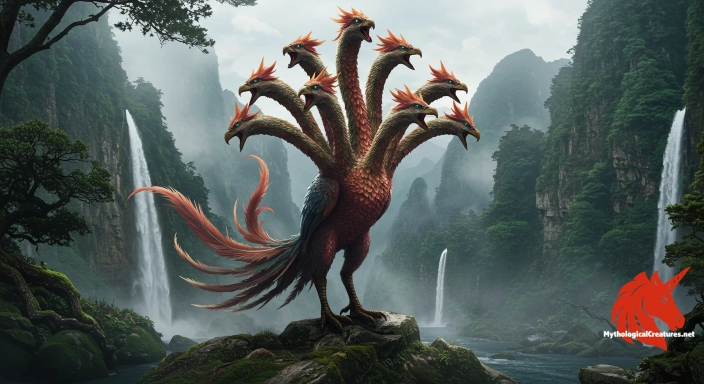
Nine-headed bird
Nine-headed bird - Served as a totem for the Chu people and later demonised due to political conflicts, influencing its modern derogatory usage.
Origins & First Encounters
Emerging from the rich tapestry of ancient Chinese mythology, the nine-headed bird stands as a captivating emblem of both divine power and intricate cultural identity. Its origins can be traced to the indigenous traditions of Hubei province during the Warring States period, where it was revered as one of the earliest manifestations of the fenghuang, or phoenix. The creature was intricately linked with the people of Chu, embodying the spiritual and societal aspirations of a region steeped in ritual and symbolism. Each of its nine heads was believed to signify different virtues and cosmic principles, making it a multifaceted icon in the local mythos. Over time, its image became interwoven with the area’s historical narrative as political shifts and cultural exchanges redefined ancient symbols. As rival dynasties jostled for influence, the nine-headed bird’s once sacred emblem was tainted by narratives of treachery and deceit. This transformation highlights a striking interplay between religious reverence and political manipulation. Even today, its enduring legacy continues to spark debate and inspire reinterpretation, echoing the complex dualities of honour and reproach that have defined its journey through time.
Source Texts & Tale Variants
Ancient texts and archaeological discoveries have unearthed intriguing references to the nine-headed bird, offering a window into its early worship and symbolic significance. Inscriptions on bronze artefacts and relief carvings from the Chu region hint at a creature revered not only for its divine attributes but also as an emblem of regional identity. Varied accounts from early records suggest that its multiple heads were seen as representations of broad cosmic forces and the manifold aspects of nature. Some narrative strands depict the bird as a benevolent guardian whose presence announced fortuitous change, while alternative versions imbued it with an air of enigmatic warning. Over generations, these stories have been adapted through oral tradition and local scribal efforts, resulting in regional variants that reflect differing societal values. Early mythographers and later compilers of folklore integrated fragmented records with evolving cultural interpretations, thereby enriching its mythic tapestry. Relics of ancient ritual practices, alongside ceremonial texts, accord the creature a central role in the spiritual life of early Chu society. Even as later dynasties disputed its sanctity, the variety of story variants preserved in both written and oral forms encapsulate the enduring appeal and mutable nature of this legendary bird. The cumulative weight of these primary sources continues to inform modern understandings of its once exalted status.
Form & Powers
The nine-headed bird presents a visual spectacle that seamlessly blends the allure of nature with the extravagance of myth. Its nine distinct heads, each finely detailed with expressive eyes and gracefully curved beaks, contribute to an overall impression of profound multiplicity and power. The creature’s plumage is often described as a vibrant medley of colours, with each feather seemingly capturing the brilliance of dawn and the mystique of twilight. Its broad, sweeping wings are adorned with intricate patterns that echo the cosmic dance of light and shadow in the heavens. In artistic depictions, the bird’s form varies from a colossal celestial being to a more refined, decorative motif, illustrating the flexibility of its symbolic representation. The layering of its features—whether in the form of shimmering feathers or the subtle interplay of each head’s gaze—underscores an almost tangible sense of dynamism. Every detail, from its powerful talons to the aura emanating from its every head, speaks of both grace and formidable strength. This elaborate physical portrait not only reinforces its role as an emblem of divine authority but also invites viewers to appreciate the interplay between aesthetics and mythology.
Regional Faces
While the nine-headed bird originated in the cultural heart of Hubei, its depiction has varied significantly across different regions of China. In the ancient Chu heartland, its imagery remains deeply intertwined with indigenous rites and the people’s sense of cultural pride, often appearing in local artefacts and ceremonial motifs. In contrast, eastern regions, where phoenix imagery is more prevalent, have absorbed elements of the nine-headed myth into broader narratives celebrating rebirth and resilience. Regional folklore has ingeniously adapted its form, with some communities emphasising a benevolent aura while others stress themes of ominous portent and cunning. These distinct interpretations are visible in traditional paintings, temple carvings, and local legends, each adding layers of nuance to the creature’s legacy. In some areas, the bird is celebrated as a harbinger of prosperity and renewal, while in others it is viewed with skepticism, cautioning against overreaching ambition or duplicity. Local adaptations have also influenced its iconography, altering its physical attributes such as the style of its plumage and the expression of its heads. This rich diversity of regional variations illustrates how a single mythic symbol can be continuously reshaped to reflect the evolving cultural, social, and political landscapes of its adherents.
Cultural Parallels
Across the vast expanse of world mythology, creatures bearing multiple heads often emerge as symbols of complex, multifaceted power. The nine-headed bird resonates with similar iconographic figures such as the phoenix in other Eastern traditions, where rebirth and transformation are recurring themes. In several narratives, much like the multi-headed eagles or serpents of Western lore, the presence of several heads signifies the convergence of wisdom, strength, and dynamic chaos. This parallel underscores a universal motif: that the multiplicity of a creature’s form can mirror the varied yet interconnected forces of nature and fate. In certain South Asian myths, for example, guardians with several heads perform roles not unlike those attributed to the nine-headed bird in ancient China. These comparisons point to a shared human fascination with the idea that the number nine itself often holds mystical significance and suggests completeness or transcendence. The intermingling of these symbolic threads across cultures illuminates a broader dialogue between mythic traditions, where the specific form of a creature is as much about local expression as it is about universal archetypes. Such cross-cultural analysis not only deepens our understanding of the nine-headed bird but also highlights the enduring human penchant for bridging beauty, mystery, and moral complexities through myth.
Legacy & Modern Evolution
Over the centuries, the image of the nine-headed bird has undergone a profound evolution in its symbolic significance and cultural interpretation. Initially venerated as a divine emblem by the ancient Chu people, the creature's image was later contested and repurposed amid the shifting tides of political power and cultural hegemony. Its early association with celestial protection and natural harmony gradually transformed under the influence of external forces, notably when it was demonised by the Zhou dynasty. In modern contexts, this transformation has taken on further complexity as the term 'nine-headed bird' acquired derogatory connotations, particularly in reference to the people of Hubei. Despite these negative reinterpretations, contemporary intellectuals and artists are increasingly reexamining the creature's legacy, viewing its multifaceted nature as a rich source of cultural identity and historical reflection. Modern portrayals in literature, art, and digital media often seek to reclaim the bird's original majesty and its role as a symbol of both resilience and complexity. The evolution of its depiction is emblematic of a broader dialogue between ancient myth and modern experience, where reinterpretations serve as a means of negotiating past injustices and contemporary realities. Thus, the historical journey of the nine-headed bird remains a potent reminder of the ways in which myth adapts over time, reflecting the layered interplay between honour, stigma, and the enduring power of cultural memory.
Interesting Fact
The nine-headed bird not only represents ancient totemic beliefs but also illustrates how political strife can reshape the interpretation of mythological symbols.
For indie creators
Give your myth project a permanent home
Indie authors, artists, small studios, and makers can secure an annual, non-intrusive sponsor slot that meets readers where they explore.
Obtain more informationQuick Creature Info
Features:
Associations:
Our Mythic Legendary Rating:

Also Sometimes Known As:
Habitat:
Supernatural Powers:
Physical Attributes:
Abilities:
Behavior:
Lore:
Related Creatures, Tales or Lore
References
Discover Another Mythical Legend You May Not Have Heard Of?
Uncover the mysteries of ancient folklore and expand your knowledge of legendary beings from cultures around the world.
Dare to Meet the Ikuchi....

Curated by the Mythological Creatures Team
Series editor: Mythological Creatures Directory
Primary desk: Asian & Pacific Myth Cycles Desk
(rev. November 2025)