
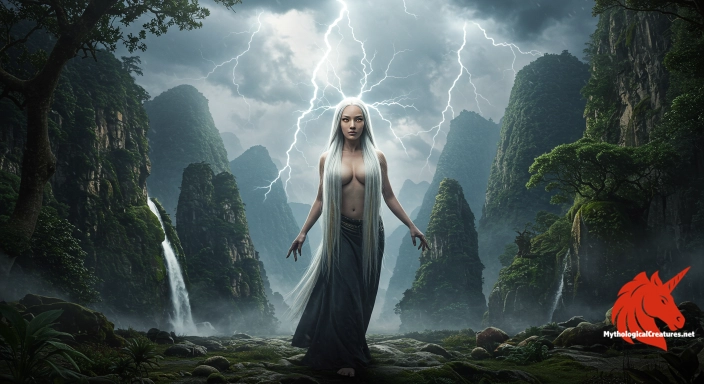
Nongthang Leima: Nongthang Leima, the Lightning Queen, is the Meitei goddess of seduction, thunder, and lightning.
Nongthang Leima
Nongthang Leima - Plays a pivotal role in early creation by predicting the first rain and curbing cosmic chaos
the legend in five swipes.
the legend in five swipes.
Nongthang Leima: Origins and First Sightings
Nongthang Leima emerges as a dynamic and enchanting deity within Meitei mythology, celebrated as the goddess of seduction, thunder, and lightning. Her origins are deeply intertwined with the creative artistry of Atingkok, who fashioned her to captivate and draw forth Haraba, thereby setting in motion the intricate dance between order and chaos. In early mythic narratives, she is portrayed as a commanding presence who tamed the wild elements of the primordial world. Her mastery over thunder and lightning marks a critical turning point in the ancient cosmos, reflecting the delicate balance between destructive force and nurturing renewal. Local traditions recount her role in predicting the first rain, a metaphor that underscores both the fertile promise of creation and the unpredictability of nature. Her first attestations in oral lore and ritualistic practices suggest a long-held reverence among the Meitei people, where cosmic phenomena were closely observed and mythologised. The goddess’s multifaceted attributes have made her a symbol of both irresistible allure and the formidable power of nature. Over time, she has come to represent the harmony between seduction and celestial might, a narrative resonating with communities who view natural events as divine expressions. Her enduring legacy continues to captivate and inspire, ensuring that her myth remains a cornerstone of Meitei cultural identity.
How many versions of the Nongthang Leima story are there?
The primary sources concerning Nongthang Leima trace back to ancient oral traditions and scriptural fragments preserved by the Meitei community. Although surviving texts are fragmentary, they vividly capture her role as a mediator between chaos and creation, celebrating both her seductive power and her control over elemental forces. Various manuscripts and puya recensions hint at her involvement in cosmic order, though the complete narratives have evolved through generations. In local folklore, storytellers highlight her integral contribution to the early workings of the cosmos by harmonising disruptive energies through her mastery of thunder and lightning. Regional rituals and ceremonial chants also serve as living texts that perpetuate her legend, underscoring the importance of nature in ritual celebrations. Alternative story variants often emphasise her role in attracting and uniting divine forces, particularly in relation to Haraba (Pakhangba). The diversity of these sources enriches her myth, offering multiple perspectives on her divine character. Artistic depictions in temple bas-reliefs and traditional dance interpretations further complement the textual sources, reinforcing her status in the cultural narrative. As a result, both written records and oral transmissions play a pivotal role in preserving and diversifying the legend of Nongthang Leima.
What was Nongthang Leima believed to be capable of?
Nongthang Leima is frequently portrayed with an aura that mirrors the intensity and brilliance of a storm, embodying the very essence of lightning that illuminates the sky. Her eyes are imagined as glistening with the ferocity of a sudden thunderclap, conveying both her magnetic allure and overwhelming power. Artists often depict her with flowing, luminous hair that cascades like crackling electric currents, infusing every depiction with a sense of dynamic movement. Her form is simultaneously ethereal and formidable, suggesting a delicate beauty interlaced with the raw force of nature. Across various iconographic representations, proportions vary to highlight her divine stature, sometimes appearing as a towering celestial figure and at other times as an intimate embodiment of the natural world. Intricate patterns adorn her garments, reminiscent of swirling storm clouds and the jagged paths of lightning bolts. Precious adornments, crafted from shining metals, enhance her image and symbolise the fleeting brilliance of natural phenomena. Every detail of her depiction, from her compelling gaze to the subtle interplay of light and shadow on her form, reinforces her dual role as both seductress and controller of elemental chaos. Thus, her visuals capture a harmonious blend of beauty, power, and the unpredictable majesty of a thunderstorm.
The Geography of the Nongthang Leima Legend
Across the diverse cultural landscape of northeastern India, Nongthang Leima is celebrated with a reverence that carries distinct local flavours. In Manipur, where her myth is deeply rooted, she is revered not only as a powerful force of nature but also as an emblem of feminine allure and vitality. Variations in regional retellings often place greater emphasis on either her stormy might or her captivating seduction, reflecting the local priorities and environmental influences. In some village traditions, the goddess is honoured during seasonal festivals where the onset of rains is celebrated as a divine blessing. Rural rituals may incorporate dramatic enactments of thunder and lightning, illustrating the tangible presence of her powers in everyday life. Neighboring communities adjust her narrative to resonate with local deities, sometimes blending her characteristics with those of indigenous nature spirits. Folk songs and traditional dances serve as a medium to reinterpret her myth, ensuring that her story adapts to the unique ecological and social rhythms of each region. These regional adaptations are a testament to her enduring relevance, as they fuse ancient symbolism with contemporary local identity. Overall, her myth continues to evolve, enriched by the cultural diversity and unique environmental contexts of the areas that honour her.
Which myths echo the story of Nongthang Leima?
The myth of Nongthang Leima shares intriguing parallels with other cultures where divine figures encapsulate the volatile interplay of nature and desire. Uniquely, she embodies the power over thunder and lightning—a domain frequently reserved for male deities in other traditions—thus challenging typical gender roles in mythological archetypes. While thunder gods in Greco-Roman or Norse traditions often wield their power with unrestrained force, Nongthang Leima weaves seduction and elemental mastery into a single, multifaceted persona. Similar deities in indigenous cultures of Southeast Asia also celebrate the interplay of beauty and devastating natural forces, yet her narrative retains a distinctly Meitei flavour. This duality resonates with themes found in Hindu mythology, where the interplay of creation and destruction is often personified in deities like Parvati or Kali, albeit in very different narrative contexts. Her role as both a nurturer and a controller of chaos invites comparisons with various goddesses whose attributes bridge the gap between love and the tempestuous aspects of nature. The integration of her myth with themes of fertility and renewal also mirrors a global narrative of nature’s cyclic transformation. By juxtaposing the allure of seduction with the ferocity of elemental power, her depiction enriches cross-cultural dialogues on the divine feminine. In essence, Nongthang Leima’s unique characteristics contribute to an expansive pan-cultural tapestry of mythologies where natural forces are both revered and mystified.
The Lasting Influence of Nongthang Leima
Throughout the centuries, the legend of Nongthang Leima has undergone a remarkable evolution, adapting to the shifting cultural and historical landscapes of the region. Early portrayals anchored in ritual and oral tradition have paved the way for vibrant modern interpretations that celebrate her as a timeless embodiment of natural force and feminine mystique. Contemporary artists, writers, and performers have embraced her myth, drawing on her dual aspects of seduction and elemental power to reflect modern sensibilities about nature and divinity. In traditional arts, her image is a common motif in dance, sculpture, and ceremonial practices, demonstrating her enduring influence over the cultural psyche. Modern reinterpretations often position her as a symbol of resistance against chaos, resonating with themes of environmental stewardship and the empowerment of the feminine spirit. As academic interest in indigenous mythologies grows, her narrative provides a rich source of insight into the interplay between ancient belief systems and modern identity. Digital media and public art projects have resurrected her story, ensuring that her potent imagery continues to evolve and inspire new generations. Her myth not only serves as a cultural touchstone within Manipur but also enriches a broader dialogue on the intersections of science, nature, and spirituality. Ultimately, the legacy of Nongthang Leima is one of continual reinvention, reflecting the timeless quality of myth in bridging the past with the present.
Interesting Fact
Nongthang Leima uniquely fuses the realms of seduction and elemental power, exemplified by her role in predicting the first rain and curbing primordial chaos.
Mythological Treasures
Chinese Beasts: A field guide to the dragons and demon kings of Chinese myth
From river dragons to demon kings, with the legends that shaped five thousand years of storytelling.
Japanese Yokai: A field guide to the spirits and demons of Japanese folklore
Fifteen spirits, with the signs to watch for and what the old tales say to do if you meet one.
Greek Myths: A field guide to the monsters of ancient Greece
Every monster here earned its place in legend, and each gets a full page of artwork and the story behind it.
the legend in five swipes.
Reach myth fans
Connect your myth-driven brand with this audience
Our readers are writers, educators, gamers, and collectors who care about mythology. Enquire about a limited sponsor placement on creature pages.
Enquire about sponsorshipQuick Creature Info
Origin:
Features:
Associations:
Our Mythic Legendary Rating:

Also Sometimes Known As:
Habitat:
Supernatural Powers:
Physical Attributes:
Abilities:
Behavior:
Lore:
References
Discover Another Mythical Legend You May Not Have Heard Of?
Uncover the mysteries of ancient folklore and expand your knowledge of legendary beings from cultures around the world.
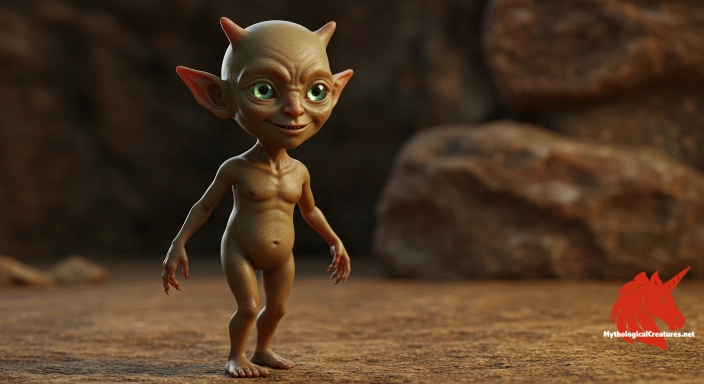
Dare to Meet the Kobalos....
The Mythological Creatures Book Series
Yokai, Greek, Norse, Egyptian & Chinese. Five illustrated field guides to the creatures the old stories either warned or told you about.

Curated by the Mythological Creatures Team
Series editor: Mythological Creatures Directory
Primary desk: Asian & Pacific Myth Cycles Desk
(rev. November 2025)