
Parthenope: Parthenope is a siren from Greek mythology celebrated for her enchanting, maiden-like voice that lured sailors to ruin.
-9067a922-ca33-4469-a2ca-177e6060e611_small.webp "Parthenope - Parthenope’s legend has influenced art and literature as a symbol of dangerous beauty, and her myth is often linked to the founding narratives of cities such as Naples.")
Parthenope
Parthenope - Parthenope’s legend has influenced art and literature as a symbol of dangerous beauty, and her myth is often linked to the founding narratives of cities such as Naples.
Origins & First Encounters
Parthenope stands as one of the most captivating figures in ancient Greek mythology, renowned as one of the sirens whose enchanting song beguiled mariners and stirred the imagination of entire civilizations. Her origins are shrouded in legend, emerging from a time when myth and reality intertwined on the Mediterranean shores. The very essence of her name, meaning 'maiden-voiced', evokes images of both purity and an irresistible allure that was both beguiling and ominous. Early attestations of her character appear in fragmented poetic traditions and oral narratives that celebrated her dangerous beauty and sororal bonds with other sirens. In the cultural context of ancient Greece, she symbolised the duality of nature: simultaneously a source of mesmerising charm and a harbinger of impending doom. Her story resonated widely, representing the eternal conflict between temptation and survival that every seafarer feared and revered. Over time, her legend became deeply intertwined with local myths, occasionally even serving as an emblem for emerging communities along the coast. Artists and poets depicted her as a spectral figure whose voice could calm the stormiest seas and also summon destruction. Her myth offers insights into the ancient world's complex relationship with the natural world and the mysterious forces that resided within it. Even today, Parthenope endures as a testament to the enduring allure of myth and the power of storytelling in defining human experience.
Source Texts & Tale Variants
The narrative of Parthenope is preserved in a mosaic of ancient texts and fragmented oral traditions that have evolved over centuries. Some of the earliest literature hints at her role among the sirens, offering glimpses into a character imbued with both beauty and peril. Textual remnants from classical Greek sources present her as a figure whose melodious yet dangerous song challenges the resolve of intrepid seafarers. Roman literary adaptations further embellished her saga, integrating regional lore and emphasising her tragic fate when fatefully cast upon rocky shores. Variants of her story appear in medieval manuscripts where her persona is extended into allegory and moral warning. In some accounts, her voice is portrayed as a divine instrument that both summons and condemns those who dare approach the mysteries of the sea. Diverse folklore traditions from the Mediterranean have preserved her memory, each adding layers of symbolic meaning appropriate to their cultural context. Manuscript discrepancies and creative reinterpretations over the centuries have contributed to a multifaceted portrait of her character. The strength of these sources lies not only in their narrative detail but also in their ability to evoke the transcendent nature of myth. Thus, the collection of sources and story variants surrounding Parthenope forms a rich tapestry that continues to invite scholarly inquiry and imaginative reinterpretation.
Form & Powers
Parthenope is vividly depicted as possessing an ethereal beauty that blurs the line between human and divine. Her visage is often described as strikingly attractive, with luminous eyes that seem to mirror the depths of the ocean. Many artistic representations highlight long, flowing hair that cascades in gentle waves, echoing the unpredictable movement of sea water. Some portrayals incorporate subtle avian elements, such as delicate feathers interwoven with her tresses, hinting at her hybrid nature. Her form is elegantly proportioned, exuding both grace and a latent, predatory air that hints at her inherent danger. Ancient paintings and sculptures frequently adorn her with intricate jewellery fashioned from motifs of the sea, further reinforcing her maritime identity. Illustrations commonly capture a serene yet enigmatic expression, one that conveys both seduction and sorrow. Variations in size and form reflect the diverse artistic traditions that sought to embody her multifaceted character. Each visual detail, from the curvature of her figure to the reflective quality of her eyes, speaks to the complex interplay of allure and menace inherent in her design. Ultimately, the physical depictions of Parthenope create a resonant image of a being who is both magnificently beautiful and perilously enigmatic.
Regional Faces
As the legend of Parthenope circulated throughout the ancient Mediterranean, her portrayal adapted to the cultural and geographical nuances of each region. In her Greek origins, she is traditionally remembered as a siren whose beguiling voice was both a promise and a threat, resonating deeply with the seafaring traditions of the Aegean. As the myth expanded westward into Italy, Parthenope became intricately linked with local lore and was even associated with the early foundations of cities along the coast, most notably Naples. In these regional adaptations, her story took on additional layers of local symbolism, blending maritime superstition with civic identity. Some local traditions depict her as a tragic heroine whose fate is intertwined with the fortunes of coastal communities. The emphasis on her alluring voice may be either celebrated or mourned depending on regional attitudes toward the sea and its mysteries. Artisans and poets across different territories reimagined her narrative, incorporating indigenous elements and natural landmarks unique to their environment. Her dual image as both a divine seductress and a portent of disaster found varying interpretations across cultural boundaries. Consequently, the regional variations of her myth reflect a fluid exchange of ideas between Greek, Roman, and local traditions. This adaptability underscores the universal appeal of her story and the way in which myth can serve diverse cultural identities.
Cultural Parallels
Parthenope offers a fascinating parallel to other mythological entities whose beauty veils a deadly nature. Like the sirens of Homer’s Odyssey, her very existence is defined by the paradox of seductive enchantment and fatal consequence. Her story finds echoes in other cultural traditions where beings of supernatural allure lure mortals to their fate, such as the European mermaid legends and the Celtic selkies. The recurring motif of a bewitching, dangerous feminine presence appears in numerous myths, each underscoring themes of temptation, loss, and the inexorable pull of the unknown. In comparisons with other siren figures, Parthenope is often noted for her distinctive maiden-like purity juxtaposed with the peril she represents. Cross-cultural studies reveal how similar narratives address the duality of beauty as both a blessing and a curse. Her myth overlaps with broader archetypal themes found in various ancient societies, highlighting universal human concerns over desire and destruction. The intricate balance of allure and menace that she embodies resonates with similar figures whose stories serve as cautions against unbridled temptation. Comparative analysis demonstrates that, while the details may vary, the underlying narrative of a captivating force that lures individuals into danger is remarkably consistent throughout myth. Thus, Parthenope stands not only as a unique figure in Greek lore but also as part of a rich global tapestry of mythological traditions.
Legacy & Modern Evolution
Throughout history, the legend of Parthenope has undergone a remarkable evolution that reflects changing societal and artistic sensibilities. In antiquity, she was viewed predominantly as a cautionary emblem of the dangers inherent in the seductive allure of the sea. Over time, however, her image transformed into an enduring symbol of mysterious beauty and romantic tragedy. The Renaissance saw a revival of interest in classical mythology, with artists and writers reinterpreting her story to reflect contemporary values and transcendent aesthetics. Modern portrayals have continued this trend, often casting her as a complex figure whose enchanting voice and tragic destiny invite both empathy and awe. In film, literature, and visual art, Parthenope is frequently reimagined as a metaphor for the inevitable interplay between creation and destruction. Academic discourse has revisited her myth through a variety of lenses, ranging from feminist interpretations to analyses of symbolic representation in art. The enduring resonance of her narrative is evident in cultural festivals, local traditions, and even the naming of geographical locations. Contemporary audiences are drawn to the layered meanings embedded in her legend, which continues to inspire new creative endeavours. Ultimately, Parthenope’s legacy is a dynamic testament to the power of myth in shaping and reflecting the human experience across the ages.
Interesting Fact
Interestingly, Parthenope's very name means 'maiden-voiced', directly highlighting her defining trait—an irresistibly enchanting song that has fascinated listeners and inspired countless artistic interpretations over the millennia.
For serious myth projects
Feature your work alongside the legends
From academic works to story-rich games, we highlight projects that respect world mythologies. Talk to us about a measured, long-term placement.
Start a conversationQuick Creature Info
Origin:
Features:
Associations:
Our Mythic Legendary Rating:

Habitat:
Supernatural Powers:
Physical Attributes:
Abilities:
Behavior:
Weaknesses:
Lore:
References
Discover Another Mythical Legend You May Not Have Heard Of?
Uncover the mysteries of ancient folklore and expand your knowledge of legendary beings from cultures around the world.
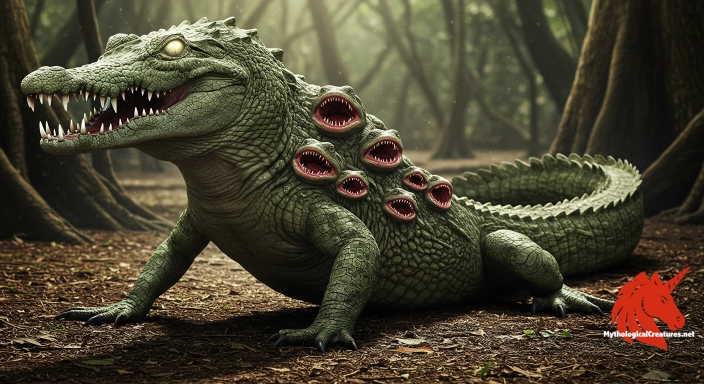
Dare to Meet the Cipactli....
Curated by the Mythological Creatures Team
Series editor: Mythological Creatures Directory
Primary desk: Hellenic & Ancient Mediterranean Desk
(rev. November 2025)