
Patupaiarehe: Patupaiarehe are supernatural beings from Māori mythology, noted for their fair skin, distinctive hair, and human-like stature.
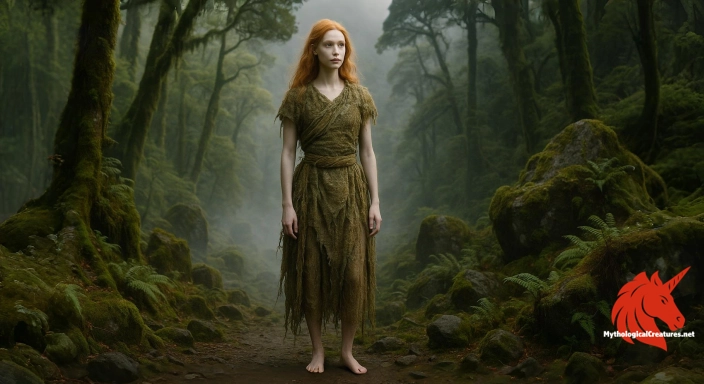
Patupaiarehe
Patupaiarehe - They embody the elusive and otherworldly aspects of the natural environment in Māori mythology, serving as both protectors of their lands and enigmatic cultural figures.
Origins & First Encounters
The patupaiarehe are mysterious, otherworldly beings that have captivated the imagination of Māori communities for centuries. They are thought to have emerged from the depths of ancient oral traditions, embodying a connection between the spiritual and natural realms. Their legend speaks of fair complexions and distinctive hair shades of blonde or red, a stark contrast to the typical appearance of their human counterparts. Many stories weave their origins into the fabric of the land, suggesting that they have existed since long before the arrival of modern settlers. Their affinity for mist and twilight, combined with a natural aversion to direct sunlight, reinforces their status as denizens of the secret places of the earth. Intricate lore tells of communities hidden deep within forests and on lofty mountains, where their invisible abodes are guarded jealously. The patupaiarehe are celebrated not only for their ethereal beauty but also for the enchanting music they bring forth with traditional instruments. Their enduring myth serves as a cultural reminder of the delicate balance between the human world and nature’s mysterious forces. Many local narratives portray them as both custodians of ancient wisdom and harbingers of caution for those who wander into unknown territories. Ultimately, their story continues to mystify and inspire, inviting a deeper reflection on the hidden aspects of nature and identity.
Source Texts & Tale Variants
Traditional oral narratives have long preserved the essence of the patupaiarehe, even though written records are sparse and often fragmentary. Early accounts from explorers and settlers added new dimensions, capturing fleeting impressions that would later be woven into a rich tapestry of folklore. Diverse storylines exist, with some emphasising the enchanting music and gentle presence of these beings, while others caution against their unpredictable and even hostile demeanour. Variations of the tale have been recounted through generations, each adaptation colouring the patupaiarehe with the distinct hues of regional belief. The influence of local rituals and the natural setting has contributed to multiple versions, where behavioural traits and physical appearances subtly differ from one account to another. Occasional references in historical documents from the 17th century hint at encounters during early intercultural exchanges, deepening the intrigue surrounding their identity. Over time, these stories have been refined in communal storytelling sessions, ensuring that their legacy remains as fluid as the mists they are said to command. Local legends often intertwine with seasonal changes, where the patupaiarehe emerge amidst foggy days to perform their otherworldly melodies. The blending of anecdotal testimony with remembered myth has allowed their character to evolve in ways that resonate with new audiences. In this way, the patupaiarehe continue to inhabit both ancient lore and contemporary reinterpretations, maintaining a dynamic presence in Māori culture.
Form & Powers
The patupaiarehe are depicted with an ethereal physicality that renders them both familiar and strikingly different from ordinary humans. Their skin, often described as unusually pale or even glowing under moonlight, contrasts sharply with the richly tattooed features customarily seen among Māori people. Remarkably, they are never adorned with ta moko, a detail that symbolises their passage from the human realm. Their hair, varying between luminous blonde and fiery red, evokes the colours of twilight and early dawn. Subtle nuances in their facial features—such as delicate cheekbones and serene eyes—hint at a lineage that transcends mortal regularity. They are of a stature that mirrors that of ordinary people, yet an elusive quality in their bearing heightens the sense of mystery. Many accounts speak of a fluid motion in their appearance, as if they are in tune with the ever-changing weather and mist. The untouched complexion and refined features contribute to an image that is as graceful as it is enigmatic. Details about their attire are scarce, suggesting that they dress in a manner that harmonises with the natural environment. Their overall appearance is a blend of natural elegance and surreal otherness, reinforcing their role as spectral guardians of the forest and hills.
Regional Faces
Regional interpretations of the patupaiarehe vary considerably, mirroring the diverse landscapes and cultural traditions found across Aotearoa. In some areas, they are celebrated as gentle custodians of ancient, forested domains, while in others they are seen as possibly dangerous entities protecting hidden realms. Different iwi have passed down stories that attribute unique accents, gestures, and even variations in physical traits to these beings. Some traditions tie their presence to specific mountain ranges or secluded valleys, where the interplay between light and shadow deepens their mythic allure. Local legends frequently incorporate natural landmarks that are believed to be meeting points between the human world and that of the patupaiarehe. These regional variations often reflect the distinct relationship that each community has with the surrounding environment. In the misty highlands, for instance, the patupaiarehe are portrayed as elusive figures who govern the boundaries of nature. Farther along, in the more temperate lowlands, their stories may portray them as more approachable yet inscrutable guides. Such differences highlight the adaptability of their mythos, allowing each community to imbue them with qualities that support local values and history. This rich mosaic of interpretations has ensured that the patupaiarehe remain ever-relevant in a variety of cultural and ecological contexts.
Cultural Parallels
Across the globe, the notion of otherworldly beings residing at the margins of ordinary life is a recurring theme, and the patupaiarehe share many similarities with these widespread legends. Their nocturnal and elusive nature can be compared to the Celtic sidhe, whose own secretive existence parallels the patupaiarehe’s affinity for darkness and mist. While their melodious expression with traditional instruments adds a unique musical dimension, it also echoes the enchanting tunes associated with European faeries and elves. In some respects, their reported vulnerability to sunlight and modern technology recalls narratives from various mythologies where supernatural beings are diminished by the forces of the modern world. Both in Polynesian and European traditions, such entities are often portrayed as gatekeepers to mystical realms, bridging the gap between the known and the unseen. The delicate balance between benevolence and retribution seen in their stories is a common motif, presenting a duality that resonates with global mythic archetypes. Comparative folklore studies often highlight how these beings serve as metaphors for the human relationship with nature, cautioning against environmental disregard. While each cultural context adds its own flavour, the universal magnetism of these legends underscores a shared human fascination with the unexplained. The patupaiarehe, in their serene yet unpredictable manner, thus emerge as part of a larger tapestry of myth, one that spans continents and epochs. Their narrative serves not only as a reflection of indigenous spirituality but also as a contribution to a global dialogue on the boundaries between the visible and the ethereal.
Legacy & Modern Evolution
Across the span of history, the depiction of the patupaiarehe has undergone significant transformation, reflecting both continuity and change within Māori culture. Once transmitted exclusively through oral traditions by elders in the quiet of the forests, their stories have now found a place in modern artistic expressions and academic discourse. Early portrayals painted them as shadowy, potentially hostile entities whose presence demanded caution, but later interpretations emphasised their role as enigmatic ambassadors of natural beauty. Modern creative reimaginings, seen in literature and visual arts, often celebrate the patupaiarehe as symbols of environmental stewardship and cultural resilience. Their enduring allure has inspired filmmakers, writers, and musicians who integrate ancient motifs with contemporary themes to create layered narratives. The evolving story of the patupaiarehe also resonates with broader discussions about indigenous identity, heritage, and the effects of colonisation. Notably, the theorised connection between the term pakehakeha and the designation for Europeans adds a fascinating dimension to debates about historical encounters and identity formation. Their myth has thus become a dynamic meeting point between past traditions and modern reinterpretations of cultural identity. In festivals and community events, the patupaiarehe are invoked as both a celebration of ancestral wisdom and a subtle critique of modernity's impact on nature. Ultimately, this living legend continues to inspire a reassessment of the relationship between humans and the natural world, ensuring that their mystique endures in contemporary society.
Interesting Fact
An intriguing observation is that the alternative term 'pakehakeha' for the Patupaiarehe has been theorised as a potential origin for the word 'pākehā', which is now commonly used to refer to Europeans in New Zealand, hinting at early cultural encounters.
For myth educators and toolmakers
Built a resource for mythology learners?
If you offer courses, teaching tools, or research platforms focused on myth and folklore, consider a discrete placement on our reference pages.
Introduce your resourceQuick Creature Info
Origin:
Associations:
Our Mythic Legendary Rating:

Also Sometimes Known As:
Habitat:
Supernatural Powers:
Physical Attributes:
Abilities:
Behavior:
Weaknesses:
Lore:
Related Creatures, Tales or Lore
- SSidhe
- TTylwyth Teg
- HHuldufólk
References
Discover Another Mythical Legend You May Not Have Heard Of?
Uncover the mysteries of ancient folklore and expand your knowledge of legendary beings from cultures around the world.
Dare to Meet the Kitsunebi....
Curated by the Mythological Creatures Team
Series editor: Mythological Creatures Directory
Primary desk: Asian & Pacific Myth Cycles Desk
(rev. November 2025)