
Polevik: Polevik is a malevolent field spirit from Slavic folklore known for its deformed appearance, grass for hair, and variable eye colours.
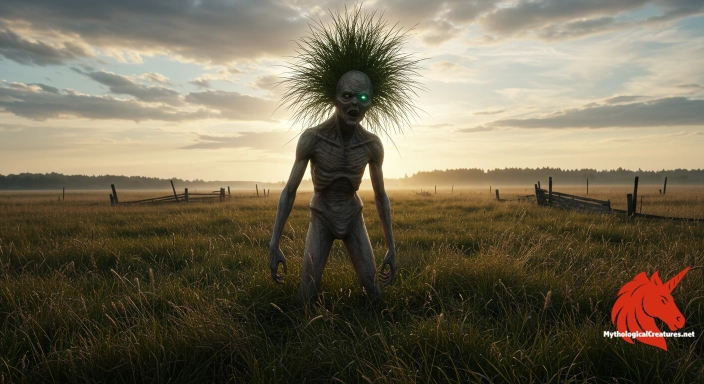
Polevik
Polevik - Embodies the dangers and superstitions associated with rural life and agricultural work.
Origins & First Encounters
Polevik is a striking embodiment of the untamed forces of nature in Slavic mythology, emerging from the rustic and deeply superstitious agrarian landscapes of Eastern Europe. This field spirit is rooted in centuries-old oral traditions, where the natural world and the supernatural seamlessly intertwine. The legends of Polevik reflect a belief system in which the land itself was animated by mysterious powers that could both nurture and doom. Early accounts, handed down through generations, portray Polevik as a being whose unsettling presence warns of impending misfortune in the fields. Emerging during pivotal moments—often at noon or sunset—this creature symbolises nature's liminal spaces, a time when the boundaries between the physical and the mystical blur. Its origins are intertwined with local customs and the rhythms of rural life, where the state of the crops and the temperament of the weather were deeply interlinked with the actions of unseen spirits. The lore surrounding Polevik served not only as a warning to those who failed in their duties but also as a reminder of the inherent unpredictability of nature. Over the ages, its myth has evolved, capturing both the beauty and the terror of the wild, uncultivated earth.
Source Texts & Tale Variants
The narrative of Polevik has been preserved primarily through folklore and the oral traditions of Slavic communities, where vivid descriptions and cautionary tales have been recited for generations. Numerous folktales recount encounters with the field spirit, detailing its ability to lead the unwary astray or even inflict harm on those who succumb to negligence. While there is no single definitive text that exclusively catalogues Polevik’s attributes, regional manuscripts and collections of fairy tales contain various episodes highlighting its capricious nature. In southern Russian folklore, for instance, the creature is distinguished by its green hair, adding a unique local flavour to its characterisation. Different variants are found across the Slavic world, each adapted to reflect the concerns and environment of its community, such as warnings issued to day labourers and travellers. Some accounts pit Polevik against other field-associated entities, broadening its narrative to encompass a wider spectrum of agricultural and seasonal symbolism. These collective sources demonstrate the versatility of the myth, showing it to be a living, breathing aspect of cultural memory rather than a static legend. As a repository of communal wisdom, the stories of Polevik continue to influence the cultural tapestry of the region.
Form & Powers
Polevik’s physical depiction is both eerie and memorable, crafted to evoke a sense of disquiet and otherworldliness. He is often described as a deformed creature, with an unsettling asymmetry that sets him apart from ordinary mortals, emphasising his supernatural origins. His eyes, strikingly different in colour, seem to mirror the unpredictable nature of the fields he haunts. The most unusual aspect of his appearance is his head, where strands of grass replace natural hair, rooting him symbolically in the world of crops and greenery. On some days, he is depicted wearing an all-black suit, and on others an all-white suit, adding an element of duality that hints at the balance between blessing and curse. In certain variants, a vivid portrayal of green hair further distinguishes him, suggesting his intimate connection with the life force of the fields. His stature may vary, with some accounts claiming he is of a grotesque small form while others imagine him as imposing and larger than life. Such fluid descriptions serve to underscore the mysterious and multifaceted nature of the spirit, making him both a figure to be feared and a symbol of the living earth.
Regional Faces
The characteristics of Polevik shift subtly across different regions, illustrating the rich diversity of Slavic myth. In the south Russian tradition, his green hair not only highlights his connection to flora but also serves as a marker of his regional identity. Elsewhere, the focus shifts to his attire, with local storytellers emphasising the dichotomy of his all-black and all-white suits to mirror the dual aspects of luck and peril. In some locales, he is portrayed as a malevolent trickster targeting those who fall asleep or neglect their labours, while other regions imbue him with a more ambivalent role as a guardian of the fields. Such variations underscore the adaptability of his character to the needs and values of different communities. Rural populations, for instance, saw in him a personification of nature's unforgiving unpredictability, crafting rituals for appeasement that incorporated specific regional symbols. The rituals, involving items like eggs, a rooster, a toad, and a crow, differ in detail from one locality to another, signifying richly localised beliefs. This regional diversity enriches the myth, connecting the abstract ideas of fate and nature to tangible local practices and landscapes.
Cultural Parallels
A comparative analysis places Polevik in an intriguing context alongside other mythological beings from nearby traditions. In Slavic lore, his role as a field spirit is complemented by the contrasting figure of Poludnisa, a beautiful maiden who appears at noon and whose actions complicate the conventional narratives of benevolent and malevolent spirits. While Polevik is often depicted as deformed and threatening, Poludnisa brings an ethereal beauty that belies her mischievous intent, highlighting a duality in the representation of field deities. This interplay of contrasting images reflects broader themes found in other mythologies where nature is both revered and feared, such as the Greek gods of agriculture who command respect for both their nurturing and destructive capacities. In regions across Europe, similar spirits appear, symbolising the living essence of the countryside and embodying the unpredictable mood of the earth. The stark differences in their appearance and behaviour invite comparisons with Western European faeries and goblin-like entities, which also oscillate between charm and menace. Such cross-cultural parallels underscore a universal human concern with the natural world and its unfathomable powers. Ultimately, Polevik’s unique blend of grotesque physical attributes and ambiguous moral character becomes emblematic of a broader mythological impulse to personify nature’s caprice.
Legacy & Modern Evolution
Over time, the myth of Polevik has evolved significantly, reflecting changing cultural landscapes and the reinterpretation of ancient symbols. Historically, he was feared as an active force in the fields, a vengeful spirit who punished neglect and carelessness among labourers. As contemporary society has shifted away from agrarian lifestyles, the figure of Polevik has found new interpretations in literature and art, sometimes reimagined as a metaphor for environmental degradation and the loss of connection with nature. Modern adaptations often portray him as a tragic figure, caught between the inexorable pull of ancient lore and the encroachment of modernity. This evolution has allowed artists and storytellers to explore themes of alienation and nostalgia for a rustic past. While some depictions retain the dark, foreboding qualities of the original folklore, others experiment with his character, blending elements of horror, comedy, and even melancholy. His legacy persists not only as a cautionary tale for those who disrespect natural forces, but also as a symbol of the enduring power of myth to encapsulate the anxieties of any era. In contemporary cultural discourse, Polevik continues to resonate, embodying both the mystery of a lost pastoral world and the relentless spirit of the untamed earth.
Interesting Fact
Polevik is often contrasted with Poludnisa, a beautiful field demon, highlighting the duality and complexity of field spirits in Slavic folklore.
Partner with us
Sponsor this space
Reach thousands of mythology enthusiasts with a curated placement on our creature pages.
Learn about sponsorshipQuick Creature Info
Associations:
Our Mythic Legendary Rating:

Also Sometimes Known As:
Habitat:
Supernatural Powers:
Physical Attributes:
Abilities:
Behavior:
Weaknesses:
Lore:
References
Discover Another Mythical Legend You May Not Have Heard Of?
Uncover the mysteries of ancient folklore and expand your knowledge of legendary beings from cultures around the world.
Dare to Meet the Menestho....
-3ab8e286-480b-4c22-ac9a-7c8eb9111531_small.webp "Depiction of Menestho")
Curated by the Mythological Creatures Team
Series editor: Mythological Creatures Directory
Primary desk: Northern & European Folklore Desk
(rev. November 2025)