
Sanxing: Sanxing, or the Three Stars, are revered deities in Chinese folk religion representing fortune, prosperity, and longevity.
-d31399dd-b7a9-4bac-b2f0-bad75763b983_small.webp "Sanxing - They symbolize essential attributes for a good and balanced life in Chinese culture")
Sanxing
Sanxing - They symbolize essential attributes for a good and balanced life in Chinese culture
the legend in five swipes.
the legend in five swipes.
When was the Sanxing first written about?
The Sanxing are a distinguished trio in Chinese mythology, revered as the celestial emissaries of fortune, prosperity, and longevity. Their origins trace back to ancient Chinese folk religion, evolving over the centuries into personified deities whose influence remains profound. Emerging in iconography during the Ming dynasty, they are represented as three venerable, bearded elders whose dignified demeanour conveys both wisdom and compassion. Each member of the Sanxing—Fu, Lu, and Shou—is associated with a specific celestial body: Jupiter, Ursa Major, and Canopus, respectively. Their embodiment of cosmic forces and earthly blessings swiftly established them as symbols for a life of good fortune. They have been intricately woven into cultural rituals, temple iconography, and domestic altars, reinforcing their role as bringers of auspicious energies. The integration of these deities into various aspects of daily life reflects China’s historical emphasis on harmony between the cosmos and human existence. Over time, their enduring image has served as a reminder that celestial power and human prosperity are inextricably linked. Their legacy continues to resonate in celebrations and practices that uphold the values of a balanced and blessed life.
What are the earliest texts about the Sanxing?
The rich tapestry of Sanxing lore is preserved in a variety of ancient texts, temple records, and enduring folk narratives. Early literary depictions, particularly from the Ming dynasty, set the stage for their humanised portrayal in visual and written traditions. Over successive generations, temple inscriptions and local accounts have chronicled their deeds and associations, enhancing their mythological stature. Numerous story variants exist, some referring to them by alternative names such as Cai, Zi, and Shou, which underscore the fluidity of their myth. These variations emerge from diverse regional narratives and interpretations by local storytellers. Oral traditions have also played a pivotal role, with community rituals reinforcing their miraculous attributes in everyday life. The interplay of scholarly manuscripts and grassroots cultural practices has enriched their narrative, ensuring that their myth persists in both intellectual and popular domains. The multilayered sources not only attest to their ancient origins but also illustrate how myth and tradition were interwoven over time.
What does the Sanxing look like?
The physical portrayal of the Sanxing is marked by an air of dignified antiquity and timeless wisdom. Artists traditionally depict them as venerable elder men adorned with long, flowing beards and period-specific robes that echo the aesthetics of the Ming dynasty. Their faces are rendered with a blend of serenity and authority, encapsulating the spirit of cosmic guidance. Each deity exhibits subtle differences: Fu is often shown with robust features symbolising abundant fortune, while Lu and Shou exhibit more refined, contemplative demeanours. The traditional imagery highlights detailed folds of their garments and the intricate designs that accentuate their elevated status. Their eyes, twinkling with benevolence, suggest an infinite reservoir of knowledge and compassion. In many depictions, symbolic elements such as celestial orbs or ambient light halos accentuate their connection to the cosmos. These detailed portrayals serve not only as religious iconography but also as cultural artefacts that celebrate the beauty of sacred tradition.
Sanxing: Regional Versions and Local Names
The portrayal of the Sanxing adapts subtly to regional artistic and cultural preferences while upholding a core iconographic narrative. In northern China, for instance, traditional depictions remain faithful to the classic Ming dynasty style, presenting them as solemn and wise custodians of fate. Southern regions and overseas Chinese communities often infuse their images with vibrant colours and local motifs, reflecting a more festive or even whimsical approach. In some local traditions, additional auspicious symbols or modified facial features are introduced to accentuate particular aspects of prosperity or longevity valued by that community. Despite these regional nuances, the prescribed left-to-right arrangement of Shou, Lu, and Fu remains a unifying theme. Local festivals and temple celebrations further contribute unique cultural elements that enrich their traditional imagery. The adaptation of their iconography in different locales demonstrates how a shared mythological framework can accommodate diverse regional aesthetics. Ultimately, these variations highlight the dynamic interplay between national tradition and local cultural expression.
Legends Comparable to That of the Sanxing
The Sanxing share intriguing similarities with other triadic figures found across different mythological traditions. Much like the Three Wise Men or Magi from Western lore, these Chinese deities collectively symbolise the bestowing of gifts that enhance human life. The use of a triad to encapsulate complex ideals such as fortune, prosperity, and longevity is a recurring motif in many cultures. In various East Asian traditions, comparable celestial triads serve to bridge the gap between the spiritual and the earthly realms. These figures are often portrayed as venerable sages, emphasising a universal archetype where wisdom and auspiciousness converge. While the specific attributes differ, the underlying symbolism of balance and blessing finds echoes in other cultural narratives. This cross-cultural resonance underscores both the uniqueness of the Sanxing and the shared human desire for tangible expressions of divine benevolence. Comparative analysis reveals how the triad serves as a powerful metaphor for the harmonious integration of different life forces.
Who tells the story of the Sanxing now?
The legacy of the Sanxing has evolved from ancient celestial symbolism to a modern emblem of cultural identity and seasonal celebration. Initially immortalised during the Ming dynasty, their representation has matured as artistic techniques and social contexts have transformed over time. Today, these deities are not confined to the realm of religious iconography; they have also become popular motifs in décor, fashion, and digital media. Their images are a constant presence during Chinese New Year, adorning homes, businesses, and public spaces as reminders of auspicious beginnings. The migration of Chinese communities worldwide has further broadened the reach and reinterpretation of their myth, blending traditional symbolism with contemporary cultural expressions. Modern renderings often meld classic iconography with innovative design, reflecting an ongoing dialogue between heritage and modernity. Through various media—from ceramics to urban art—the Sanxing continue to inspire and convey messages of hope and renewal. Their remarkable journey illustrates how ancient beliefs can adapt and thrive, remaining ever relevant in a changing world.
Interesting Fact
A unique aspect of Sanxing is their specific altar arrangement, which mirrors the traditional Chinese writing order, symbolizing the harmonious flow of fortune, prosperity, and longevity.
Mythological Treasures
Chinese Beasts: A field guide to the dragons and demon kings of Chinese myth
From river dragons to demon kings, with the legends that shaped five thousand years of storytelling.
Japanese Yokai: A field guide to the spirits and demons of Japanese folklore
Fifteen spirits, with the signs to watch for and what the old tales say to do if you meet one.
Greek Myths: A field guide to the monsters of ancient Greece
Every monster here earned its place in legend, and each gets a full page of artwork and the story behind it.
the legend in five swipes.
Mythology commerce, done carefully
Align your store with our global myth audience
If you sell myth-inspired jewellery, prints, decks, or collectibles, we can feature your brand without overwhelming the reading experience.
Partner with usQuick Creature Info
Associations:
Our Mythic Legendary Rating:

Also Sometimes Known As:
Habitat:
Supernatural Powers:
Physical Attributes:
Abilities:
Behavior:
Lore:
Related Creatures, Tales or Lore
- TThe Three Pure Ones
- TTrimurti
- TThe Three Fates
References
Discover Another Mythical Legend You May Not Have Heard Of?
Uncover the mysteries of ancient folklore and expand your knowledge of legendary beings from cultures around the world.
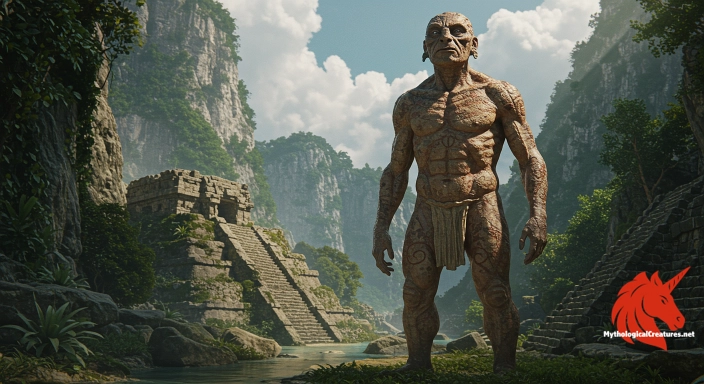
Dare to Meet the Ulmecatl....
The Mythological Creatures Book Series
Yokai, Greek, Norse, Egyptian & Chinese. Five illustrated field guides to the creatures the old stories either warned or told you about.
Curated by the Mythological Creatures Team
Series editor: Mythological Creatures Directory
Primary desk: Asian & Pacific Myth Cycles Desk
(rev. November 2025)