
Sathariel: Sathariel is a fallen angel and one of the leaders of the 200 fallen angels as described in the Book of Enoch.
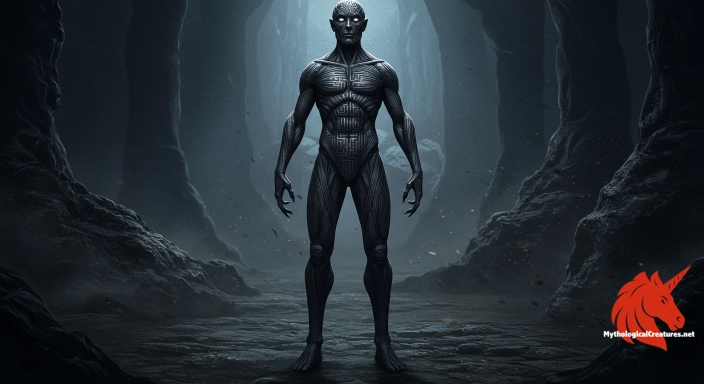
Sathariel
Sathariel - Embodies the hidden, chaotic and concealing aspects of divine fall and occult mysticism
Origins & First Encounters
Sathariel emerges from the mists of ancient apocalyptic literature as a being of both divine luster and enigmatic obscurity. In the Book of Enoch, he is introduced as the 17th among the Watchers, a cadre of fallen angels whose descent bridges sacred realms and the spectre of chaos. His name, rendered in Hebrew and Ancient Greek, carries suggestions of celestial transitions, intimating meanings like 'Moon of God' or 'Dawn of God.' Early narratives position him within a cultural milieu that interlaces mysticism with cosmic order, where every celestial journey is fraught with hidden mysteries. The figure of Sathariel has long been shrouded in an aura of both revelation and concealment, challenging established hierarchies of divine beings. His portrayal in apocalyptic texts hints at transformative processes that blur the divide between light and darkness. Layers of symbolism throughout his mythos invite the reader to contemplate the enigmatic interplay of destiny, wisdom, and the occult. As his legacy weaves together strands of ancient tradition and later mystical reinterpretation, he stands as a testament to the enduring fascination with beings that transcend mortal understanding. His introduction in early sacred texts marks the beginning of a profound dialogue between divine radiance and the secrets that lie in shadow. Over time, this mysterious entity has become a symbol of the eternal balance between revelation and obscurity.
Source Texts & Tale Variants
The primary foundation of Sathariel’s myth is found in the Book of Enoch, where his role among the fallen angels is first chronicled. Early manuscripts in Hebrew and Ge'ez provide variant interpretations of his name and attributes, expanding his mystique through layers of linguistic nuance. Occult writings emerging during the early modern period further enriched his profile with esoteric qualities that diverge from strictly canonical accounts. Both ancient apocryphal texts and later mystical treatises offer fragmented glimpses into his nature, which inspire multiple interpretative traditions. The Hermetic Order of the Golden Dawn reimagined his character as part of a wider celestial and occult system, blending esoteric symbolism with older mythic elements. Aleister Crowley’s work, among other modern occultists, imbued Sathariel with resonances of dark wisdom and the reordering of cosmic hierarchies. These textual traditions, steeped in both reverence and subversion, allow for an expansive view that welcomes reinterpretation. Contemporary occult organizations continue to revisit these early sources, interweaving them with modern myth-making and symbolic allegory. This vast array of texts, from ancient scriptural fragments to modern magical writings, underpins a multifaceted narrative that defies singular explanation. Through the convergence of such diverse sources, Sathariel’s story remains both a relic of ancient lore and a living enigma in occult thought.
Form & Powers
Sathariel is rarely depicted with a fixed anatomical framework, his presence more akin to a shifting shadow or ephemeral labyrinth than a creature defined by solid form. His physical representation often invokes the imagery of a dark, formless void where clarity gives way to enigmatic patterning. Some artistic renderings hint at a cloaked silhouette interwoven with subtle, luminous details that recall moonlit splendour or the faint glow of dawn. The interplay of light and darkness in his form reinforces his role as a guardian of hidden, esoteric riddles. Visual interpretations frequently suggest that his very contours dissolve into chaotic strokes of shadow, echoing the motif of a labyrinth ruled by the mysteries of the Abyss. Observers note that his visage might be marked by transient and piercing eyes or ambiguous features that defy a conventional portrait of being. The ambiguity extends to his scale, leaving his presence at times vast and all-encompassing, while at others, intimate enough to evoke a sense of personal introspection. Such artful depictions underscore the belief that Sathariel’s true form is a puzzle—a constantly morphing symbol of concealment and the allure of the unknown. His ever-elusive physicality mirrors the dual essence of knowledge and mystery inherent in occult tradition. Each portrayal serves as a visual parable, inviting the viewer to explore realms beyond the literal and into the poetic.
Regional Faces
Across different cultural landscapes, Sathariel’s portrayal adapts to local mythic and mystical sensibilities in strikingly varied forms. Early Jewish apocalyptic texts present him as a figure deeply embedded in a celestial hierarchy, a role that stresses his connection to divine cosmic order. In contrast, the esoteric traditions of Western mysticism portray him as a symbol of concealed knowledge, often interlaced with the theatrical language of the occult. The Hermetic Order of the Golden Dawn and similar movements cast his image in a distinctly European light, where the interplay of darkness and revelation becomes central to his identity. Middle Eastern traditions, meanwhile, emphasise his connections to the celestial spheres, particularly with notions of moon cycle and dawn, which resonate powerfully within local cosmological beliefs. Some modern occult groups further reframe his role by ascribing rulership by archdemonic figures, thereby linking regional folklore with broader occult narratives. Variations in his depiction—from a distant, almost mythic observer to a dynamic, influential presence—indicate how local cultures reappropriate his symbolism. Regional artistic and literary adaptations enrich his story by embedding him in the fabric of local religious debates and philosophical discourses. This diversity exemplifies the flexibility of myth, where a single figure like Sathariel can transcend geographical confines to embody universal themes of mystery and metamorphosis. Each cultural reinterpretation adds a new layer to his mythos, ensuring that his enigmatic stance remains ever-evolving and deeply resonant.
Cultural Parallels
Sathariel occupies a unique niche in the spectrum of mythological entities, prompting comparisons with other illustrious fallen angels and dark celestial beings. His role as one of the Watchers finds echoes with other figures in apocalyptic traditions who similarly bridge the divide between divine order and chaotic rebellion. The duality inherent in his character is reminiscent of other mirror entities within mystical systems, where a positive divine force is counterbalanced by its shadow counterpart. In Kabbalistic thought, for instance, the notion of a qliphah mirroring a sefirotic attribute invites a rich dialogue between light and darkness, much like Sathariel’s own ambiguous essence. Comparable to other enigmatic figures in various mythologies, his narrative encapsulates both a loss of innocence and the transformative potential of hidden knowledge. Some Eastern traditions offer parallel motifs where spirits of transition play roles akin to the dark heralds found in Western occultism. His thematic association with labyrinths and chaotic riddles finds a subtle kinship with mythical creatures that guard secret paths, reminiscent of serpentine labyrinth guardians in classical myths. When set against figures like Satan or Moloch in modern interpretations, his layered symbolism becomes even more pronounced, contrasting mere embodiments of evil with characters that provoke critical reflection on cosmic order. Such comparative analyses help to illuminate the broader cultural dialogue that spans continents and epochs, where archetypes continuously evolve across religious and philosophical lines. In this way, Sathariel stands as both a singular figure and a mirror reflecting the universal human fascination with the interplay of light, shadow, and the ineffable mysteries that lie between.
Legacy & Modern Evolution
The evolution of Sathariel over the centuries reflects a profound transformation from a mysterious Watcher of ancient texts to a potent symbol in modern occultism. Once confined to apocalyptic narratives, his figure has been reimagined by influential occultists such as Aleister Crowley and practitioners of the Hermetic Order of the Golden Dawn. This reconfiguration shifted his identity from a mere celestial fall from grace to a multifaceted emblem of concealed wisdom and chaotic energy. In contemporary settings, his image is frequently explored as a metaphor for the labyrinthine pathways of the subconscious and the complex dualisms of light and dark. Modern artistic and literary works have embraced his mutable form, often casting him as a bridge between ancient myth and modern existential inquiry. His legacy now extends into various subcultures, where reinterpretations highlight themes of transformation, secret knowledge, and the subversion of traditional hierarchies. The character of Sathariel serves as a focal point in discussions about the nature of evil, the interplay of destiny, and the perennial search for hidden truths. His enduring appeal is found in the way his myth symbolically encapsulates the eternal struggle between revelation and obfuscation. As modern occult narratives continue to evolve, Sathariel’s enigmatic presence remains a powerful reminder of the complexities inherent in the interplay between forbidden knowledge and luminous divinity. The shifting contours of his myth underscore not only an abiding fascination with what lies beyond the visible, but also humanity’s relentless quest to understand the profound mysteries that shape existence.
Interesting Fact
Sathariel's unique position as both a fallen angel and a qliphah symbolises the intricate interplay between divine order and chaos, making him a compelling subject of study in both religious and occult traditions.
Reach myth fans
Connect your myth-driven brand with this audience
Our readers are writers, educators, gamers, and collectors who care about mythology. Enquire about a limited sponsor placement on creature pages.
Enquire about sponsorshipQuick Creature Info
Origin:
Associations:
Our Mythic Legendary Rating:

Also Sometimes Known As:
Habitat:
Supernatural Powers:
Physical Attributes:
Abilities:
Behavior:
Lore:
References
Discover Another Mythical Legend You May Not Have Heard Of?
Uncover the mysteries of ancient folklore and expand your knowledge of legendary beings from cultures around the world.
Dare to Meet the Kelpie....

Curated by the Mythological Creatures Team
Series editor: Mythological Creatures Directory
Primary desk: Hellenic & Ancient Mediterranean Desk
(rev. November 2025)