
Samael: Samael is a multifaceted archangel in Jewish tradition, renowned as both the angel of death and the accuser of sins.
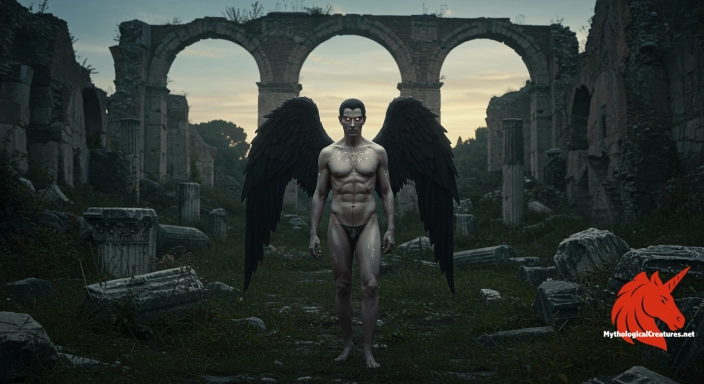
Samael
Samael - Samael embodies the paradox of divine justice by executing punishment and purging sin, reflecting both destructive and redemptive forces within the divine order.
Origins & First Encounters
Samael emerges in ancient texts as an archangel whose nature defies a simple classification into good or evil. His name, meaning "Venom of God," hints at the paradox inherent in his role as both a divine servant and a fierce executor of celestial justice. He is traditionally depicted as the accuser and adversary, a figure who carries out harsh decrees that sometimes result in a greater good. Rooted in Talmudic and Midrashic traditions, his earliest attestations are found in narratives that explore the balance between divine mercy and retribution. Over time, his story expanded to include roles in the Garden of Eden myth, notably through his connection with the serpent that precipitated humanity’s fall. He is portrayed as a component of the heavenly host, tasked with destructive duties that serve a higher purpose, particularly in punishing sin. His complex character reflects a cultural understanding where divine justice is not purely benevolent but interwoven with severity and necessary correction. The evolution of Samael’s myth speaks to an enduring fascination with the ambiguous nature of divine power. His narrative continues to inspire reflection on the dualities that mark both human and divine existence.
Source Texts & Tale Variants
Ancient texts such as the Talmud and Midrash provide the primary foundation for Samael’s multifarious character, establishing him as both an accuser and an agent of death. Multiple story variants emerge across post-Talmudic literature, where he is depicted as a figure who enacts divine punishment without being unambiguously malevolent. Early accounts delineate him as an angel who performs grim, yet necessary, duties in service to God rather than embodying pure evil. In the Book of Job and Exodus, his actions align with that of an adversary, yet these roles are balanced by his continued service to the divine will. Later midrashim elevate him to the title of "head of satans," indicating a hierarchical complexity within the celestial realm. Some traditions even intertwine his legacy with other controversial figures, presenting him as the partner of Lilith or the progenitor of Cain in specific accounts. Gnostic cosmologies further complicate his portrayal, sometimes equating him with a demiurgic force responsible for the material world. This layered narrative structure illustrates how his myth has been adapted and reinterpreted over centuries, reflecting shifts in theological and cultural perspectives. Each variant contributes to a tapestry of stories that underscore the multifaceted and evolving depiction of Samael.
Form & Powers
Descriptions of Samael’s physical form are sparse in ancient texts, yet a composite image has emerged from artistic and literary interpretations. He is often envisaged as a formidable presence whose countenance melds both celestial splendour and a foreboding aura. Traditional depictions sometimes present him in dark, flowing robes, symbolising the somber aspects of his role as the angel of death. His eyes are frequently described as penetrating and austere, conveying a profound sense of divine authority and sorrow. In some medieval illustrations, he is adorned with intricate, winged regalia that hints at his archangel status while also carrying an unearthly, almost demonic, patina. Imagery associating him with serpentine elements—such as the beast he is said to have ridden in Eden—further reinforces his connection to both creation and destruction. Variations in his portrayal may include accoutrements like a scythe or other symbolic implements of judgement and mortality. Despite the diverse interpretations, a consistent theme is his ability to evoke both awe and dread through his imposing, shadowed form. This blend of divine beauty and ominous forewarning remains central to the enduring visual mythos of Samael.
Regional Faces
Samael’s character has been reshaped significantly by the cultural contexts in which his myth has taken root. Within Jewish mysticism, he is recognised as a critical figure whose stern duties underscore the necessity of divine retribution and balance. In some Kabbalistic traditions, his ambiguous morality allows him to act as both a punisher and a protector, mirroring the tension between justice and mercy. European interpretations, influenced by the convergence of Jewish and Christian thought, have occasionally equated him with the fallen angel or even with aspects of Satan, though his role remains distinct. Middle Eastern traditions tend to retain a more nuanced view, highlighting his function as an accuser rather than an unmitigated symbol of evil. Variations also occur between Sephardic and Ashkenazi narratives, with each cultural branch adapting his story to address local spiritual and ethical concerns. The differences in his portrayal across regions reveal a broader dialogue about the nature of divine power and human responsibility. His myth serves as a canvas upon which different communities project their anxieties and aspirations regarding justice and punishment. Overall, regional adaptations of his legend have enriched his character, making Samael a versatile figure in the world of myth and mysticism.
Cultural Parallels
The multifaceted nature of Samael invites compelling comparisons with analogous figures in diverse mythological traditions. In Christian lore, there exists a tendency to align him with Satan, although his origins as an angelic messenger set him apart from the wholly malevolent modern devil. Similarities can be drawn with the Islamic Iblis, where defiance and the capacity for both destruction and protection are intrinsic characteristics. While these figures share the motif of a rebellious divine spirit, Samael’s narrative uniquely intertwines the roles of punisher and necessary agent of divine will. Comparative analysis reveals that many cultures grapple with the paradox of a divine force that administers both mercy and retribution, reflecting a universal theme in human belief systems. Ancient Near Eastern deities associated with destruction and creation further echo the dual aspects seen in Samael's myth. His character, viewed through various cultural prisms, embodies the enduring tension between light and dark. This interplay between contrasting forces is a recurring theme in global mythologies, reinforcing the idea that divine agency often encompasses elements of both benevolence and severity. In this way, Samael stands as a bridge between disparate theological and cultural landscapes, inviting ongoing dialogue about the complexities of divine intervention.
Legacy & Modern Evolution
The historical evolution of Samael’s myth mirrors the broader shifts in religious thought and artistic expression over the centuries. Initially emerging as an angelic figure with firmly defined responsibilities, his character later absorbed layers of complexity, gradually blurring the line between a servant of God and an embodiment of destructive force. In medieval times, he came to represent the intricate balance between divine justice and the harsh realities of mortal sin, a duality that resonated deeply with contemporary spiritual concerns. Modern interpretations have further expanded his legacy, portraying him in literature, film, and art as a tragic and conflicted figure rather than a mere harbinger of doom. Occult traditions and alternative spiritualities often revere him not simply as an agent of death, but as a transformative figure capable of symbolising both the end and the rebirth of spiritual paradigms. His enduring allure lies in his ambiguity, which allows successive generations to project and reimagine the nature of divine intervention and cosmic order. Contemporary scholars and artists frequently explore his themes to question established dichotomies between good and evil. As a result, Samael serves as a powerful emblem of the eternal interplay between loss and renewal, punishment and redemption. His layered representation continues to evolve, ensuring that his myth remains a living dialogue within modern cultural and spiritual landscapes.
Interesting Fact
An intriguing aspect of Samael is his paradoxical role as both a servant of God and an embodiment of destruction, which blurs traditional boundaries between good and evil in angelic hierarchies.
Sponsor this space
Tasteful, fixed-fee placements for myth projects
No bidding wars or flashing banners. We offer simple placements for a small set of creators and brands aligned with our readers.
Request further detailsQuick Creature Info
Origin:
Our Mythic Legendary Rating:

Also Sometimes Known As:
Habitat:
Supernatural Powers:
Physical Attributes:
Abilities:
Behavior:
Lore:
References
Discover Another Mythical Legend You May Not Have Heard Of?
Uncover the mysteries of ancient folklore and expand your knowledge of legendary beings from cultures around the world.
Dare to Meet the Liver bird....

Curated by the Mythological Creatures Team
Series editor: Mythological Creatures Directory
Primary desk: Hellenic & Ancient Mediterranean Desk
(rev. November 2025)