
Seraph: Seraphim are the highest order of celestial beings in Abrahamic traditions.

Seraph
Seraph - Seraphim represent the highest order of angels, embodying divine purity and the fiery love of God.
Origins & First Encounters
The seraph is a luminous celestial being whose origins extend back to ancient Jewish revelations and early prophetic writings. Emerging in the vivid visions of Isaiah, these divine entities are imbued with an aura of transcendent purity and formidable power. Their earliest attestations reveal figures that are both awe-inspiring and enigmatic, serving as messengers who radiate the sanctity of the divine presence. They have long been depicted as agents of intense holy fire, symbolising the unyielding brilliance of divine love and judgement. Beyond their biblical origins, seraphim have been woven into the fabric of later theological traditions, notably within Christian and Islamic contexts. They occupy the highest echelons of celestial hierarchies, often associated with the very essence of unblemished holiness. This enduring imagery has not only enriched religious literature but also influenced artistic endeavours across centuries. In the tapestry of spiritual lore, the seraph exemplifies the bridge between the earthly and the eternal, embodying both mystery and moral authority. Their portrayal continues to evoke wonder, serving as a focal point for meditations on purity and divine order. The seraph remains a dynamic symbol of celestial fire and eternal grace in myriad cultural narratives.
Source Texts & Tale Variants
Ancient sacred texts provide a multifaceted view of the seraph that has enriched its mythological status over time. The Book of Isaiah presents a vivid image of six-winged beings exalting the divine through ceaseless hymns of holiness. The apocalyptic vision in the Book of Revelation reinforces this portrayal, situating seraphim among the highest orders of celestial beings. Additional insights are offered by the semi-canonical Book of Enoch, which integrates these entities into a broader cosmological framework. Rabbinic literature and mystic commentaries further elaborate on the seraph’s role as a fiery intermediary between God and creation. Medieval angelological treatises expanded upon these scriptural details, codifying the seraph as an emblem of divine passion and untamed luminosity. In Islamic cultural traditions, while the terminology may differ, there emerge parallel conceptions of radiant, winged messengers that echo seraphic attributes. Illuminated manuscripts and artistic renderings from the medieval period serve to reinforce and sometimes reinterpret these ancient texts. Variations across these sources illustrate a rich tapestry of narrative traditions and symbolic interpretations. Together, these texts and legends form an enduring literary and iconographic foundation that continues to captivate believers and scholars alike.
Form & Powers
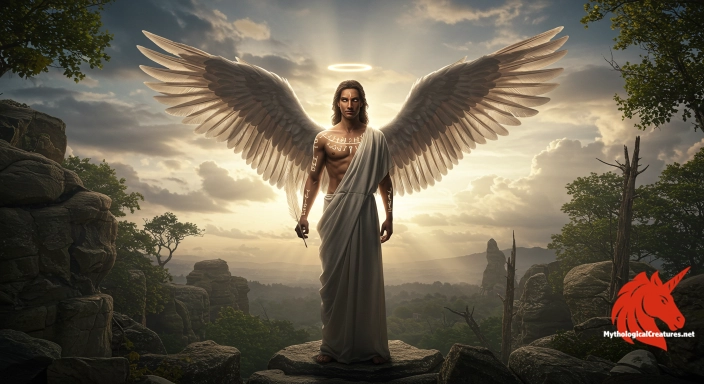
Iconography of the seraph is marked by the distinctive portrayal of six resplendent wings that convey both motion and mystery. Two of these wings are often shown veiling the face, hinting at an ineffable brilliance that mortals cannot fully behold. Another pair envelop the feet, suggesting modesty and the sacred nature of their divine station. The remaining wings are rendered in dynamic sweeps that evoke swift, ethereal flight amid celestial realms. Their entire form is typically suffused with a radiant glow, as though composed of pure light intermingled with flickers of holy fire. Artistic descriptions sometimes include intricate patterns or subtle textures across the wings, embellishing their fiery essence. The seraph’s physique is less grounded in earthly anatomy and more an expression of transcendent energy and fluid motion. Their luminous presence, often depicted in warm hues of gold and amber, reinforces the symbolism of burning purity and divine illumination. In some traditions, hints of humanlike features can be discerned beneath an overwhelming aura, accentuating their dual nature as both divine and reminiscent of mortal form. This elaborate physical portrayal serves as a visual testament to the seraph’s role as a celestial guardian and a conduit of divine radiance.
Regional Faces
The portrayal of the seraph reflects a remarkable diversity influenced by varying cultural and regional perspectives. In traditional Jewish thought, seraphim are revered as fiery emissaries perpetually attendant to the divine throne, embodying the essence of heavenly sanctity. European Christian art further amplified this image, often depicting them in dramatic, vibrant settings that highlighted their six-winged form and intense luminosity. In contrast, certain Islamic traditions, while not always naming them explicitly as seraphim, celebrate analogous celestial beings whose radiant presence underscores themes of purity and divine authority. Eastern European folk narratives sometimes weave seraph-like figures into local myth, associating these beings with both protection and the mystery of natural fire. Regional iconography has, at times, adapted the seraph’s form to align with local artistic styles, utilising distinctive colour palettes and stylistic flourishes. These adaptations have allowed the seraph to resonate with diverse spiritual communities, each interpreting its symbolism within their own cultural framework. Through poetic depictions and mystical symbolism, local traditions have enriched the narrative of the seraph, linking it to broader themes of light and transformation. The convergence of these cultural influences underscores the seraph’s universal appeal as a bridge between human aspiration and the divine. Its enduring presence across regions continues to inspire a synthesis of ancient lore and contemporary interpretation.
Cultural Parallels
Comparatively, the seraph occupies a unique niche when set alongside other celestial beings in various mythological traditions. It is frequently weighed against cherubim and archangels, though its fiery, six-winged depiction often sets it apart with a character of its own. The motif of burning radiance found in the seraph bears resemblance to the fire spirits of Zoroastrian lore, where celestial flames symbolise both purification and cosmic order. Similar heavenly emissaries appear in Eastern traditions, where luminescent beings serve as reminders of divine benevolence and transcendence. In Greco-Roman mythologies, although messengers of the gods are not as elaborately depicted, certain depictions do echo the seraph’s dynamic energy and symbolic fire. The phoenix, with its cycle of rebirth and association with flames, offers another thematic parallel that underscores the transformative power of fire. Despite the differing cultural contexts, these various figures all point to a human fascination with light, purity, and the ineffable. The seraph’s blend of mystic fire and flight creates an archetype that resonates with global iconography of the heavenly and the sublime. Comparative analyses hint at a shared symbolic vocabulary across civilizations, one that elevates the seraph as a beacon of divine inspiration. Ultimately, this cross-cultural dialogue enriches our understanding of how humanity has long sought to articulate the mysteries of the divine through the imagery of luminous, winged beings.
Legacy & Modern Evolution
The seraph has journeyed through millennia as a potent symbol of divine fire and celestial authority, evolving significantly from its ancient scriptural roots. Early biblical visions laid the groundwork for a rich artistic and literary tradition that has continually reimagined its transcendent character. Medieval and Renaissance artists depicted the seraph with dramatic flair, their six wings and radiant aura becoming synonymous with the sublime presence of the divine. Over time, this imagery expanded into modern art, where contemporary interpretations fuse traditional iconography with new media and digital techniques. The seraph now appears in a variety of modern cultural forms, including literature, film, and graphic novels, each adaptation recontextualising its age-old symbolism. Its portrayal in modern syncretic spirituality often emphasises themes such as renewal, transcendence, and the quest for purity in an ever-changing world. As a celestial archetype, the seraph also continues to influence theological discussions, where it is invoked as a symbol of both divine inspiration and moral aspiration. The evolution of its image reflects broader shifts in religious thought, bridging the intimate human experience with the mysteries of the cosmos. This enduring legacy is a testament to the seraph's adaptability and its capacity to inspire wonder across different eras. Ultimately, the seraph remains a timeless emblem of sacred light and transformative power in both historical and contemporary contexts.
Interesting Fact
An interesting observation is that the seraphim’s depiction with six wings and a fiery aura has transcended ancient texts, influencing modern visual representations of angels in various cultures and media.
Sponsor this space
Tasteful, fixed-fee placements for myth projects
No bidding wars or flashing banners. We offer simple placements for a small set of creators and brands aligned with our readers.
Request further detailsQuick Creature Info
Associations:
Our Mythic Legendary Rating:

Also Sometimes Known As:
Habitat:
Supernatural Powers:
Physical Attributes:
Abilities:
Behavior:
Lore:
Related Creatures, Tales or Lore
- CCherubim
- TThrones
- AArchangels
References
Discover Another Mythical Legend You May Not Have Heard Of?
Uncover the mysteries of ancient folklore and expand your knowledge of legendary beings from cultures around the world.
Dare to Meet the Israfil....
Curated by the Mythological Creatures Team
Series editor: Mythological Creatures Directory
Primary desk: Hellenic & Ancient Mediterranean Desk
(rev. November 2025)