
Shapi Leima: Shapi Leima is the revered Meitei goddess of rodents.
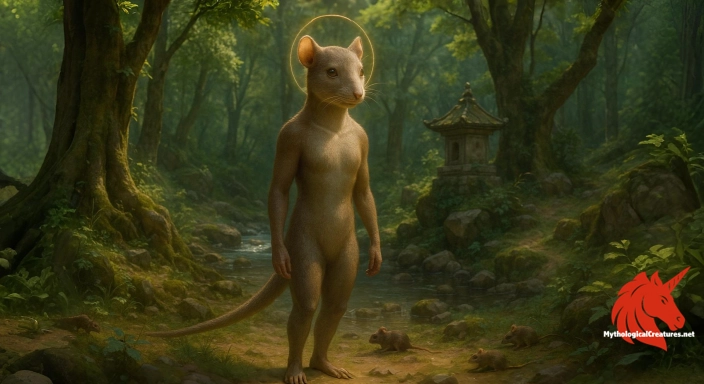
Shapi Leima
Shapi Leima - She represents the divine embodiment and control of rodent life, reflecting the unique interplay between nature and the divine in Meitei culture.
Origins & First Encounters
Shapi Leima is a captivating figure within the rich tapestry of Meitei mythology, revered as the goddess of rodents and symbolising both the overlooked and the extraordinary within nature. Her origins are steeped in the ancient traditions of Manipur, where the spiritual and the natural world intertwine in everyday life. Born into a divine lineage alongside her sisters Khunu Leima and Nganu Leima, her narrative is interwoven with themes of familial bonds and shared destinies. She is often celebrated for her unique role that bridges the delicate realm of small creatures and the greater cosmic order. The sacred legends portray her as a custodian of nature’s minutiae, embodying qualities of fertility, resilience, and transformation. Tales passed down through generations reveal her as both nurturing and enigmatic, reflecting the duality of life’s abundance and mystery. In the context of traditional rituals, her presence has long been honoured in local festivals that accentuate the importance of every living form. Ancient oral traditions have kept her memory alive, ensuring that her myth remains a vibrant part of cultural identity. Her story, enriched by symbolism and local reverence, invites a deeper exploration of the inherent connections between the divine and the natural world. Ultimately, Shapi Leima stands as a testament to the belief that every element of nature, no matter how small, is woven into the destiny of mankind.
Source Texts & Tale Variants
Ancient palm-leaf manuscripts and royal chronicles of Manipur provide some of the earliest glimpses of Shapi Leima, highlighting her association with the rodent domain in ritualistic narratives. Oral tradition has played a pivotal role in shaping her legend, with bards and storytellers recounting her exploits in rhythmic verses and evolving ballads. Multiple versions of her myth exist, each adorned with variations that reflect the dynamic interplay between divinity and the mortal world. One well-known narrative relates that she, along with her sisters, married the same mortal man, an account that has given rise to discussions on divine-human interactions. Local performances and traditional dances often incorporate episodes from her life, further realising her multifaceted persona through expressive art. Some stories delve into her nurturing aspects, depicting her as a protector of the natural order, while others imbue her with a playful and cunning character. As the myth has been transmitted orally, subtle regional variations have emerged, allowing her attributes to adapt to changing cultural contexts. In some retellings, her powers over rodents are amplified, serving as a metaphor for fertility and regeneration. The convergence of various narrative threads over time has enriched her myth, ensuring its resilience and versatility. Modern reinterpretations continue to explore these ancient texts, melding tradition with contemporary sensibilities to celebrate her enduring legacy.
Form & Powers
Traditional iconography paints Shapi Leima as a deity of ethereal grace whose form reflects the nimble and elusive nature of the rodents she governs. She is often depicted with delicate, refined features, including eyes that sparkle with a mysterious inner light reminiscent of moonlit nights. Her countenance exudes both wisdom and mischief, capturing the dual essence of nurturing care and playful cunning. Artistic renditions frequently incorporate rodent motifs, with subtle embellishments such as hints of whiskers or tiny paw prints woven into her garments and jewellery. Her attire is described as flowing and elegant, with intricate patterns that mimic the winding paths and hidden burrows in nature. Some portrayals even suggest that she possesses an almost ethereal luminescence, linking her to the soft glow of twilight. Her hair, depicted as cascading in gentle waves, is sometimes styled to evoke the soft fur of a rodent, enhancing her connection to the animal realm. In sculptures and traditional paintings, Shapi Leima’s posture is both graceful and inviting, symbolising her role as a mediator between the divine and the earthly. The balance of strength and delicacy in her form underscores how smallness and power can harmoniously coexist. Overall, the artistic expression of her physical appearance remains a blend of symbolic elements and imaginative artistry that celebrates her as a timeless embodiment of nature’s subtle resilience.
Regional Faces
Regional interpretations of Shapi Leima display a rich variety that reflects the diverse cultural landscape of Manipur and its neighbouring areas. In certain communities, she is revered as a benevolent guardian who not only watches over the rodent population but also ensures the wellbeing of households and farmlands. Local rituals and festivals often adapt her myth to local needs, portraying her as an essential link between agricultural abundance and the capricious forces of nature. Her name, rendered in subtle variations such as Shabi Leima or Sapi Leima, speaks to the local linguistic and cultural nuances that colour her myth. Some villages emphasise her role as a protector against pests, thereby invoking her aid in maintaining a balanced ecosystem. In urban settings, her story is sometimes modernised to resonate with themes of environmental conservation and sustainable living. Traditional art forms, including dance and theatre, have been used to depict her legend with creative adaptations that reflect the spirit of the local community. Regional iconography may include unique symbols and artefacts that differ from the canonical images found in more central texts. The flexibility of her narrative has allowed her to transcend boundaries, becoming a cultural symbol that is celebrated differently across varied settings. Thus, her myth is not fixed but continually evolves, mirroring the changing priorities and creative expressions of local traditions.
Cultural Parallels
Shapi Leima’s distinct role in Meitei mythology finds intriguing parallels in other cultural mythologies where modest creatures are exalted as divine messengers or guardians. Similar to certain East Asian deities who preside over natural elements or small animals, she embodies the belief that every creature holds a spiritual significance. Comparisons can be drawn with deities in Roman tradition who were assigned specific, often overlooked, domains within nature, suggesting a universal tendency to elevate even the humblest life forms. In various indigenous cultures, narratives honour spirits of nature in forms that echo her guardianship of the rodent realm. Her myth serves as a counterpoint to more grandiose deities, highlighting how divine power can manifest itself in subtle and unexpected forms. The reverence for small creatures is also seen in aspects of local animistic traditions, where every being is thought to contribute to the balance of the world. Cross-cultural connections emerge when considering the symbolic use of animals in folklore, with figures in some traditions representing resourcefulness and protection much like Shapi Leima. While many mythic figures command vast domains, her focus on the modest rodent challenges conventional hierarchies in the pantheon of deities. These comparisons illustrate that a unified human experience often finds its voice in diverse expressions, whether through the lens of epic grandeur or gentle guardianship. Ultimately, her narrative underscores a shared theme across cultures: the recognition of life’s intricate interdependence and the sanctity of even the smallest beings.
Legacy & Modern Evolution
The evolution of Shapi Leima’s myth reflects a transformative journey from ancient oral traditions to contemporary cultural expressions, celebrating the enduring power of nature’s subtleties. Over centuries, her image has shifted from that of a local folk deity to a symbol resonating with modern ecological awareness. Traditional rituals and ceremonial gatherings continue to pay homage to her, preserving a legacy that honours nature and its myriad forms. With the advent of modern art and literature, her narrative has been reimagined to highlight themes of conservation, resilience, and the interconnectedness of all life. Contemporary artists and writers embrace her story as a metaphor for balancing tradition with innovation, often drawing on her image to advocate for ecological sustainability. In academic and popular cultural discussions, her myth is studied not just as a relic of ancient belief, but as a living narrative that adapts to societal change. Her portrayal in festivals and temple rituals remains a vibrant celebration of local heritage and community solidarity. The dynamic reinterpretation of her legend has also produced innovative visual representations that blend classical motifs with modern aesthetics. Her continuous re-emergence in various media underscores a broader cultural commitment to preserving nature’s legacy. In modern times, Shapi Leima stands as a potent emblem of the enduring bond between humanity and the natural world, inspiring a respect for even the smallest elements that sustain life.
Interesting Fact
It is intriguing that all three sister goddesses, including Shapi Leima, share a marital union with the same mortal man, highlighting the complex and non-conventional divine relationships in Meitei mythology.
Curated sponsor space
One subtle banner. Thousands of myth lovers.
We offer a small number of curated sponsor spots for relevant books, courses, games, and art. No clutter, just well-matched partners.
Partner with usQuick Creature Info
Associations:
Our Mythic Legendary Rating:

Also Sometimes Known As:
Habitat:
Supernatural Powers:
Physical Attributes:
Abilities:
Behavior:
Lore:
Related Creatures, Tales or Lore
References
Discover Another Mythical Legend You May Not Have Heard Of?
Uncover the mysteries of ancient folklore and expand your knowledge of legendary beings from cultures around the world.
Dare to Meet the Chloris....
-b52dfecb-743e-468e-9078-03681b474ec3_small.webp "Depiction of Chloris")
Curated by the Mythological Creatures Team
Series editor: Mythological Creatures Directory
Primary desk: Asian & Pacific Myth Cycles Desk
(rev. November 2025)