
She-wolf: The She-Wolf is a legendary Italian wolf from Roman mythology, famed for nurturing the abandoned twins Romulus and Remus.

She-wolf
She-wolf - Her image symbolizes the birth and nurturing of Rome, making her one of the most enduring icons of ancient mythology.
the legend in five swipes.
the legend in five swipes.
She-wolf: How the Story Began
The she-wolf emerges in myth as a figure of striking duality, embodying both the fierce spirit of the wild and the compassionate nature of a nurturer. Born out of ancient Roman lore, her story is interwoven with the myth of Romulus and Remus, where an untamed creature bestows life-saving care upon abandoned heirs of a profound destiny. Her appearance in early Roman narratives marks one of the most enduring episodes in the mythic foundations of a burgeoning empire. The tale is set against a backdrop of rustic wilderness and the harsh realities of early life, a contrast that only deepens the mystique surrounding her character. Over time, this creature evolved into an emblem of both resilience and the essential interconnection between the natural and human realms. The narrative celebrates her exceptional role as both protector and symbol of rebirth, qualities that resonated with early Roman values. In the broader cultural context, she epitomises the paradox of nature: brutal yet benevolent, wild yet caring. Her enduring legacy underscores how a single myth can encapsulate the spirit of a civilisation while inspiring admiration across the ages.
She-wolf: From Oral Tale to Written Record
The she-wolf’s tale is rooted in a variety of ancient textual and artistic sources, each contributing unique nuances to her legend. Classical historians such as Livy and Plutarch recount the nurturing encounter between the wolf and the infant twins, underscoring her pivotal role in the birth of Rome. These narratives, alongside later interpretations, have been instrumental in cementing her status in Roman mythology. In addition to literary accounts, artistic depictions on coins, sculptures, and murals have immortalised her image, capturing the simultaneous wildness and tenderness of her nature. Across different periods, storytellers and chroniclers have introduced variations in detail, some portraying her with almost divine attributes while others focus on her naturalistic aspects. Folklore traditions inherited from these classical sources continue to portray the she-wolf not only as a literal caregiver but also as a metaphorical guardian of Rome’s destiny. The layers of interpretation found in different sources highlight the flexibility of myth to adapt to cultural and historical changes. Altogether, these combined strands of evidence have contributed to a rich tapestry that has allowed the she-wolf’s image to evolve and endure over millennia.
Did the She-wolf have any weaknesses?
The she-wolf is depicted with an arresting physicality that combines raw animal strength and an almost tender expression. Her body is robust and muscular, evoking the power of a creature well-adapted to the challenges of the untamed wilderness. Traditionally, her coat is rendered in a palette of grey and russet tones, which seems to shimmer with both wild beauty and a subtle grace. The careful detailing in artistic renditions captures the keen alertness in her eyes and the defined contours of her snout and fangs, representing both danger and protection. In many portrayals, the curves of her body gently accommodate the scene of nurturing, as she is often depicted cradling the abandoned twins. Variations in her sizes, sometimes elevated to heroic proportions, underscore her mythic status and the extraordinary nature of her role. Artists have taken liberty to blend naturalistic precision with allegorical elements, thus fusing the realistic with the symbolic. The overall imagery is a careful balance of ferocity and maternal warmth, each detail contributing to a portrait that is as inspiring as it is formidable.
She-wolf: The Same Figure in Different Places
The narrative and imagery of the she-wolf have not remained static within the borders of Rome, but have been reinterpreted across various regions and cultural milieus. In Italy, local traditions have often infused her with layered symbolism, imbuing the creature with both mythic divinity and rustic authenticity. Different regions have taken pride in this symbol, sometimes representing her as a guardian spirit of the land and protector of vulnerable beginnings. Neighboring cultures have occasionally adapted her tale to align with indigenous folklore, emphasising themes of survival amidst harsh, untamed landscapes. This regional reimagining illustrates how the core narrative adapts to local identities, reflecting diverse attitudes towards nature and motherhood. Variations range from subtle shifts in physical depiction to reinterpretations of her symbolic role as a harbinger of hope and renewal. The flexibility of her character has allowed communities to thus intertwine their local heritage with the universal motif of life emerging from adversity. In every cultural retelling, the she-wolf stands as a potent reminder of the deep roots shared by myth and the human experience.
How does the She-wolf compare to figures in other traditions?
The she-wolf’s dual nature of wild ferocity and gentle nurturing finds resonances in many other mythological traditions across the world. In several Native American cultures, for example, the wolf is revered as a guide and protector, while its pack dynamics symbolise both strength and communal nurture. Similar to the she-wolf, these figures often straddle the line between the untamed wilderness and the nurturing spirit that supports life itself. In Norse mythology, while wolves like Fenrir are more associated with chaos, the broader symbolism of wolves reflects both danger and the intricate ties between the mortal world and the forces of nature. Across various Mediterranean cultures, the wolf appears as a symbol in stories that highlight the paradox of nature’s dual role in fostering both life and destruction. This comparative analysis underscores a universal fascination with wolves as creatures that embody ambivalence, balancing savagery with deep-seated care. The she-wolf, therefore, not only represents a pivotal moment in Roman myth but also taps into a wider, almost archetypal, narrative found in many ancient societies. Through these cross-cultural parallels, her myth serves as a bridge linking disparate traditions centred on the mystique of the wild.
Who tells the story of the She-wolf now?
Throughout the centuries, the she-wolf has evolved from a local mythic figure into an enduring icon of both ancient heritage and modern identity. Her storied role in the origin of Rome has made her an emblem of the city’s resilience and a symbol of rebirth that transcends time. The Renaissance witnessed a resurgence in classical themes, during which her image was celebrated in art and civic monuments as a testament to the city’s noble origins. Modern interpretations have expanded her significance beyond mere mythology, incorporating her into national symbolism and popular culture. Her portrayal in famous sculptures such as the Capitoline Wolf reminds us how art can capture the essence of a legend and transform it into a lasting cultural treasure. In literature and film, the she-wolf is often reimagined as a complex figure, one whose raw natural energy coexists with an almost mystical maternal care. As societies continue to explore the relationships between nature, civilisation, and identity, her myth provides a rich source for both scholarly analysis and creative expression. Even today, the she-wolf endures as a powerful narrative, encapsulating the eternal interplay between the wild and the nurturing aspects of the human condition.
Interesting Fact
The iconic image of the She-Wolf suckling Romulus and Remus is so influential that it has been reproduced in art and sculptures, most notably in the Capitoline Wolf statue, and continues to be a powerful symbol of Rome’s origins.
Mythological Treasures
Japanese Yōkai: A field guide to the spirits and demons of Japanese folklore
Fifteen spirits, with the signs to watch for and what the old tales say to do if you meet one.
Greek Myths: A field guide to the monsters of ancient Greece
Every monster here earned its place in legend, and each gets a full page of artwork and the story behind it.
Norse Sagas: A field guide to the beasts of the Viking world
Drawn from the saga accounts themselves, with the powers, weaknesses and doom of each being set out.
the legend in five swipes.
Advertising opportunity
Showcase your mythology project
We offer limited sponsor placements for books, courses, games, and creators aligned with our audience.
View partnership optionsQuick Creature Info
Origin:
Features:
Associations:
Our Mythic Legendary Rating:

Also Sometimes Known As:
Habitat:
Supernatural Powers:
Physical Attributes:
Abilities:
Behavior:
Lore:
Related Creatures, Tales or Lore
References
Discover Another Mythical Legend You May Not Have Heard Of?
Uncover the mysteries of ancient folklore and expand your knowledge of legendary beings from cultures around the world.
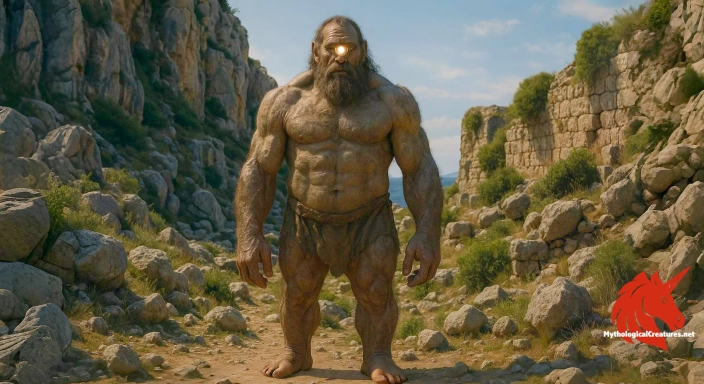
Dare to Meet the Cyclopes....
The Mythological Creatures Book Series
Yōkai, Greek, Norse, Egyptian & Chinese. Five illustrated field guides to the creatures the old stories either warned or told you about.


Curated by the Mythological Creatures Team
Series editor: Mythological Creatures Directory
Primary desk: Hellenic & Ancient Mediterranean Desk
(rev. November 2025)