
Shinatsuhiko: Shinatsuhiko, also known as Shinatobe, is a revered Japanese wind deity documented in the Kojiki and Nihon Shoki.
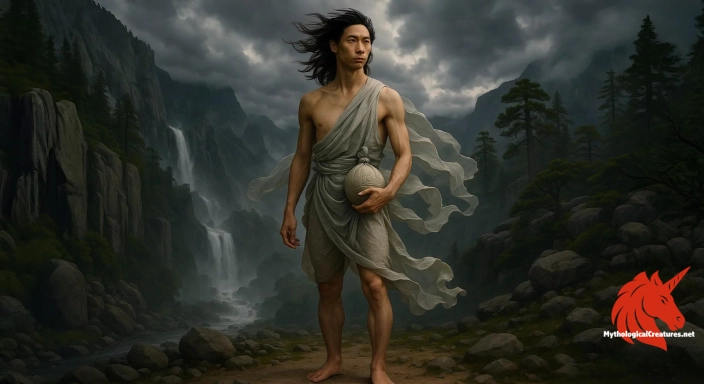
Shinatsuhiko
Shinatsuhiko - Central to the understanding of wind phenomena and weather in ancient Japanese culture
Origins & First Encounters
Shinatsuhiko stands as one of the quintessential embodiments of nature's power in Japanese mythology, a deity whose very essence is entwined with the wind and its capricious moods. His early attestations in ancient texts such as the Kojiki and Nihon Shoki reveal a being both formidable and enigmatic, often portrayed as a luminous force that shapes the very breath of the land. The epithet 'Long Blowing Lad' hints at his youthful vigour and the ceaseless movement inherent to the wind, a trait that has fascinated generations. Emerging from a backdrop of early ritualistic worship, his origins are steeped in the interplay between human reverence and nature’s untamable spirit. His narrative reflects not only the life-giving whispers of a gentle breeze but also the tempestuous gusts that could upend the order of nature and society. Over time, the deity’s role evolved to embody the delicate balance between benevolence and unpredictability. Intriguingly, the merging of his identity with that of a separate wind goddess known as Shinatobe speaks to the fluid nature of myth-making in early Japanese culture. This evolution has allowed Shinatsuhiko to serve as a symbol for both the nurturing calm and the storming fury of nature. His mythological presence continues to inspire awe and respect, resonating with themes of transformation and natural power. Ultimately, Shinatsuhiko encapsulates the ancient Japanese fascination with the elemental forces that govern the world.
Source Texts & Tale Variants
Ancient texts such as the Kojiki and Nihon Shoki serve as the primary repositories for the legends surrounding Shinatsuhiko, encapsulating his role as the god of wind in early Japanese lore. The Kojiki, with its succinct yet vivid portrayal, introduces him as a potent and restless spirit, while the Nihon Shoki provides variant details that hint at a more complex mythological tapestry. These classical sources not only document his name and deeds but also establish the foundations upon which later interpretations were built. The narratives present him as a dynamic force, whose presence is as essential to cosmic order as it is to natural phenomena. Alongside these canonical texts, later shinto records and regional manuscripts have contributed additional layers to his myth, often fusing his identity with that of the wind goddess Shinatobe. This conflation underscores the evolving nature of his character as storytellers and priests adapted his image to resonate with contemporary spiritual and societal needs. Oral traditions and local shrines further enriched his portrayal, offering diverse accounts of his interventions in the lives of communities. Though the original texts provide only a glimpse into his mythic function, the cumulative tradition paints a picture of a deity whose influence transcends singular narratives. Such variants mirror the fluidity and adaptability inherent in myth, where a single divine figure can be reinterpreted across different epochs and cultures. In this way, the sources collectively offer a multifaceted view of Shinatsuhiko’s divine role and enduring legacy.
Form & Powers
Visual depictions of Shinatsuhiko evoke the very essence of the transient and elusive wind, blending an ethereal quality with a palpable sense of dynamism. He is often imagined as a youthful yet powerful figure whose form seems partially composed of swirling air and shifting mists. Traditional artistic renditions highlight his flowing garments, which appear to ripple in an unseen breeze, perfectly capturing the fluidity associated with his dominion over the wind. His hair, depicted as long and unbound, merges seamlessly with the currents that surround him, suggesting a life force that is both wild and unstoppable. Detailed portrayals sometimes lend him a semi-translucent presence, as if he were less a corporeal being and more an embodiment of nature’s ephemeral energy. In some regional art, his face is shown with a serene yet intense expression, balancing the calm of a gentle zephyr with the fierce energy of a storm. Accessories and motifs, including patterns reminiscent of gusts and turbulent skies, further accentuate his connection to the elemental forces. Even in static depictions such as woodblock prints, the suggestion of movement is ever-present, giving viewers a sense of experiencing a live, animated force. The intricate interplay of light and shadow in these artworks symbolises the dual nature of the wind—both nurturing and unpredictable. Overall, his iconography successfully marries the beauty of natural phenomena with an imposing, almost untouchable divine power.
Regional Faces
Across the Japanese archipelago, the character and iconography of Shinatsuhiko have been subject to varied regional interpretations that reflect both local climate and cultural practices. Coastal communities, where the wind plays a decisive role in daily life and seafaring endeavours, often portray him as a guardian against the destructive elements of tropical storms. In contrast, mountain villages view him as a benevolent spirit who gently guides seasonal breezes to nurture the crops and forests. The incorporation of the alternate name Shinatobe in several local traditions suggests that in some areas, Shinatsuhiko’s identity was originally split between masculine and feminine aspects before merging into a single, more multifaceted deity. These regional adaptations highlight subtle variations in his iconography, from depictions emphasising resilience and fortitude in the north, to those celebrating a more nurturing and life-affirming presence in the south. Local festivals and shrine rituals frequently feature unique rites dedicated to him, which underscore the diverse ways in which his myth permeated different communities. Hand-carved amulets, shrine carvings, and even regional temple murals provide tangible evidence of how his image was transformed by local aesthetics and cultural priorities. Despite the diversity in portrayal, a common reverence for the wind’s raw power unites these regional narratives, affirming Shinatsuhiko’s status as a universal deity of the natural world. In essence, the regional variations of his myth underscore the dynamic interplay between local traditions and the broader Japanese spiritual heritage. His chameleon-like adaptability remains a testament to the fluidity of myth in reflecting the environmental and cultural realities of each area.
Cultural Parallels
The myth of Shinatsuhiko occupies a unique space in Japanese lore, yet it shares compelling parallels with wind deities from a variety of global mythologies. Much like the Greek deity Aeolus, who was believed to govern the winds, Shinatsuhiko personifies the capricious and uncontrollable nature of air. Comparable to Vayu in Hindu mythology, his influence is seen as vital not only for its life-sustaining properties but also for its capacity to disrupt and transform. The dual character inherent in his depiction—encompassing both gentle, nurturing breezes and destructive gusts—echoes a universal theme found in many cultures, where the same force is revered for its benevolence and feared for its fury. Similar intrinsic tensions are evident in Chinese and Polynesian mythologies, where wind deities often signify both creative and destructive aspects of nature. The fusion of masculine and feminine attributes in his lore, as highlighted by the integration with Shinatobe, finds a counterpart in other mythic systems where gender fluidity among natural forces is celebrated. This cross-cultural dialogue reveals how societies across the world have sought to explain and celebrate the mysterious nature of wind. By drawing these comparisons, one can see that Shinatsuhiko is part of a broader tradition that venerates elemental forces as both arbiters of fate and as dynamic symbols of change. His myth thus forms a bridge between different cultures, illustrating a shared human fascination with the unseen and the powerful. In comparative analysis, his narrative exemplifies the universal human endeavour to personify and make sense of the unpredictable forces of nature.
Legacy & Modern Evolution
The trajectory of Shinatsuhiko’s myth reveals a fascinating evolution from ancient ritualistic worship to a vibrant presence in modern cultural expressions. Early depictions in sacred texts and shinto shrines laid the groundwork for a deity whose identity was inextricably linked with the natural world and its elemental forces. Over the centuries, as Japan underwent profound social and cultural transformations, his portrayal began to expand, absorbing influences from various local traditions and artistic reinterpretations. Modern artists and storytellers have reimagined his figure in diverse media, from traditional woodblock prints to contemporary anime and manga, ensuring that his myth remains resonant with new generations. Today's portrayals often emphasise his role as a mediator between nature and human society, symbolising both the fragility and the resilience inherent in natural cycles. This dynamic reinterpretation has also allowed him to emerge as a cultural icon in festivals and digital art, blending myth with modern aesthetics. The enduring appeal of Shinatsuhiko is evident in the renewed scholarly interest in ancient kami, as well as in popular culture where elemental deities continue to captivate audiences. His continued relevance is a testament to the timeless allure of nature’s mysteries, symbolising a deep-seated respect for the forces that shape our world. In reimagining his timeless qualities, modern interpretations seek to reconcile ancient wisdom with contemporary challenges, inviting today's society to appreciate the inherent power of nature. Thus, Shinatsuhiko's legacy encapsulates a journey through time, reflecting both the evolution of cultural imagination and the perennial importance of the natural world in human experience.
Interesting Fact
An intriguing aspect of Shinatsuhiko's myth is the evolution of his identity, where the male god and the originally separate goddess, Shinatobe, eventually merged into a single revered deity of wind.
For indie creators
Give your myth project a permanent home
Indie authors, artists, small studios, and makers can secure an annual, non-intrusive sponsor slot that meets readers where they explore.
Obtain more informationQuick Creature Info
Features:
Associations:
Our Mythic Legendary Rating:

Also Sometimes Known As:
Habitat:
Supernatural Powers:
Physical Attributes:
Abilities:
Behavior:
Weaknesses:
Lore:
References
Discover Another Mythical Legend You May Not Have Heard Of?
Uncover the mysteries of ancient folklore and expand your knowledge of legendary beings from cultures around the world.
Dare to Meet the Pamola....
Curated by the Mythological Creatures Team
Series editor: Mythological Creatures Directory
Primary desk: Asian & Pacific Myth Cycles Desk
(rev. November 2025)