
Smallpox demon: The Smallpox Demon is a terrifying supernatural entity from medieval Japan, believed to be responsible for causing smallpox outbreaks.
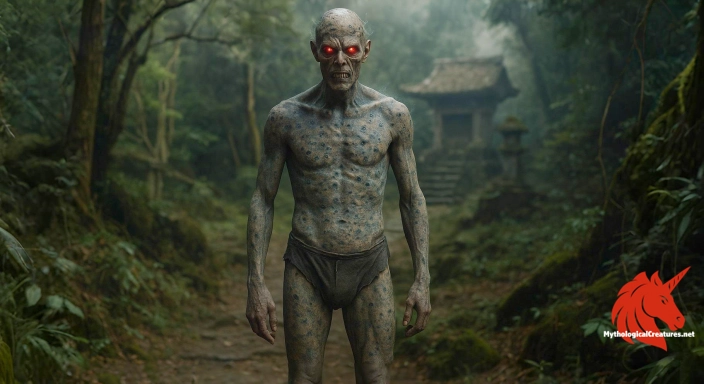
Smallpox demon
Smallpox demon - Represents the mysterious and feared nature of epidemic diseases in medieval Japan, leading people to both appease and confront the demon.
Origins & First Encounters
The smallpox demon emerged in medieval Japan as a potent symbol of the interplay between disease and supernatural retribution. Its origins are entwined with the era’s attempts to explain and control the ravages of smallpox through the intervention of spiritual forces. The demon was long believed to be the instigator of smallpox outbreaks, representing both the physical and moral turmoil of the age. Distinct from other deities, this demonic figure encapsulated the fear and uncertainty that surrounded epidemics in an era with little recourse for effective treatment. The earliest attestations of this figure appear in ritual records and folklore, where its influence was both feared and placated. Communities sought to appease its wrath with offerings and ceremonial practices, hoping to avert the devastation of the disease. This demon not only symbolised the inexplicable nature of smallpox but also the human instinct to impose order on chaotic natural events. Over time, its mythos came to reflect deeper cultural understandings of illness, morality, and the human condition.
Source Texts & Tale Variants
Ancient Japanese manuscripts and local temple records serve as key sources chronicling the smallpox demon’s lore. Various folklore collections preserve ritual narratives, demonstrating the community’s enduring engagement with the demon. There are fragments of literature where the demon is cast in roles both malevolent and, at times, cautiously appeasable. Oral traditions were equally influential, with diverse story variants passing from generation to generation. In some accounts, the demon is depicted as a vengeful spirit whose anger is both feared and managed through ritualistic sacrifices. Alternative narratives present it as a capricious entity whose mood could be mollified with specific rites and offerings. Though the primary sources vary in detail, they consistently underscore a deep-seated cultural need to understand and mitigate the impact of smallpox. These textual and oral sources illustrate a complex tapestry of belief where historical records meet dynamic local lore.
Form & Powers
The smallpox demon is often depicted with an appearance as unsettling as the disease it personifies. Artistic renditions frequently highlight a grotesque visage marked by scars and pockmarks, mirroring the physical afflictions of smallpox. Some images suggest it possesses exaggerated, twisted features such as elongated horns, wide eyes, and a furrowed brow that enhances its threatening presence. These depictions are not uniform; variations capture the demon both in a somewhat human-like form and as a more abstract, monstrous shapeshifter. Its body is occasionally illustrated draped in ragged, tattered garments that allude to decay and the transient nature of life. The physical form of the demon symbolically integrates elements of suffering as its scars offer a visual narrative of contagion and pain. There are also interpretations where the demon’s elongated fingers and lean frame evoke an eerie sense of inevitability and doom. Overall, these artistic portrayals serve to personify the terror of smallpox, merging physical disfigurement with mythic imbalance.
Regional Faces
Interpretations of the smallpox demon have varied across the diverse landscapes of Japan, reflecting local customs and beliefs. In rural communities, the demon was sometimes seen as a capricious spirit whose favour could mean the difference between health and calamity. Regional festivals and rituals often featured unique practices aimed at both pacifying and warding off its malign influence. In some prefectures, the figure acquired a more benevolent aspect when placated properly, suggesting that its wrath might be curbed through local forms of exorcism. Distinct local narratives often incorporated indigenous symbols, blending the demon’s image with familiar regional animals or spirits. In mountainous areas, carvings and talismans depicted the demon with greater animalistic traits, while coastal regions sometimes portrayed it with fluid, almost marine-like features. Variations in the demon’s naming conventions also occur, with local dialects contributing alternative epithets that underscore its dual nature. Despite these differences, the central narrative of an otherworldly being responsible for illness remains a common thread throughout regional folklore.
Cultural Parallels
Comparisons between the smallpox demon and similar figures in other cultural traditions reveal striking similarities in the personification of disease. Much like the smallpox demon, figures in Greek and Hindu mythologies embody the chaos and unpredictability of epidemics. In India for instance, deities associated with illness, such as Sitala Devi, exhibit characteristics that balance both malevolence and the potential for protection when properly revered. European medieval legends also house demonic figures whose presence is thought to foreshadow outbreaks of plague and pestilence. These parallels underscore a universal tendency to attribute mysterious illnesses to supernatural agents. While the smallpox demon embodies the specific fears of Japanese communities, its cross-cultural counterparts similarly serve as symbolic mediators between human vulnerability and the capricious nature of contagion. These inter-cultural comparisons not only highlight shared human experiences in disease interpretation but also illustrate how myth provides a framework for making sense of widespread suffering. The recurring motif of appeasing a powerful, otherworldly force speaks to a deep-rooted psychological response common to many societies confronting unexplained epidemics.
Legacy & Modern Evolution
Over the centuries, the depiction of the smallpox demon has evolved considerably, reflecting broader changes in society’s understanding of disease. During the medieval period, it was a focal point of both fear and ritual, embodying the desperate measures communities employed to combat the ravages of smallpox. With the advent of modern medicine, the demon’s role shifted from that of a literal threat to a symbolic representation of a bygone era’s struggle with illness. Today, it occupies a unique space in Japanese cultural memory, often invoked in art, literature, and even theatrical productions. Modern portrayals tend to highlight its allegorical significance, serving as a reminder of the historical interplay between health, spirituality, and human resilience. In contemporary discourse, the smallpox demon is sometimes referenced in the context of public health, symbolising the lasting impact of ancient explanatory models. Its evolution mirrors a broader transition from supernatural interpretations to scientific explanations of disease. Nonetheless, the myth endures by encapsulating the universal human tendency to personify natural disasters, thus continuing to inform and inspire modern imaginings of historical pandemics.
Interesting Fact
An interesting aspect of the Smallpox Demon is how traditional rituals to appease it possibly served as early forms of community-based public health responses, reflecting a blend of superstition and pragmatic action.
Partner with us
Sponsor this space
Reach thousands of mythology enthusiasts with a curated placement on our creature pages.
Learn about sponsorshipQuick Creature Info
Features:
Our Mythic Legendary Rating:

Also Sometimes Known As:
Habitat:
Supernatural Powers:
Abilities:
Behavior:
Lore:
Related Creatures, Tales or Lore
- SShitala Devi
- PPestilence (Four Horsemen)
- PPlague Demon of Medieval Europe
References
Discover Another Mythical Legend You May Not Have Heard Of?
Uncover the mysteries of ancient folklore and expand your knowledge of legendary beings from cultures around the world.
Dare to Meet the Klabautermann....
Curated by the Mythological Creatures Team
Series editor: Mythological Creatures Directory
Primary desk: Asian & Pacific Myth Cycles Desk
(rev. November 2025)