
Tannin: Tannin is a mythological sea monster from Canaanite and Hebrew traditions, embodying chaos and evil.
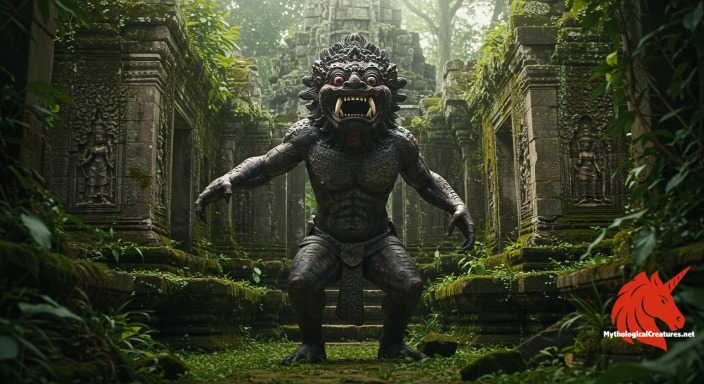
-c01f9c9b-b7b5-4318-975e-2557042cc4a7_small.webp "Tannin - Represents the ancient struggle between order and chaos, underscoring the cosmic battle between divine authority and primordial disorder")
Tannin
Tannin - Represents the ancient struggle between order and chaos, underscoring the cosmic battle between divine authority and primordial disorder
Origins & First Encounters
Tannin is a formidable sea monster emerging from the rich tapestry of ancient Canaanite and Hebrew lore, embodying the primordial forces of chaos and darkness. Its origins are steeped in the mythic narratives of the ancient Near East, where the uncontrolled power of the deep sea was a symbol of the untamed void preceding creation. The earliest attestations of Tannin can be found in ancient Hebrew scriptures and Ugaritic texts, where it appears as a personification of the chaotic abyss. This creature's portrayal was not simply that of a beast, but rather a metaphoric representation of the struggle between order and the formless void. Its recounting within these texts reveals a cultural context that both feared and revered the destructive potential of nature. Tannin’s name, rendered in various forms across Hebrew, Syriac, and Arabic, underscores the cross-cultural penetration of its myth. In many ancient traditions, it served as an emblem of the unfathomable mysteries lurking beyond the known world, a reminder of the boundary between the ordered universe and the chaos that dwells beneath. The enduring legacy of Tannin is a testament to its role in ancient cosmologies, signifying the eternal conflict between the forces of creation and destruction.
Source Texts & Tale Variants
Ancient literature serves as the primary repository for the legend of Tannin, with its earliest mentions residing in the Hebrew Bible and Ugaritic inscriptions. Texts in classical Hebrew reference the creature as a symbol of unbridled chaos, while related accounts in Syriac and Arabic sources further cement its status in regional mythologies. The Akkadian roots of the name suggest a shared cultural vocabulary among the peoples of the ancient Near East, reflecting a common understanding of chaos and cosmic disorder. Various story variants have evolved over time; in some texts, Tannin is portrayed as an adversary subdued by divine intervention, whereas in other narratives it occupies a more ambiguous, liminal role. The narrative of Tannin is interwoven with cosmic myths that describe the orderly emergence of the world from a turbulent, watery abyss. Fragments of later rabbinic and extra-biblical literature hint at its continued symbolic significance in the post-biblical era. These differing iterations attest to the adaptability of the myth, where each cultural layer added its own nuances to the creature’s legend. The varying accounts illustrate how ancient authors employed Tannin not merely as a literal sea monster, but as a potent allegory for the forces that disrupt order.
Form & Powers
Tannin is typically envisioned as an enormous, serpentine creature that dominates the watery realms with a presence both graceful and fearsome. Its form is often described as lithe and undulating, with a body covered in shimmering scales that evoke the mysterious depths of the ocean. Visual depictions, though sparse, frequently suggest a sinuous anatomy reminiscent of a great dragon, complete with elongated curves and, at times, multiple twisting heads. The creature’s eyes are depicted as dark and penetrating, casting an aura of timeless malevolence. Some artistic renditions include additional features such as horns or spiny projections that further accentuate its otherworldly character. Its massive, undulating frame is imagined as capable of stirring the seas into tumult, symbolising the volatile power of nature itself. Variations in its description hint at the possibility of supernatural attributes—perhaps even the capacity to breathe a noxious mist or to command the very elements of the storm. Despite the inherent uncertainty in these ancient descriptions, each portrayal reinforces Tannin’s image as a creature both majestic and terrifying. The ambiguity in the physical details has allowed later interpretations to embellish the myth, enriching its legacy in both art and literature.
Regional Faces
Across the ancient Near East, the figure of Tannin exhibited regional nuances that underscored local cosmological beliefs and cultural sensibilities. In the Canaanite tradition, Tannin was primarily associated with the tumultuous forces of the sea, a living embodiment of nature’s unpredictable rage. Hebrew texts, however, often imbued the sea monster with rich allegorical significances, positioning it within the broader narrative of divine order triumphing over chaos. In Ugaritic sources, where it is vocalised under distinct linguistic forms, the creature integrates into a larger pantheon where the battle between well-ordered creation and anarchic existence is a recurring theme. Syriac and Arabic traditions retain echoes of its ancient identity, yet they sometimes portray Tannin as part of a more detailed hierarchy of mythic creatures. Some regional interpretations elevate the monster to a central role in cosmic battles, while others use its image as a metaphor for the unpredictability of natural forces. This geographical diversity allowed Tannin to adapt its characteristics, reflecting local mythologies and religious paradigms. The regional variations not only demonstrate the fluidity of myth but also highlight a common cultural preoccupation with representing the inscrutable powers of nature.
Cultural Parallels
The myth of Tannin resonates with diverse chaos monsters found throughout global mythology, revealing a shared human fascination with cosmic disorder. In Hebrew tradition, Tannin is often mentioned in tandem with Leviathan, another titanic sea creature symbolising the forces of chaos and untamed nature. Comparatively, in Babylonian lore, figures such as Tiamat emerge as similar embodiments of primordial chaos, reinforcing a regional pattern of mythmaking. European legends too have their share of draconic beings that serve as metaphors for the struggle between order and primal wilderness. These cultural parallels illustrate how different societies have sought to encapsulate the terror and majesty of natural forces in the guise of monstrous beings. The recurrent appearance of such creatures across mythologies points to a universal archetype, one that symbolises the ever-present tension between the cosmos and its chaotic undercurrents. By examining these similarities, one can discern a widespread symbolism: that of the sea as both a source of life and a reservoir of unconscious fear. The shared motifs between Tannin and other mythic entities underline the interconnectedness of human narratives that seek to define the boundaries between civilization and the wild. Such comparative analysis enriches our understanding of how ancient cultures perceived the cosmos and their place within it.
Legacy & Modern Evolution
The enduring footprint of Tannin in the cultural imagination has led to a rich historical evolution that stretches from ancient scripture to modern popular culture. Over the centuries, the creature’s image has transformed from a literal sea monster into a potent symbol for chaos and cosmic imbalance. The recurrent theme of battling primordial disorder has inspired countless reimaginings in literature, art, and film, where Tannin’s essence is echoed in modern depictions of dragons and sea beasts. This evolution reflects a broader cultural shift, where ancient allegories are reinterpreted to address contemporary concerns about the limits of control and the unpredictability of nature. In many modern narratives, Tannin’s legacy is expressed through characters and forces that blur the lines between myth and reality, offering a rich metaphor for inner turmoil and societal upheaval. Artistic representations continue to draw on its fearsome, serpentine form, thereby preserving its mystique for new generations. The myth of Tannin has also spurred scholarly interest, with comparative studies highlighting its role within a wider network of chaos symbols across various cultures. Its legacy underscores the timeless human quest to understand and depict the conflict between order and the unknown. Even as modern scientific views reframe our understanding of the natural world, the myth of Tannin endures as an emblematic reminder of the ancient struggle against chaos.
Interesting Fact
The term 'Tannin' crosses linguistic and cultural boundaries in the ancient Near East, influencing modern notions of dragons and chaos monsters in literature and art.
For authors, artists, and makers
Created something from the realm of myth?
If your book, deck, game, or artwork draws from legendary creatures and lore, you can showcase it here in a tasteful, year-round placement.
Share your projectQuick Creature Info
Origin:
Associations:
Our Mythic Legendary Rating:

Also Sometimes Known As:
Habitat:
Supernatural Powers:
Physical Attributes:
Abilities:
Behavior:
Weaknesses:
Lore:
Related Creatures, Tales or Lore
References
Discover Another Mythical Legend You May Not Have Heard Of?
Uncover the mysteries of ancient folklore and expand your knowledge of legendary beings from cultures around the world.
Dare to Meet the Kirtimukha....
Curated by the Mythological Creatures Team
Series editor: Mythological Creatures Directory
Primary desk: Hellenic & Ancient Mediterranean Desk
(rev. November 2025)