
Tikokura: Tikokura is a malevolent sea spirit from Mangaia in the Cook Islands, manifested as a gigantic storm wave.
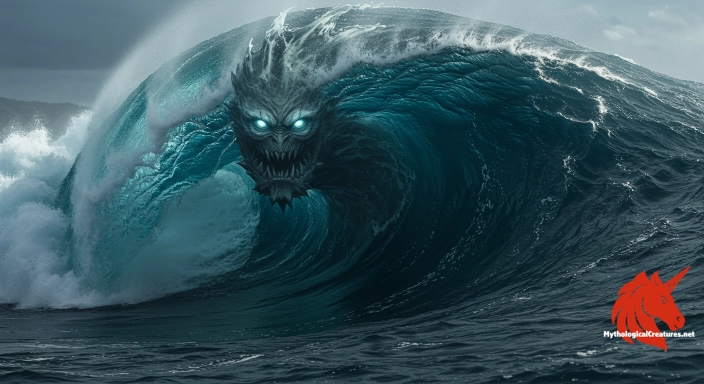
Tikokura
Tikokura - Serves as a cautionary embodiment of nature's wrath and the perils of the ocean.
the legend in five swipes.
the legend in five swipes.
Tikokura: Where the Legend Started
Tikokura occupies a unique place in the rich tapestry of Mangaian mythology, emerging as a formidable spirit of the sea. Its roots stretch back into the ancient oral traditions of the Cook Islands, where it is envisioned as a living storm wave with a malevolent purpose. This entity is born of the natural fury of the ocean and is a stark reminder of the unstoppable power of nature. Local legends tell of Tikokura’s sudden appearance during turbulent weather, symbolising the danger inherent in challenging the natural order. Over time, its myth has been carefully woven into the cultural and spiritual fabric of the island, serving both as a warning and as a symbol of respect for the sea. The spirit’s narrative reflects an intimate connection with the environment, illustrating how natural forces can be both beautiful and perilous. Early attestations, passed down by elders and storytellers, highlight Tikokura as an embodiment of strength and chaos. Its very presence in tales is used to explain the unpredictable moods of the coastal waters. The story of Tikokura inspires both fear and reverence among seafarers and islanders alike. Ultimately, it remains a timeless emblem of the delicate balance between human endeavour and the wild, uncontrollable force of the ocean.
Tikokura: The Written Sources
Ancient accounts of Tikokura are rooted in the rich oral traditions of Mangaia, where elders have recounted its fearsome exploits for generations. Records from the late 19th century, notably those documented by chroniclers like Gill, provide one of the earliest written references to this enigmatic sea spirit. Various story variants share accounts of dramatic confrontations between human protagonists and Tikokura, thereby enriching its mythological profile. In one well-known variant, the hero Ngaru engages in a perilous contest against both Tikokura and a formidable shark-like companion, Tumuitearetoka. These narratives are replete with vivid descriptions of the ocean’s wrath personified by the spirit, offering a potent mix of adventure and caution. The multiplicity of tales is evidence of how Tikokura’s legend evolved over time, adapting to the needs and perceptions of different storytellers. Some versions embellish the basic narrative with unique local twists, reflecting regional beliefs and environmental observations. The consistent theme of a supernatural sea force reappearing whenever the balance of nature is disturbed also features prominently. Across these accounts, Tikokura emerges not only as a solitary villain but as part of a broader mythological dialogue about the dangers of the deep. In every iteration, the tales serve to instruct and remind communities about the respect owed to the unpredictable ocean.
What could Tikokura do?
Tikokura is vividly described as a colossal, ever-changing mass of water, manifesting most often as a swirling, tempestuous wave. Its form is not fixed, shifting continuously as though animated by a life force that defies mortal comprehension. In many descriptions, the creature’s outline is intensified by frothy crests and churning depths, suggesting a chaotic blend of liquid energy and spectral apparitions. Witness accounts imply that within the rolling, surging water, fleeting impressions of a face and eyes can be discerned, as if the spirit itself is watching with a predatory awareness. The creature’s anatomy is defined not by solid flesh but by dynamic, ephemeral qualities that merge natural phenomena with supernatural essence. Often, its appearance is accentuated by sudden flashes of luminescence, reminiscent of lightning caught in the turbulent expanse of the sea. Variations of the myth sometimes describe it with hints of serpentine forms interwoven into the depths, adding to its otherworldly allure. Its size appears to expand in moments of high intensity, symbolising the immeasurable scale and unpredictable power of nature. The descriptions provide a visual metaphor that balances raw natural beauty with the underlying threat of the unknown. Thus, Tikokura remains an arresting emblem of elemental fury, both terrifyingly powerful and mysteriously transient.
How did location shape the story of Tikokura?
Within Mangaian tradition, Tikokura is firmly rooted as a symbol of the inexorable dangers posed by the sea, vividly embodying the islanders’ complex relationship with the ocean. In neighbouring islands of the Cook Islands group, similar sea spirits are described with nuances that reflect the unique environmental conditions and cultural outlooks of those regions. Some local adaptations render Tikokura with an added layer of ambiguity, where its destructive attributes are mingled with aspects of protection, serving as a guardian of sacred marine areas. Across Polynesia, variants of this myth emerge that underscore the dual nature of the sea, oscillating between benevolence and hostility. These differences illustrate how communities adapt a common myth to suit local experiences of weather, sea life, and spiritual beliefs. In certain traditions, the spirit’s encounters are depicted as challenges that test the bravery of those who venture too close to the ocean’s edge. Variations in the narrative also create a rich dialogue between the notion of divine retribution and natural calamity. The flexible retellings of Tikokura’s legend underscore its ability to mirror diverse cultural attitudes towards nature. Regions with a long history of seafaring have especially embraced these stories as cautionary tales. In doing so, they preserve a shared Polynesian heritage while celebrating the distinct qualities inherent in their respective local myths.
Is Tikokura unique, or found elsewhere?
Tikokura shares striking thematic resemblances with water deities and sea monsters from a variety of global mythologies, reinforcing the universal allure of the ocean’s mysteries. Much like the Maori taniwha, this storm-wave spirit embodies both benevolent vigilance and a destructive propensity that commands deep respect. Comparative studies reveal that many cultures personify the ocean’s unpredictable temperament in entities that mirror Tikokura’s volatile nature. In some Polynesian traditions, spirits similar to Tikokura are recast as protectors under specific circumstances, highlighting the dual nature of sea power. The shared motif of nature’s might, whether in the guise of a monstrous wave or a serpentine creature, underlines a common human response to the overwhelming forces of the natural world. While Tikokura is predominantly depicted as malevolent, other mythologies present their aquatic spirits with a mix of veneration and fear, demonstrating a regional variance in interpretation. Such comparisons offer insight into the deep cultural respect for, and fear of, the ocean that transcends geographical boundaries. The interplay between chaos and control in these legends mirrors broader themes in myth about the balance between civilization and nature. This synthesis of attributes places Tikokura in a global context, where similar forces are immortalised in the lore of distant peoples. Ultimately, these cultural parallels enrich our understanding of Tikokura as a multifaceted symbol of nature’s enduring power.
Where do you see Tikokura today?
Over the centuries, the lore of Tikokura has evolved from its ancient oral roots to become a lasting symbol of the power and mystery of the ocean in modern Cook Islands culture. Traditional narratives have been passed down from generation to generation, each retelling adding layers of meaning and artistic expression. Contemporary reinterpretations of Tikokura often find a place in local art, literature, and cultural festivals, where the spirit’s tempestuous nature is both celebrated and scrutinised. The evolution of the myth reflects modern society’s growing environmental awareness and an appreciation for indigenous storytelling. Today, depictions of Tikokura blend traditional imagery with modern aesthetics, creating dramatic visuals that resonate with both elders and younger audiences. The enduring relevance of its narrative is evident in community efforts to preserve and revitalise traditional folklore through educational programmes and artistic endeavours. As a symbol, Tikokura continues to inspire discussions about the relationship between humanity and the natural world. Its myth serves as a reminder of the inherent dangers of neglecting the environment, while also celebrating the beauty of raw, untamed nature. Modern storytellers have reimagined Tikokura as an allegory for both natural disaster and ecological resilience. In this way, the legend of Tikokura not only honours its ancient origins but also adapts to reflect the contemporary challenges and values of the Cook Islands.
Interesting Fact
Tikokura uniquely blends natural oceanic phenomena with mythological malevolence, serving as a potent symbol of both nature's beauty and its capacity for destruction.
Mythological Treasures
Greek Myths: A field guide to the monsters of ancient Greece
Every monster here earned its place in legend, and each gets a full page of artwork and the story behind it.
Norse Sagas: A field guide to the beasts of the Viking world
Drawn from the saga accounts themselves, with the powers, weaknesses and doom of each being set out.
Egyptian Legends: A field guide to the gods and monsters of ancient Egypt
Guardians of the living and devourers of the dead, with the role each played in judgement.
the legend in five swipes.
Partner with Mythological Creatures
Bring your myth-based world into ours
From game settings to narrative worlds, we work with partners who treat myths with care. Share your project for a potential sponsor slot.
Partner with usQuick Creature Info
Origin:
Features:
Associations:
Our Mythic Legendary Rating:

Habitat:
Supernatural Powers:
Physical Attributes:
Abilities:
Behavior:
Lore:
Related Creatures, Tales or Lore
References
Discover Another Mythical Legend You May Not Have Heard Of?
Uncover the mysteries of ancient folklore and expand your knowledge of legendary beings from cultures around the world.
Dare to Meet the Enlil....
The Mythological Creatures Book Series
Yokai, Greek, Norse, Egyptian & Chinese. Five illustrated field guides to the creatures the old stories either warned or told you about.
Curated by the Mythological Creatures Team
Series editor: Mythological Creatures Directory
Primary desk: Asian & Pacific Myth Cycles Desk
(rev. November 2025)