
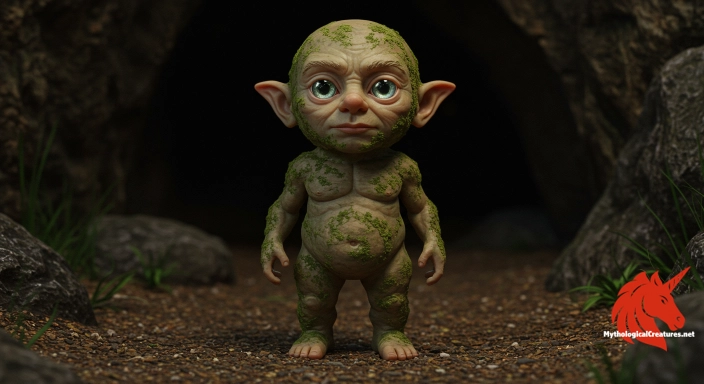
Trauco: The Trauco is a diminutive humanoid creature from Chilote mythology in Chile.

Trauco
Trauco - A notable figure in Chilote folklore, the Trauco embodies the mysterious and dangerous allure of the forest, serving as a cautionary emblem of supernatural seduction and misfortune.
the legend in five swipes.
the legend in five swipes.
The Earliest Known Accounts of the Trauco
The Trauco remains one of the most enigmatic figures within the folklore of Chiloé, its origins deeply embedded in the lore of southern Chile. Emerging from the rich tapestry of indigenous myths and later colonial narratives, this creature embodies the mystique of the ancient forests. Its legend has been passed down orally from generation to generation, gradually forming a corpus of tales that capture the imagination. The creature’s early attestations are intertwined with the natural rhythms of the Chiloé archipelago, where the interplay of land and sea creates an environment steeped in magic. Over time, the Trauco came to represent the unpredictable forces of nature and the dualities of charm and danger. Its physical portrayal as a small, humanoid entity with a disfigured face and peculiar limbs has only added to its allure. Community storytellers have used the Trauco as a means to explain unexplained events and social taboos, linking the creature to themes of seduction and misfortune. Every narrative around the Trauco reflects the community’s attempt to interpret the wild, untamable aspects of both the natural world and human desire. The enduring presence of this myth in local culture is a testament to its ability to both frighten and fascinate, continuing to evoke respect and caution in equal measure.
Trauco: Variants Across the Sources
Timeless oral traditions serve as the primary repository for the many variants of the Trauco legend. Early folkloric writings and later ethnographic records capture the creature’s multifaceted personality, highlighting both its seductive and perilous traits. Interviews with elder community members have preserved vivid accounts that vary from benign mischief to ominous warnings. Some narratives recount personal encounters in the deep, shadowed woods, while others focus on the ritualistic aspects of his presence in the natural realm. The diversity of these sources has allowed the myth to evolve, as storytellers adapted details to suit shifting cultural and social landscapes. Written compilations from the 19th and early 20th centuries offer detailed descriptions that both embellish and rationalise the creature’s peculiar characteristics. Different accounts often reflect the owner’s perspective, with some emphasising the Trauco’s role in fertility and seduction, and others underscoring his association with misfortune. The convergence of testimonial and literary sources ensures that the legend remains a living narrative, continually reshaped by its community. With each retelling, subtle variations highlight the adaptability of the myth, reinforcing its status as a key element of regional identity.
The Described Form of the Trauco
The physical form of the Trauco is as distinctive as it is unsettling, marked by a combination of human and supernatural features. Described as a small, dwarf-like creature, it possesses an unattractive face that is often depicted with exaggerated, almost monstrous traits. Most notably, the Trauco is characterised by legs that appear unfinished or devoid of proper feet, lending it an eerie, limping gait. Its overall stature may vary from account to account, sometimes portrayed as no taller than a human child and in other versions as slightly more robust. The creature’s skin is frequently imagined as rough, bearing the mottled texture of bark or weathered earth, which serves as a reminder of its deep connection to the forest. Unkempt hair and piercing eyes add further dimensions to its disjointed yet compelling appearance, suggesting both wildness and a latent, uncanny wisdom. Some descriptions indicate that its movements are deliberate and stealthy, an adaptation developed for the dense woodland environment it inhabits. Each detail in its depiction, from the gnarled facial features to its oddly shaped limbs, contributes to the overall impression that the Trauco straddles the line between the natural and the supernatural. The resulting image is one that inspires both repulsion and an inexplicable fascination among those who hear its tale.
Which communities kept the Trauco tradition alive?
The depiction of the Trauco varies subtly across different regions within southern Chile, each retelling moulding its characteristics to reflect local sensibilities. In the heart of Chiloé, the creature is firmly linked to the surrounding wilderness, with its features often accentuated to evoke the elemental forces of nature. On the mainland, however, some accounts imbue the Trauco with a more pronounced sexual magnetism, presenting him as both a seducer and a mischief-maker. Variations in its portrayal can be observed where certain communities emphasise its solitary, ominous presence, while others integrate it more closely with daily life and social customs. Local interpretations sometimes imbue the creature with additional attributes, such as an almost totemic connection to fertility or a role as a ward against misfortune. These regional adaptations often mirror the environmental and social conditions of the area, highlighting how the natural surroundings inspire different aspects of the legend. Storytellers in more isolated villages tend to embellish the creature’s mysterious allure to underscore the perils of venturing too far into untamed lands. Whether seen as a benign trickster or a portent of bad luck, the Trauco’s narrative flexibility ensures its relevance across diverse community contexts. In this way, regional lore not only sustains the myth but also reinforces the broader cultural identity of each locality that embraces it.
What makes the Trauco different from similar figures?
The Trauco shares intriguing parallels with other mythological beings found throughout global folklore, particularly within the realm of small, humanoid entities. Its blend of seductive charm and inherent danger echoes the dual nature often seen in European goblins and dwarfs, where attractiveness and menace coexist. Much like the faeries of Celtic legend, the Trauco possesses a magnetism that captures the imagination while simultaneously warning of the peril in succumbing to its allure. Cross-cultural comparisons reveal that many traditions assign similar forest-dwelling spirits the role of both seducers and tricksters, blending the lines between beneficence and malevolence. This creature’s ability to simultaneously enchant and unsettle aligns it with other liminal beings that exist at the thresholds between the human and supernatural worlds. The recurring motif of a small, enigmatic figure operating in the hidden realms of nature is a common thread that links diverse mythologies. Its portrayal as a catalyst for unexpected, often morally ambivalent events has strong resonances with global archetypes of the trickster spirit. Furthermore, the evolution of its narrative mirrors a universal human fascination with the mysterious forces of nature. In essence, while the Trauco is unmistakably rooted in the cultural soil of Chile, its core attributes find counterparts in legends that span continents and traditions.
How is the Trauco remembered today?
The legacy of the Trauco has experienced a fascinating evolution from an ancient forest spirit to a modern cultural icon. Over the decades, traditional narratives have been reinterpreted and reshaped by artists, writers, and filmmakers, expanding its mythological footprint well beyond the confines of Chiloé. Contemporary portrayals often highlight the creature’s complex character, exploring themes of desire, taboo, and the inherent unpredictability of nature. In modern Chilean literature and visual art, the Trauco is sometimes cast as a symbol of marginalized sexuality and the tension between civilization and the wild. Its image has been reimagined in various media, where it perpetually straddles the line between menace and allure. Community festivals and local exhibitions have revived traditional tales, infusing them with current social sensibilities and a renewed sense of relevance. This modern reimagining also reflects a broader cultural movement to reclaim and reassess indigenous and local folklore. In today’s dynamic landscape of cultural identity, the Trauco continues to serve as a powerful metaphor for the enduring interplay between the natural world and human emotions. The ongoing dialogue between past and present in its depiction ensures that the Trauco remains an ever-evolving and deeply compelling figure in both myth and modernity.
Interesting Fact
Trauco’s paradoxical combination of a repulsive appearance and an irresistibly cursed charm highlights the complex interplay between beauty, desire, and danger in myth.
Mythological Treasures
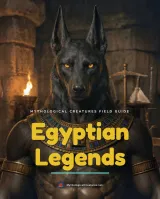
Egyptian Legends: A field guide to the gods and monsters of ancient Egypt
Guardians of the living and devourers of the dead, with the role each played in judgement.
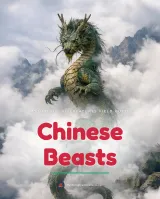
Chinese Beasts: A field guide to the dragons and demon kings of Chinese myth
From river dragons to demon kings, with the legends that shaped five thousand years of storytelling.
Japanese Yokai: A field guide to the spirits and demons of Japanese folklore
Fifteen spirits, with the signs to watch for and what the old tales say to do if you meet one.
the legend in five swipes.
For authors, artists, and makers
Created something from the realm of myth?
If your book, deck, game, or artwork draws from legendary creatures and lore, you can showcase it here in a tasteful, year-round placement.
Share your projectQuick Creature Info
Origin:
Features:
Associations:
Our Mythic Legendary Rating:

Habitat:
Supernatural Powers:
Physical Attributes:
Abilities:
Behavior:
Lore:
References
Discover Another Mythical Legend You May Not Have Heard Of?
Uncover the mysteries of ancient folklore and expand your knowledge of legendary beings from cultures around the world.
Dare to Meet the Gnome....
The Mythological Creatures Book Series
Yokai, Greek, Norse, Egyptian & Chinese. Five illustrated field guides to the creatures the old stories either warned or told you about.
Curated by the Mythological Creatures Team
Series editor: Mythological Creatures Directory
Primary desk: Americas & Indigenous Traditions Desk
(rev. November 2025)