
Trinavarta: Trinavarta is a fearsome asura from Hindu mythology, manifesting as a destructive whirlwind.
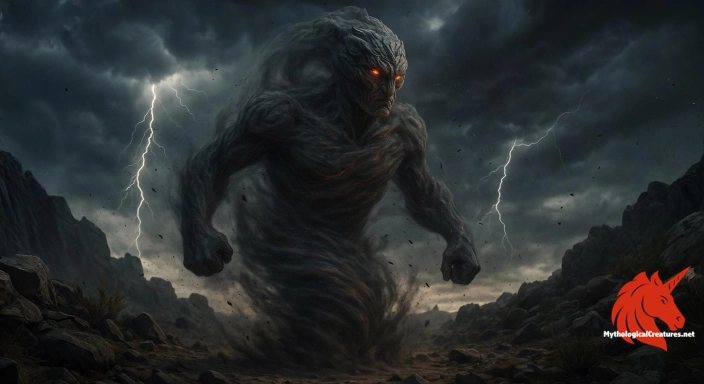
Trinavarta
Trinavarta - Represents the destructive force of nature and serves as a narrative device to highlight the triumph of divine order over chaos.
Origins & First Encounters
Emerging from the vibrant panorama of Hindu myth, Trinavarta embodies the relentless dynamism of the elemental whirlwind in the guise of an asura. His earliest literary appearance is found in the Bhagavata Purana, where his brief but potent role sets him apart as a force of nature in opposition to divine order. Born from the intricate succession of asura lineages, he was conceived as a counterbalance to the cosmic harmony that Krishna represents. His very name evokes images of circular, unyielding motion, symbolising the turbulent cycles of creation and destruction. In a mythological landscape that celebrates the interplay between divine benevolence and malevolent chaos, Trinavarta stands as an audacious emblem of nature’s unbridled fury. The narrative surrounding him highlights both his intended menace and the inevitable reordering brought about by divine intervention. His story captures an era when the boundaries between the human, natural, and divine were seen as vividly interwoven. Though his presence in the scriptural canon is fleeting, his impact endures as a reminder of the eternal confrontation between order and tumult.
Source Texts & Tale Variants
The primary literary reference for Trinavarta is entrenched within the Bhagavata Purana, which offers a detailed framework for his confrontation with Krishna. Other ancient texts, including fragments of the Harivamsa and various Puranic recountals, occasionally mention him, thereby underlining his importance in the broader mythic cycle. Different recensions of these texts sometimes present subtle variations in his narrative, reflecting a diversity of interpretative traditions. Oral traditions and regional folklore have further enriched his portrayal, adding layers of nuance to his characterisation as a tempest incarnate. Certain commentaries cast his whirlwind form in metaphorical terms, equating his destructive energy to the moral and natural turmoil of the age. Over successive generations, the retellings have oscillated between emphasising his terrifying physicality and interpreting his actions as allegories of cosmic justice. His literary portrayal demonstrates how ancient scribes wove together the tangible and the abstract to deliver a narrative that is both dramatic and symbolic. Thus, Trinavarta’s myth is preserved as a dynamic record of his clash with divine forces, echoing through the intricate tapestry of Hindu storytelling.
Form & Powers
Visually, Trinavarta is conceived as a being whose form defies conventional physical boundaries, existing as an ever-changing vortex of wind and shadow. He is often described as a colossal swirl of dust and dark vapours, which seems to distort the very air around him. In artistic renditions, fleeting impressions of limbs and eyes are sometimes discernible within the chaotic spiral, offering only a hint of traditional monstrous features. His shape is fluid and ephemeral, shifting with the force of a storm rather than remaining fixed in any singular form. The luminous interplay of light and dark on his form creates an enigmatic aura, as if he were simultaneously present and dissolved within the tempest. Some depictions suggest that his contours are edged with an almost supernatural brilliance, emphasising the raw energy that underlines his existence. His size is variably portrayed, ranging from an overwhelming presence that looms ominously over his foes to an elusive spectre that mirrors the capricious nature of the wind. The amalgamation of these visual features not only conveys his identity as a creature of destructive potential but also symbolises the intangible and relentless power of nature itself.
Regional Faces
Across the diverse cultural landscapes of South Asia, Trinavarta’s legend has been refracted through various regional lenses, adding unique local flavours to his myth. In northern retellings, he is depicted as a clear antagonist whose identity is inextricably linked to the violent forces of the storm, thereby accentuating the dramatic contrast with Krishna’s divine attributes. Local folklore has occasionally merged his character with traditional depictions of tempests and monsoon winds, reinforcing his association with natural calamities. In southern narratives, theatrical renditions and temple art often portray him with an added layer of allegorical significance, embodying the embodiment of cosmic disruption. Eastern communities tend to emphasise his ephemeral quality, aligning his nature with themes of transience and the cyclic patterns inherent in the natural world. These varied portrayals highlight how local myths adapt central figures to reflect their own environmental and cultural realities. As his legend travels across regions, elements of performance, ritual, and oral tradition enrich the canonical text with new symbolic meanings. Ultimately, Trinavarta’s diverse regional interpretations maintain the core narrative of his confrontation with divine order while celebrating local artistic sensibilities and environmental allegories.
Cultural Parallels
When placed alongside similar mythological entities, Trinavarta resonates with universal themes of chaos embodied in elemental forces. His portrayal as a swirling tempest draws intriguing comparisons to figures in other traditions, such as the Greek Typhon, who also symbolises a primordial, destructive power of nature. Much like Typhon, Trinavarta represents a natural force that disrupts harmony and must be subdued by divine intervention. In the broader canvas of Indo-European myths, his character finds echoes in diverse narratives where the embodiment of natural phenomena is pitted against the forces of order. Within Hindu mythology itself, his attributes complement those of adversaries like Vritra, who similarly manifest nature’s untamable power. These parallels underscore a common motif — the eternal struggle of cosmic order prevailing over the inherent chaos that accompanies creation. As a result, Trinavarta serves as an illustrative counterpart in cross-cultural analyses of myth, where elemental disruptors are universal symbols of both destruction and transformation. This comparative lens not only magnifies his mythic role but also reinforces the idea that the battle between mundane chaos and spiritual order is a recurring narrative across varied cultural landscapes.
Legacy & Modern Evolution
Over the centuries, the depiction of Trinavarta has undergone a compelling evolution, transforming from a literal whirlwind demon into a potent symbol of nature’s uncontrollable forces. His presence in ancient texts inspired generations of artists, writers, and devotees, who reimagined his story to reflect broader themes of struggle and redemption. Modern adaptations in literature, visual arts, and performance bring forth a reinterpretation that bridges the mythic past with contemporary aesthetic sensibilities. In these retellings, his fleeting yet formidable nature is often depicted as a metaphor for the inevitable upheavals of life and the transient nature of chaos. The character of Trinavarta is frequently invoked in modern discussions about the balance between destructive energy and creative renewal, symbolising the turbulence that precedes transformation. As scholars explore the intersections of myth and modernity, his figure is seen as a reminder of the enduring power of ancient narratives to speak to the human condition. Contemporary cultural expressions, ranging from theatrical plays to digital art, continue to draw inspiration from his myth, underscoring themes of conflict and restoration. Ultimately, Trinavarta’s legacy is a testament to how age-old myths can adapt and thrive, maintaining their relevance in a world where the struggle between order and chaos remains eternally resonant.
Interesting Fact
An interesting aspect of Trinavarta is that his embodiment as a whirlwind prefigures natural cyclonic phenomena, linking mythological symbolism with observable meteorological events.
Limited sponsor opportunity
One slot, carefully chosen partners
We only feature a small number of relevant sponsors at any time. If you create serious myth content, we would like to hear from you.
Partner with usQuick Creature Info
Features:
Associations:
Our Mythic Legendary Rating:

Also Sometimes Known As:
Habitat:
Supernatural Powers:
Physical Attributes:
Abilities:
Behavior:
Weaknesses:
Lore:
References
Discover Another Mythical Legend You May Not Have Heard Of?
Uncover the mysteries of ancient folklore and expand your knowledge of legendary beings from cultures around the world.
Dare to Meet the Mōryō....

Curated by the Mythological Creatures Team
Series editor: Mythological Creatures Directory
Primary desk: Asian & Pacific Myth Cycles Desk
(rev. November 2025)