
Tritopatores: The Tritopatores are a trio of benevolent wind gods from ancient Greek mythology, revered as deities of marriage, childbirth, and the household.
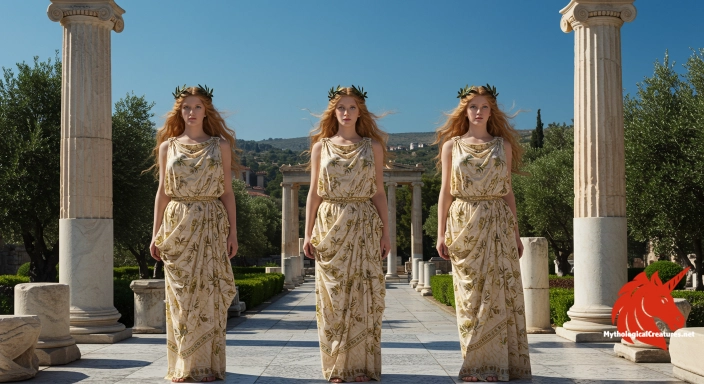
Tritopatores
Tritopatores - Reflect the integration of natural forces with domestic and civic well-being in ancient Greece
Origins & First Encounters
The Tritopatores emerge from ancient Athenian religious tradition as a distinct trio of benevolent wind deities, each embodying the essential aspects of family life and domestic well-being. Their title, meaning 'thrice-ancestors', hints at a revered role as progenitors of marriage, childbirth, and the household, intertwining natural force with familial continuity. Their mythic origins are deeply embedded in the cultural fabric of Athens, where the winds were seen as vital carriers of fortune and prosperity. Early attestations suggest that these deities were not merely abstract forces but were celebrated as personal protectors in everyday life. Their worship symbolised the harmonious balance between human endeavours and the unpredictable yet nurturing elements of nature. The Tritopatores, therefore, served as both guardians and ancestral spirits, an embodiment of the blessings bestowed upon crucial life events. Their presence in Athenian society underscored an intimate connection between the divine and everyday domestic affairs. Over time, the three gods became emblematic of the natural cycles of life, reflecting the intersections between human lineage and elemental power. Their story encapsulates the significance of wind as a metaphor for life’s passage, carrying the legacy of ancient belief into later interpretations.
Source Texts & Tale Variants
The primary sources for the Tritopatores are sparse yet intriguing, drawing attention from both Byzantine compendia and local epigraphic records. Among these, the Suda lexicon stands out as a significant Byzantine reference, preserving a brief but potent description of these wind deities. A series of Greek inscriptions further corroborate their veneration in Athens, linking them explicitly with essential domestic rites. Various fragments of ancient texts and inscriptions suggest that the Tritopatores were invoked during celebrations of marriage and rites of passage, though many details have been lost over time. Some lesser-known folklore variants hint at a distinction in their individual roles, with each god subtly presiding over different facets of domestic life. Despite the paucity of extensive literary narratives, these sources collectively underscore a well-established cultic presence in the Athenian milieu. Other inscriptions and artefacts, including vase paintings, occasionally allude to these deities, thereby expanding our understanding of their iconographic and ritual significance. The surviving records, though limited in scope, have spurred ongoing scholarly debate and creative reinterpretations regarding the narrative and symbolic depth of the Tritopatores.
Form & Powers
Artistic depictions of the Tritopatores, though not uniformly standardised, evoke an aura of ethereal beauty intertwined with the dynamism of the wind. They are often portrayed as graceful figures with lithe and athletic forms, their physiques imbued with an almost kinetic energy that mirrors the ever-changing nature of the air. Flowing garments and delicate, billowing drapery characterise their visual imagery, suggesting both movement and a celestial lightness. Some representations include subtle winged adornments, symbolically reinforcing their dominion over the breezes that once swept through ancient Athens. The gods’ countenances are typically rendered with serene expressions, conveying both wisdom and a benevolent regard for human endeavours. Within various artistic traditions, the integration of swirling motifs and translucent, ethereal patterns further enhances their connection to the natural element they govern. Despite the lack of a singular canonical portrait, common themes such as softness, balance, and harmonious proportion consistently appear in depictions across different media. These visual traits encapsulate an idealised form of divine beauty, bridging the human and the natural in a manner that invites both reverence and contemplation.
Regional Faces
While the Tritopatores are closely associated with the urban and cultural epicentre of Athens, subtle regional variations in their worship and portrayal have been noted over time. In the heartland of Attica, they were celebrated explicitly as guardians of the household, with rituals that highlighted familial unity and domestic prosperity. In more peripheral locales, however, aspects of their identity merged with local agricultural and maritime traditions, resulting in a broader interpretation of their role as protectors of life’s cyclical rhythms. Certain island communities, for instance, incorporated maritime symbols into their imagery, thereby linking the beneficent winds not only with home but also with the bounties of the sea. These local adaptations underscore an inherent flexibility in their myth, reflecting how deities can be transformed by regional practices and environmental exigencies. Diverse local cults occasionally ascribed to them additional responsibilities, such as safeguarding travellers or ensuring a favourable harvest. Iconographic details varied subtly from one region to another, with some communities favouring depictions that emphasized the deities’ interconnection with both land and sea. Through these regional lenses, the Tritopatores evolved into a rich tapestry of local beliefs, each adding layers of nuance to their core attributes as celestial benefactors.
Cultural Parallels
The Tritopatores occupy a unique niche when compared with other wind and household deities from Mediterranean and Near Eastern traditions. Their role as triple guardians of domestic life offers an intriguing parallel to the more widely known Anemoi, yet their functions are more intimately tied to family and social rituals. In broader mythological comparisons, the idea of a triune deity finds echoes in several cultural narratives, though the Tritopatores distinguish themselves by combining elemental power with ancestral veneration. Their blend of wind symbolism and domestic guardianship can be seen as analogous to other deities who safeguard life’s transitions, albeit in a more concentrated form. Across cultures, the interplay between natural phenomena and divine oversight is common, yet the Tritopatores uniquely encapsulate the notion that the wind itself can be an heir to ancestral blessings. Their mythic framework reminds one of certain trinities in Celtic and Near Eastern traditions, where groups of three divine figures rule over specific aspects of life and nature. This cross-cultural comparison highlights a shared human impulse to structure the spiritual realm in groups, thereby rendering the divine more accessible to daily existence. In essence, while their particularities are anchored in the Athenian context, the Tritopatores resonate with a universal archetype of nurturing and protective divinities.
Legacy & Modern Evolution
Over the centuries, the legacy of the Tritopatores has evolved in tandem with the shifts in religious praxis and cultural values within the Mediterranean region. Initially venerated as simple yet potent symbols of elemental and familial blessings, their roles gradually expanded as they absorbed influences from both local and external mythological traditions. During the Byzantine era, texts such as the Suda lexicon preserved their memory, even as the milieu of worship transformed in response to emerging religious paradigms. In modern interpretations of ancient myth, artists and writers have revisited the Tritopatores, imagining them not only as guardians of the household but also as metaphors for the enduring power of nature and heritage. Contemporary artistic and literary reconstructions have cast these wind deities in a light that bridges classical antiquity and modern creative expression. In neo-pagan circles, and among enthusiasts of classical mythology, the Tritopatores are celebrated as emblematic figures who articulate the ancient interplay between natural forces and human existence. Their evolutionary narrative, from obscurity in early inscriptions to a renewed presence in modern cultural discourse, underlines the timeless appeal of myth. Today, they continue to symbolise the harmonious integration of natural and human realms, serving as a reminder of the enduring connections between ancestral wisdom and the cyclical patterns of the natural world.
Interesting Fact
Though overshadowed by the major Olympian deities, the Tritopatores serve as a compelling reminder of how specialised divine figures were integrated into the social fabric of ancient Athens.
Partner with Mythological Creatures
Bring your myth-based world into ours
From game settings to narrative worlds, we work with partners who treat myths with care. Share your project for a potential sponsor slot.
Partner with usQuick Creature Info
Origin:
Features:
Associations:
Our Mythic Legendary Rating:

Also Sometimes Known As:
Habitat:
Supernatural Powers:
Physical Attributes:
Abilities:
Behavior:
Lore:
References
Discover Another Mythical Legend You May Not Have Heard Of?
Uncover the mysteries of ancient folklore and expand your knowledge of legendary beings from cultures around the world.
Dare to Meet the Onihitokuchi....
Curated by the Mythological Creatures Team
Series editor: Mythological Creatures Directory
Primary desk: Hellenic & Ancient Mediterranean Desk
(rev. November 2025)