
Trophonius: Trophonius is an enigmatic figure from ancient Greek mythology, whose identity oscillates between hero, daimon, and god.
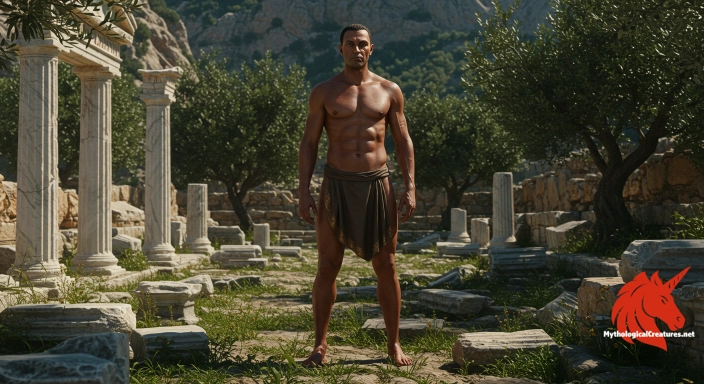
Trophonius
Trophonius - Represents the ambiguous boundary between mortal heroism and divine mystery, with a lasting cult legacy in Boeotia.
Origins & First Encounters
Trophonius occupies an intriguing niche in the annals of Greek mythology, straddling the line between heroism and divine mystery. His ambiguous identity—as a hero, daimon, or god—has intrigued devotees and scholars alike, inviting interpretations that shift with the cultural milieu. Early local traditions in Boeotia attest to his veneration, particularly at the sacred site of Lebadaea, where his presence was woven into the fabric of religious rites. The narrative surrounding Trophonius reflects an enduring fascination with the liminal, drawing those who sought deeper truths from the interface of human life and the divine. His myth is not only a testament to the rich spiritual heritage of ancient Greece but also a mirror of the diverse ways communities engaged with supernatural experience. Over time, his story absorbed elements of oracular prophecies and heroic exploits, each layer adding to his mystique. The interplay between mortal achievements and divine intervention in his legend underscores a profound ambiguity that challenges simple categorisation. With each retelling, Trophonius continues to evoke both reverence and curiosity, symbolising the perennial human quest to understand forces beyond the visible. His enduring legacy serves as a reminder of the complex relationship between ritual, belief, and the mysteries of existence.
Source Texts & Tale Variants
Ancient literary works and local inscriptions provide a multifaceted view of Trophonius, though no single source can claim definitive authority over his legend. Travellers’ accounts and regional dedicatory texts from Boeotia frequently mention his enigmatic cult and the mystic rites performed in his honour. Fragments from classical narratives hint at variations in his portrayal, with some authors emphasising his divine attributes while others underscore his mortal origins. The rich tapestry of texts from antiquity presents both oracular hymns and ritualistic descriptions that have allowed modern scholars to piece together diverse versions of his story. Several sources record the experiential nature of his oracle, inviting those seeking hidden knowledge to descend into labyrinthine chambers steeped in mystery. The coexistence of conflicting interpretations—ranging from mortal heroism to chthonic divinity—illustrates the fluid boundaries of myth and cult practice in ancient Greece. Despite the inherent ambiguity in these sources, the consistency of certain motifs, such as transformation and arcane wisdom, reinforces the centrality of his legacy. The multiplicity of accounts ensures that his myth remains a dynamic field of interpretation, open to both traditional and modern re-evaluation. Through the lens of these disparate sources, Trophonius emerges as a figure whose narrative defies simple explanation, inviting continual exploration and debate.
Form & Powers
Although ancient texts seldom offer detailed descriptions of his appearance, artistic depictions of Trophonius have provided subtle visual cues that reflect his mysterious nature. He is often portrayed with an expression of serene reserve and introspective intensity, suggesting a being versed in both human vulnerability and otherworldly insight. In some renditions, his features are rendered with a simplicity that conveys an understated dignity rather than the flamboyance typical of Olympian deities. His eyes, frequently illustrated as thoughtful and penetrating, seem to invite the observer to contemplate hidden depths and esoteric wisdom. Artists have intermittently symbolised his connection to mystery by incorporating attributes such as keys or architectural motifs into his iconography. The absence of elaborate adornment in many representations reinforces his status as a liminal figure, straddling the mortal and the divine. Variations in his portrayal—sometimes emphasising youthful vigour and at other times a more mature gravitas—reflect the inherent ambiguity of his myth. Each artistic interpretation contributes uniquely to the overall image of Trophonius, merging human qualities with symbols of transcendence. Collectively, these visual narratives evoke a timeless presence that is as enigmatic as it is evocative, inviting deeper reflection on the nature of divine mystery.
Regional Faces
The cult of Trophonius flourished particularly in the region of Boeotia, where local traditions and religious practices imbued his myth with a distinctive regional flavour. At the heart of his worship was the sacred site of Lebadaea, where rituals were specifically designed to evoke the mysterious energies associated with his oracle. Locals adapted his narrative to reflect the unique spiritual landscape of their environment, resulting in practices that varied markedly from those found in other parts of Greece. In some communities, his legacy was intertwined with rites of passage and initiatory ceremonies that underscored the transition between the ordinary and the divine. Variants of his myth in neighbouring regions sometimes placed a greater emphasis on his chthonic attributes, connecting him with the underworld and themes of rebirth. The regional adaptations ensured that while his fundamental identity remained intact, the nuances of his character resonated deeply with local cultural sensibilities. Artifacts and temple reliefs from various locales reveal subtle differences in iconography, further testifying to the fluidity of his regional representations. These distinct local interpretations not only enriched the myth of Trophonius but also underscored the adaptive nature of ancient religious traditions. As a result, his legacy is marked by a rich diversity that mirrors the complex interplay of regional identity and pan-Hellenic myth.
Cultural Parallels
Trophonius occupies a space in Greek mythology that invites a wealth of comparative reflection with other figures who bridge the mortal and the divine. His role as an oracular intermediary is reminiscent of other prophetic centres in ancient Greece, where the boundary between human knowledge and divine mystery is found to be porous. The enigmatic nature of his identity evokes parallels with figures such as Orpheus, who similarly navigated the liminal space between life and the realm beyond. Like several chthonic deities, Trophonius encapsulates the dual aspects of benevolence and otherworldly terror, combining elements of heroic endeavours with the mystique of hidden wisdom. This duality finds echoes in diverse mythological traditions, where the journey into the depths—be it a cave, an underworld, or a mystical space—symbolises both danger and revelation. The layered ambiguity seen in his myth is also akin to that found in later mystical figures who embody the archetype of the initiatory guide. In many ways, his narrative serves as a microcosm of a broader mythic tradition that prizes the tension between visible reality and the unseen forces governing it. By comparing him to other intermediary figures, one finds a shared thematic resonance that transcends regional boundaries. Thus, Trophonius remains a compelling testament to the universal human engagement with the enigmas of existence and the transformative power of mystery.
Legacy & Modern Evolution
The evolution of Trophonius’s myth mirrors the broader transformations in religious and cultural thought from antiquity through to the modern era. His once-localised cult in Boeotia gradually acquired wider significance as his narrative was adapted to fit new intellectual and spiritual paradigms in the Hellenistic and Roman periods. Over time, the symbolic imagery of his oracular rites and chthonic associations resonated with emerging themes of inner exploration and psychological transformation. In more recent centuries, reinterpretations of his legend have surfaced in literature, art, and philosophy, where he is often depicted as a figure of esoteric wisdom and timeless mystery. Modern scholars and practitioners in mystical traditions have reclaimed his myth as emblematic of the journey inward, a metaphor for discovering hidden aspects of the self. The interplay between fear and enlightenment in his story has continued to inspire contemporary debates about the nature of divinity and the transformative potential of encountering the unknown. Artistic works and cultural discussions frequently invoke his image as a symbol of both the peril and promise inherent in the quest for deeper understanding. Academic conferences and exhibitions dedicated to ancient mystery cults have further cemented his place as a figure of enduring significance. Ultimately, Trophonius’s legacy is a dynamic tapestry that has absorbed and reflected the changing contours of spiritual thought across the ages.
Interesting Fact
One intriguing aspect of Trophonius is the enduring ambiguity of his identity, which allows him to resonate as a hero, daimon, or god, reflecting the layered tapestry of ancient Greek belief.
Advertising opportunity
Showcase your mythology project
We offer limited sponsor placements for books, courses, games, and creators aligned with our audience.
View partnership optionsQuick Creature Info
Origin:
Associations:
Our Mythic Legendary Rating:

Also Sometimes Known As:
Habitat:
Supernatural Powers:
Abilities:
Behavior:
Lore:
Related Creatures, Tales or Lore
- AAgamedes
- AAsclepius
- MMelampus
References
Discover Another Mythical Legend You May Not Have Heard Of?
Uncover the mysteries of ancient folklore and expand your knowledge of legendary beings from cultures around the world.
Dare to Meet the Rå....
-cd84980b-5343-4c83-8de2-7bf6c37a0719_small.webp "Depiction of Rå")
Curated by the Mythological Creatures Team
Series editor: Mythological Creatures Directory
Primary desk: Hellenic & Ancient Mediterranean Desk
(rev. November 2025)