
Tulugaak: Tulugaak is an Inuit mythological raven celebrated as the creator of light.
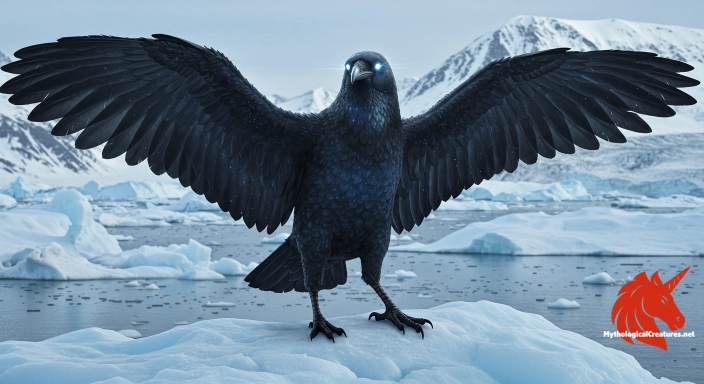
Tulugaak
Tulugaak - Tulugaak's creation of light is a foundational myth that symbolizes the emergence of order and hope from darkness in Inuit cultural narratives.
Origins & First Encounters
Tulugaak stands as a luminous figure in the vast tapestry of Inuit mythology, celebrated for his role as the creator of light and a divine force bridging night and day. His enigmatic origins are enshrined in ancient oral traditions, where the interplay of darkness and radiance is a recurring motif in the harsh polar landscape. Revered from time immemorial, Tulugaak embodies the transformative power that dispels the overwhelming cold and darkness of the Arctic winter. His name, echoing the sound and symbolism of the raven, intertwines the mystique of this clever bird with the grandeur of celestial creation. The deity’s emergence, though not precisely anchored in recorded history, is believed to have been witnessed in the first whispers of human interaction with the stark, frozen world. Community elders recall his presence in narrative cycles that celebrate the eternal rebirth of light, underscoring his central position in the cosmic order. His myth accentuates the delicate balance between chaos and harmony, reflecting both the peril and beauty of nature. Indeed, the enduring legacy of Tulugaak is integrally tied to the layered spiritual and cultural identity of the Inuit people, inspiring reverence and introspection across generations. His story continues to evoke admiration as a testament to the resilience of life and the ceaseless hope symbolised by emerging light. In an environment where light is both a literal and metaphorical lifeline, his divine intervention serves as a beacon for human endurance and cosmic balance.
Source Texts & Tale Variants
The narrative of Tulugaak has predominantly been preserved through the intricate web of oral tradition, where elders and shamans recite his deeds with poetic eloquence. Although scant written records exist from the initial epochs of Inuit culture, later anthropological accounts have captured traces of these profound stories. Stories recounted during long, frigid nights often recount Tulugaak as the seminal force that introduced brightness into a world long shrouded in darkness. Variations of his myth reflect subtle regional and cultural nuances, with some traditions emphasising his role as a benevolent guardian while others highlight his enigmatic, perhaps even mischievous, qualities. Explorers and early ethnographers, though limited in number, noted his association with the raven, a motif that resonated deeply with the communities they encountered. These narrative strands have been interwoven over time, forming a rich mosaic where each telling adds its own perspective on the creation of light. With each successive generation, the legend evolved, as storytellers adapted the myth to encapsulate new understandings of nature and morality. The enduring presence of Tulugaak in folk narratives underscores the fluidity of myth, reminding us that the essence of these tales often transcends the boundaries of any single source.
Form & Powers
Descriptions of Tulugaak often evoke vivid imagery, blending elements of both human and animal attributes to symbolise his dual nature as a creator and a trickster. He is frequently envisioned as a majestic, raven-like figure whose imposing form radiates an ethereal glow, reminiscent of the first light of day. His eyes are said to shimmer with an inner brightness, mirroring the spark that ignited the cosmos from primordial darkness. In many portrayals, his wings unfurl like vast, shimmering veils, catching hints of the iridescent colours found in the aurora borealis. Artistic renditions sometimes merge his human aspects with those of a raven, embodying a being capable of both rational wisdom and wild, instinctive energy. His appearance can vary from depictions of a colossal celestial bird to that of a more anthropomorphic deity adorned with elaborate patterns that represent the cycles of nature. Across different narratives, the interplay of shadow and light in his depiction symbolises a dynamic presence that embodies both creation and the transient nature of existence. Even when physical features are rendered symbolically, Tulugaak’s form invariably conveys an awe-inspiring majesty that aligns with the mystical qualities inherent in the world around him. The diversity in his portrayal reflects not only the multifaceted nature of his myth but also the rich artistic traditions of the Inuit, where nature and spirituality coalesce.
Regional Faces
The depiction of Tulugaak varies subtly across the expansive regions of the Arctic, with each community imprinting its unique cultural and environmental influences on his legend. In coastal areas, where the sea and ice converge in a dramatic interplay, local storytellers often cast him as a guiding light for seafarers navigating treacherous waters. Inland groups, meanwhile, evoke his myth to explain the sudden return of light after the prolonged embrace of polar night, emphasising his critical role in seasonal renewal. Variations of his tale also appear in regions where elements of shamanism dominate, lending his character a more ambiguous, transformative quality in line with the local spiritual ethos. These regional narratives reflect the interplay between universal cosmic themes and localized experiences of the natural world, such as the interplay of shadow and sunlight unique to each microclimate. Some communities merge aspects of Tulugaak with other ancestral spirits, creating hybrid figures that speak to the intertwined destinies of nature and culture. The subtle mutations in his portrayal reveal how the same core myth can adapt to address diverse environmental challenges and societal values. This variability not only enriches the myth but also highlights the flexibility and resilience of Inuit storytelling traditions in the face of changing landscapes and times.
Cultural Parallels
The myth of Tulugaak forms a fascinating bridge with similar deities and legendary figures found in other cultural traditions, particularly those that attribute creation and transformation to avian entities. The association with the raven resonates with narratives in North American indigenous lore, where the raven is often portrayed as both a creator and a trickster who shapes the destiny of the world. Remarkably, this imagery finds echoes in the traditions of the Haida and Tlingit peoples, who, like the Inuit, view the raven as a harbinger of life and change. Norse mythology, too, offers parallels with its cosmic ravens, such as Huginn and Muninn, that traverse the realms of the divine. Tulugaak’s creative act of igniting light bears a universal thematic kinship with other sun deities, whose emergence from darkness symbolises hope and renewal. His myth also shares common ground with other sky gods within the Inuit pantheon, such as Torngarsuk and Anguta, each embodying facets of the celestial and terrestrial worlds. This overlap of themes illustrates how disparate cultures observe similar natural phenomena and encode them in mythic forms. In a broader cultural context, Tulugaak’s narrative aligns with global motifs where darkness is vanquished by the emergence of light, reinforcing a universally resonant archetype. His story serves as a point of convergence, revealing that despite differing traditions, the symbolic language of light, transformation, and celestial guidance remains deeply embedded in the human psyche.
Legacy & Modern Evolution
Over the centuries, the myth of Tulugaak has evolved, adapting to both internal cultural developments and external modern influences. Once transmitted solely through intimate oral traditions, his legacy has since permeated academic studies, public art, and modern reinterpretations of indigenous spirituality. Contemporary artists have reimagined Tulugaak as a vibrant icon of resilience and renewal, capturing his essence through various mediums including sculpture, painting, and digital animations. His imagery is often invoked in discussions about environmental stewardship and the preservation of ancient cultural practices within the rapidly changing Arctic landscape. In modern Inuit communities, Tulugaak remains a symbol of hope and continuity, emblematic of the enduring light amidst darkness. His myth has also found resonance in global artistic and literary circles, where creators draw inspiration from the interplay of nature, myth, and identity. As younger generations reconnect with ancestral roots, Tulugaak’s narrative is celebrated not only as a religious or mythological tale but also as a powerful statement of cultural survival. Modern reinterpretations continue to highlight his dual character as both a benevolent creator and a complex, enigmatic figure, ensuring that the myth remains both a tribute to tradition and a dynamic facet of contemporary expression. The evolution of his legacy reflects the broader story of indigenous voices reclaiming their narrative in a modern world, where the ancient and the innovative coexist in a mosaic of light and colour.
Interesting Fact
An intriguing aspect of Tulugaak is the paradox of a raven—typically a symbol of darkness—being revered as the harbinger of light, illustrating the complexity of mythological symbolism in Inuit culture.
For authors, artists, and makers
Created something from the realm of myth?
If your book, deck, game, or artwork draws from legendary creatures and lore, you can showcase it here in a tasteful, year-round placement.
Share your projectQuick Creature Info
Origin:
Associations:
Our Mythic Legendary Rating:

Also Sometimes Known As:
Habitat:
Supernatural Powers:
Physical Attributes:
Abilities:
Behavior:
Lore:
Related Creatures, Tales or Lore
- RRaven (Haida mythology)
- RRaven (Tlingit mythology)
- RRaven (Salish folklore)
References
Discover Another Mythical Legend You May Not Have Heard Of?
Uncover the mysteries of ancient folklore and expand your knowledge of legendary beings from cultures around the world.
Dare to Meet the Shwe Sitthin....

Curated by the Mythological Creatures Team
Series editor: Mythological Creatures Directory
Primary desk: Americas & Indigenous Traditions Desk
(rev. November 2025)