
Udug: The udug are an ambiguous class of demonic entities from ancient Mesopotamia.
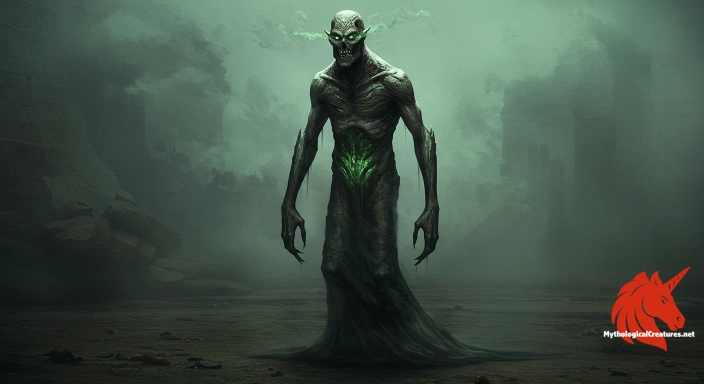
Udug
Udug - The udug exemplifies the dangerous, unseen forces in Mesopotamian belief systems and underscores the importance of exorcism rituals.
Origins & First Encounters
The udug occupy a fascinating niche in ancient Mesopotamian mythology, embodying a duality that blurs the lines between overt malevolence and enigmatic supernatural influence. Emerging in Sumerian texts and later reinterpreted in Akkadian traditions as the utukku, they have always been shrouded in ambiguity. Their origins seem deeply intertwined with the early religious and cultural practices of Mesopotamia, where the boundaries between gods and demons were intricately negotiated. The earliest attestations portray them as dangerous, shadowy figures whose mischief and maleficence could disrupt the natural order. They came to be seen as forces that could induce disease and disorder, prompting elaborate exorcism rituals. Their role in myth and ritual evolved over time, reflecting shifting societal views on the unseen and inexplicable aspects of existence. The udug’s nebulous nature made them emblematic of the unpredictable and often perilous forces believed to be lurking beyond human control. This ambiguous persona has ensured their lasting presence in the mythological imagination, symbolising both the fear of the unknown and the hope for restoration through magical intervention. Their cultural significance lies in their capacity to embody chaos while simultaneously reinforcing the order imposed by ritual and divine authority.
Source Texts & Tale Variants
The textual tradition of the udug is rich and multifaceted, with primary sources providing crucial insights into their nature and functions. Among the most significant are the Udug Hul texts, which serve as comprehensive manuals for exorcism rituals aimed at driving out these malevolent beings. Ancient Mesopotamian incantations and medical texts frequently invoke the udug, highlighting their association with illness and misfortune. Variants of their story appear in different manuscripts, each adding layers of nuance to their character as both a diffuse evil and, in rare cases, a catalyst for necessary cosmic rebalancing. References to the udug can be found in both Sumerian and Akkadian literature, where their roles shift subtly from abstract representations of chaos to more personalised demonic entities. Numerous clay tablets recovered from archaeological sites reveal ritual procedures wherein exorcists meticulously recite incantations to repel the influence of these spirits. The diverse literary depictions testify to a long process of myth-making, with local scribal traditions contributing unique details and variations. Together, these sources underscore the udug’s central role in explaining and combating the inexplicable phenomena of disease and social disorder. The various narrative strands intertwine, creating a complex tapestry that mirrors the multifarious ways in which early communities sought to understand their world.
Form & Powers
Although no definitive visual depictions of the udug have survived, textual descriptions offer evocative clues about their form and presence. They are often characterised as a dark, insidious shadow that seems to absorb light, embodying the very absence of illumination. This spectral quality is heightened by descriptions of a pervasive aura that evokes an overwhelming sense of dread and foreboding. The udug are also attributed with a noxious, poisonous emanation that symbolises their connection to both physical and spiritual corruption. Accounts sometimes mention an almost supernatural roar or a deafening voice that can unsettle both the living and the divine. Their form is elusive, suggesting a being that is mutable and perhaps even formless, capable of shifting in appearance according to the perceptions of those who encounter it. Some narratives hint at variations in size, where the udug might appear vast and all-encompassing or deceptively minute yet potent in impact. The deliberate obfuscation of their bodily details reinforces the notion that the terror they inspire is more psychological than physical. This deliberate vagueness in physical description invites imagination, ensuring that the udug remain as much a conceptual symbol of evil as a tangible entity.
Regional Faces
Across the sprawling cultural landscape of ancient Mesopotamia, the interpretation of the udug varied significantly from one region to another. In Sumerian traditions, the udug were primarily seen as capricious spirits responsible for unexplained maladies, while in Akkadian texts the term utukku expanded to incorporate a broader range of supernatural phenomena. Localised exorcism rituals reveal that different communities tailored their practices to address region-specific fears associated with these demons. In some urban centres, the epidemic qualities of the udug were emphasised, reflecting growing concerns over public health and disease outbreaks. Conversely, in more rural or isolated areas, the udug might be interwoven with local spirits and deities, thus acquiring additional roles within the existing pantheon of nature and boundary guardians. This regional dynamism allowed communities to contextualise the udug within their own experiences of calamity and divine retribution. The way in which these demons were portrayed sometimes shifted from pure malevolence to a more ambivalent force, capable of both destruction and the catalysis of regeneration. Such adaptations underscore the flexible nature of myth, where narratives evolve to resonate with local spiritual needs and societal changes. These regional variations highlight the rich tapestry of Mesopotamian religious life, where a single term could encapsulate myriad cultural fears and hopes.
Cultural Parallels
When considered alongside similar mythological entities from other cultures, the udug offers a compelling study in the universal portrayal of dark, liminal forces. Much like the shadowy djinn of Arab folklore or the dark spectres found in Greco-Roman legends, the udug embodies the archetypal fear of unseen malevolence. Their ambiguous status—as neither fully god nor entirely demon—parallels figures in other mythologies where moral distinctions blur, allowing for a complex interplay of benevolence and malevolence. The udug’s association with disease and misfortune echoes themes found throughout the ancient world, where demonic figures were often invoked to explain natural disasters or epidemics. Certain cultural parallels can also be drawn with later folkloric traditions in which dark, formless entities serve as allegories for the internal and external struggles of human life. In many respects, the udug functions as a point of contact between the spiritual and the mundane, much like the trickster figures in various global mythologies who challenge societal norms through their unpredictable actions. The shared motifs surrounding these dark beings illustrate a cross-cultural resonance in addressing the mysteries of existence and the inevitability of chaos. This comparative perspective not only enriches our understanding of the udug but also illuminates how different societies articulate their anxieties through myth. Ultimately, the study of such figures underscores a common human impulse to personify the inexplicable, imbuing the unseen with form and intent.
Legacy & Modern Evolution
The evolution of the udug through the ages reflects a broader narrative of myth adaptation and cultural reinterpretation. Initially conceived as a specific class of mistrusted demons in ancient Mesopotamia, the udug became emblematic of the pervasive fear of invisible forces and disease. Over time, their character underwent a transformation as successive generations absorbed and reimagined these ancient texts. In later periods, the concept of the udug was subsumed into a more general archetype of chaos and misfortune, influencing both religious practices and popular beliefs. The ritualistic exorcism of these demons left an enduring mark on the development of magical and medicinal traditions throughout the Near East. Modern interpretations, often found in literature, film, and digital media, tend to draw on the eerie, formless qualities of the udug to evoke a sense of primordial dread and mystery. Contemporary scholars and enthusiasts have also revisited these ancient myths, re-examining the symbolic significance of the udug in discussions about disease, mental health, and the human confrontation with the unknown. The legacy of the udug is a testament to the enduring power of myth as a vehicle for expressing societal fears and hopes. As new artistic and scholarly endeavours continue to reinterpret ancient narratives, the udug’s spectral form remains a compelling symbol of the blurred line between the known and the unknowable. This ongoing cultural dialogue ensures that the ancient demon still resonates with modern audiences, unfading and persistently enigmatic.
Interesting Fact
Interestingly, the term 'udug' is sometimes used interchangeably with demons in general, reflecting the broad and ambiguous categorisation of malevolent supernatural beings in Mesopotamian mythology.
Advertising opportunity
Showcase your mythology project
We offer limited sponsor placements for books, courses, games, and creators aligned with our audience.
View partnership optionsQuick Creature Info
Origin:
Associations:
Our Mythic Legendary Rating:

Also Sometimes Known As:
Habitat:
Supernatural Powers:
Physical Attributes:
Abilities:
Behavior:
Weaknesses:
Lore:
References
Discover Another Mythical Legend You May Not Have Heard Of?
Uncover the mysteries of ancient folklore and expand your knowledge of legendary beings from cultures around the world.
Dare to Meet the Wechuge....

Curated by the Mythological Creatures Team
Series editor: Mythological Creatures Directory
Primary desk: Hellenic & Ancient Mediterranean Desk
(rev. November 2025)