
Umū dabrūtu: Umū dabrūtu is an ancient Mesopotamian demon or mythical beast, one of the eleven monstrous creations of Tiamat featured in the Enûma Eliš.
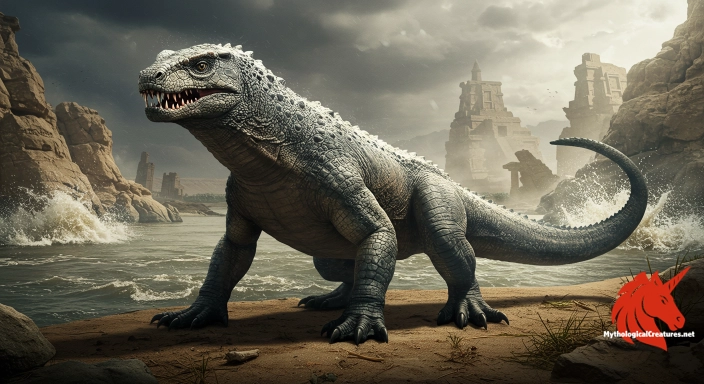
Umū dabrūtu
Umū dabrūtu - Represents the destructive and uncontrollable forces of nature in Mesopotamian cosmology, emerging from Tiamat's primordial conflict.
the legend in five swipes.
the legend in five swipes.
How old is the legend of Umū dabrūtu?
Umū dabrūtu emerges from the mists of ancient Mesopotamian lore as a creature enshrouded in mystery and elemental power. Its name, translating to 'Violent Storms', alludes to a being that embodies the chaotic and untamed fury of nature. Born from the cosmic conflict instigated by Tiamat against the rising pantheon of younger deities, it occupies a distinct place in the creation narrative captured in the Enûma Eliš. Its role as one of the eleven monstrous progenies hints at a complex interplay between order and chaos at the very dawn of civilisation. The mythic tradition that surrounds it reflects the ancient peoples’ fascination with the forces of nature and the turbulent events that gave birth to the cosmos. Often interpreted as a dark counterbalance to celestial order, the beast symbolises the overwhelming power of the elements. Its early attestation in carved cuneiform and epic recitations contributed significantly to the iconography of chaos in Mesopotamian thought. Over time, Umū dabrūtu has represented not only physical tumult but also the enduring awe of humanity in the face of nature’s might and mystery.
Umū dabrūtu: How the Tale Was Told and Retold
Primary references to Umū dabrūtu are found within the iconic Enûma Eliš, where ancient scribes inscribed its name and hinted at its formidable attributes. The creature appears as part of a cadre of eleven monsters, each brought into being during the tumultuous battles between primordial forces and emerging deities. Its cuneiform inscription, rendered as u4-mi da-ab-ru-ti, has led to varied interpretations that illuminate different aspects of its character. While some texts provide only sparse details, they collectively forge an image of a being linked to violent, stormy phenomena. Fragments from these ancient tablets offer a glimpse into the Mesopotamian cosmogony, where cosmic chaos was given tangible form through such monstrous entities. Variations in the narrative across different recensions have allowed scholars to speculate on its deeper symbolic import. Later folklore and reinterpretations by successive generations further enriched its myth by blending oral tradition with written record. Thus, the textual legacy of Umū dabrūtu remains intertwined with the broader epic of creation and the eternal struggle between order and disorder.
What was Umū dabrūtu believed to be capable of?
Although no detailed visual representation of Umū dabrūtu has survived, the hints embedded in ancient texts suggest a composite creature whose form was designed to embody chaos. It is thought that its appearance might have merged features from several animals, perhaps combining the strength of a lion, the sinuous form of a serpent, and the imposing horns of a bull. The very epithet 'Violent Storms' suggests that its essence was interlaced with the tempestuous energy of gales and lightning. This amalgamation of diverse animal characteristics was likely intended to symbolise the unpredictable and multifaceted nature of natural disasters. The lack of a fixed, canonical description allowed for artistic licence, enabling different artisans to project their visions of chaos upon its form. Elements such as swirling, cloud-like appendages and jagged outlines could have paralleled the erratic patterns of a storm. The very act of merging disparate bodily features created a visual metaphor for the convergence of multiple elemental forces. In this way, the creature’s elusive physicality reinforces its role as a personification of nature’s wild and unbridled force.
The Geography of the Umū dabrūtu Legend
Within Mesopotamia, regional interpretations of Umū dabrūtu evolved alongside the broader tapestry of Near Eastern myth. Initially rooted in the cosmological narratives of Sumer and Akkad, its portrayal adapted to suit varying local traditions and artistic conventions. In some city-states, the creature’s fearsome storm-like characteristics were accentuated, while in others, its composite nature was highlighted with more elaborate iconography. Local adaptations frequently integrated distinctive symbols, such as celestial motifs and patterns reminiscent of local environmental phenomena. Such regional variations reflect an enduring dialogue between the myth’s original context and the diverse cultural landscapes that embraced it. The ambiguous details in the ancient texts allowed neighbouring regions to interpret its attributes in ways that resonated with local beliefs about the forces of nature. Over time, these adaptations contributed to a richer, more multifaceted depiction that transcended a single cultural framework. Ultimately, Umū dabrūtu’s myth served as a canvas for regional creativity, perpetually reshaped by the communities that revered and reimagined its legacy.
Umū dabrūtu: Related Figures Across Cultures
Comparative mythology reveals that Umū dabrūtu belongs to a long tradition of composite monsters symbolising chaos and natural fury. Its portrayal as a hybrid creature finds echoes in Greek mythology through figures such as Typhon, whose fearsome amalgam was similarly linked to the uncontrollable forces of nature. Like the serpentine dragons and multi-headed beasts that populate various cultural narratives, this ancient figure embodies the eternal conflict between order and chaos. Across diverse traditions, similar monsters represent the inexorable, often destructive, power of the natural world. Such figures serve as metaphors for the unpredictable elements that shape human experience and the cosmic order. The intersection of disparate animal parts in these creatures highlights an enduring human fascination with the blend of beauty and terror. By comparing Umū dabrūtu to its counterparts in other mythologies, one can appreciate the universal impulse to interpret natural phenomena in symbolic, often formidable, forms. This cross-cultural analysis underscores how different societies harnessed myth to articulate their understanding of elemental chaos and celestial power. In doing so, Umū dabrūtu and its kin continue to illuminate shared themes in the human narrative, making them timeless figures in the mythological canon.
Umū dabrūtu in Modern Culture
Over time, the inscrutable image of Umū dabrūtu has transitioned from the confines of ancient tablets to a broader modern cultural consciousness. Its early association with cosmic storms and chaotic energies has been reinterpreted in light of evolving artistic and literary sensibilities. The creature came to represent not only a mythic embodiment of nature’s fury but also a symbol of the eternal clash between chaos and order. In modern fantasy literature and visual arts, echoes of its composite nature and elemental power are often invoked to capture the imagination. Contemporary scholars have revisited its myth, exploring the deep cultural currents that allowed such a creature to resonate across millennia. Museum exhibits and academic discussions constantly breathe fresh insight into its ambiguous form, linking ancient cosmogonies with modern existential themes. The evolution of its representation reflects broader shifts in our understanding of nature, myth, and the human condition. As artists and creators continue to reinterpret these ancient symbols, Umū dabrūtu remains a stirring reminder of the enduring power of myth to capture and convey the wild forces of the world.
Interesting Fact
Despite being one of many creatures born from cosmic conflict, Umū dabrūtu uniquely encapsulates the terror and power of violent storms, serving as a potent emblem of nature's chaotic might in ancient Mesopotamian lore.
Mythological Treasures
Chinese Beasts: A field guide to the dragons and demon kings of Chinese myth
From river dragons to demon kings, with the legends that shaped five thousand years of storytelling.
Japanese Yokai: A field guide to the spirits and demons of Japanese folklore
Fifteen spirits, with the signs to watch for and what the old tales say to do if you meet one.
Greek Myths: A field guide to the monsters of ancient Greece
Every monster here earned its place in legend, and each gets a full page of artwork and the story behind it.
the legend in five swipes.
Support the directory
Promote your myth project and fund more research
Sponsor placements help keep this directory growing and free to use while giving your work a focused, relevant audience.
Learn how sponsorship worksQuick Creature Info
Origin:
Features:
Associations:
Our Mythic Legendary Rating:

Also Sometimes Known As:
Habitat:
Supernatural Powers:
Physical Attributes:
Abilities:
Behavior:
Lore:
Related Creatures, Tales or Lore
- TTiamat's other monstrous creations
- LLeviathan (a primordial sea monster in biblical lore)
- TTyphon (the Greek monstrous storm demon)
References
Discover Another Mythical Legend You May Not Have Heard Of?
Uncover the mysteries of ancient folklore and expand your knowledge of legendary beings from cultures around the world.
Dare to Meet the Leonard....
-836de927-4731-4ed7-aad8-75d4a0fbb9cb_small.webp "Depiction of Leonard")
The Mythological Creatures Book Series
Yokai, Greek, Norse, Egyptian & Chinese. Five illustrated field guides to the creatures the old stories either warned or told you about.
Curated by the Mythological Creatures Team
Series editor: Mythological Creatures Directory
Primary desk: Hellenic & Ancient Mediterranean Desk
(rev. November 2025)