
Leonard: Leonard, also known as Master Leonard, is a demonic entity depicted as a three-horned goat with a black human face, ruling over nocturnal orgies of demons.
-836de927-4731-4ed7-aad8-75d4a0fbb9cb_small.webp "Leonard - Leonard is a pivotal figure in demonic lore, symbolising corruption, cursed initiations, and infernal power dynamics.")
Leonard
Leonard - Leonard is a pivotal figure in demonic lore, symbolising corruption, cursed initiations, and infernal power dynamics.
the legend in five swipes.
the legend in five swipes.
Where does Leonard come from?
Leonard, known also as Master Leonard, occupies a notorious place in the tapestry of occult lore, emerging as a figure intertwined with nightmarish revelry and dark seduction. His earliest attestations in sources like the Dictionnaire Infernal provide a glimpse into a tradition steeped in ritualistic lore and shadowy ceremonies. Born of medieval demonological narratives, Leonard's origins blend the mystique of forbidden rites with elements drawn from ancient sacrificial customs. Often depicted as the grand-master of nocturnal orgies among demons, he personifies both the allure and the terror of the supernatural. His myth is intricately linked with ritual symbolism, invoking echoes of the scapegoat in Biblical texts such as Leviticus while challenging conventional ideas of purity. The demon’s role as a marker of initiation, through the branding of his followers with his horn, further underscores the potent mix of power and transgression. His dual nature—capable of seducing mortals as well as unleashing chaos among divine ranks—marks him as a multifaceted archetype of occult power. Leonard’s enduring presence in occult tradition reflects a broader cultural fascination with figures who blur the boundaries between beast and man, purity and sin.
Leonard in the Historical Record
The primary texts that outline Leonard’s dark persona include the Dictionnaire Infernal and the Dictionary of Phrase and Fable, both of which capture his role as an orchestrator of infernal ceremonies and ritualistic symbolism. Within these texts, Leonard is detailed as a demon whose authority extends over nocturnal congregations and whose influence imbues his followers with supernatural gifts. The myth is further enriched by sporadic references in occult manuscripts that echo the imagery of the Goat of Mendes and connect him to other esoteric deities. In some story variants, his narrative is interwoven with hints of Biblical ritual, as seen in the allusion to the scapegoat ceremony in Leviticus, thereby lending a dimension of ancient transgression. Additional grimoires and legendary accounts ascribe to Leonard extraordinary metamorphic abilities, emphasising his capacity to transform both into monstrous animals and appealing, deceptive men. These diverse retellings underscore the adaptability of his legend as it is passed down through secretive societies and folklore traditions. In many occult circles, his narrative serves to bridge the gap between ritual initiation and dark seduction, reinforcing the archetypal themes of transformation and damnation. The resulting tapestry of sources, though sometimes contradictory, illustrates the evolving nature of Leonard’s myth across different periods and cultural narratives.
Leonard: Powers, Strengths and Vulnerabilities
Leonard’s physical form is a study in unsettling contrasts, merging the features of the animal world with those of the human. Most striking is his depiction as a three-horned goat, an image that immediately invokes ancient pagan symbolism and the wild forces of nature. His visage, marked by a black human face juxtaposed against his beastly body, lends him an aura of both intellectual menace and primal savagery. The horns themselves are not just decorative; they serve a dark ritual function, providing a physical mark to those who become initiates in his infernal rites. His eyes and expressions are often described as exuding a penetrating malevolence, capable of both seduction and intimidation. Some accounts suggest that Leonard’s form is mutable, capable of adopting an imposing, towering presence or a more subdued, deceptive human guise. This fluidity in size and shape is indicative of his role as a supernatural shapeshifter, enabling him to traverse the boundaries between the mundane and the diabolical. Each detail of his form, from the curling of his horns to the stark contrast of his features, contributes to a composite image that is as awe-inspiring as it is repellent.
Where in the world is Leonard known?
Leonard’s myth has been refracted through various cultural lenses, with regional adaptations contributing unique facets to his overall persona. In French occult tradition, his figure is interwoven with the mystique of secret rituals and arcane societies, making him a staple in the study of infernal hierarchies. Mediterranean interpretations often infuse his narrative with elements of ancient paganism, where the goat symbolizes both virility and the defiance of societal norms. In Eastern European folklore, echoes of the werewolf legend emerge in depictions of Leonard, emphasising his capacity for nocturnal transformation and clandestine seduction. Each locale casts him in a slightly different light, whether as a behemoth of terror in secluded woods or as a suave, deceptive soldier in the urban underbelly of dark myth. These regional variations illustrate how local cultural and historical contexts can dramatically alter the portrayal of a singular demonic figure. In many adaptations, the focus shifts between his monstrous physicality and his subtle, dangerous charisma. The diversity of his regional portrayals underscores the universal appeal of his myth, a testament to the enduring power of symbols drawn from the animal realm and human psyche alike.
The Global Cousins of Leonard
The myth of Leonard has intriguing parallels with several other occult and mythological figures whose imagery resonates across diverse cultural contexts. His goat-headed appearance firmly aligns him with the archetype of Baphomet, a symbol that has come to embody the mysterious and often transgressive nature of esoteric traditions. Like the Celtic deity Cernunnos, Leonard represents a synthesis of animalistic power and mystical authority, illustrating how horned figures serve as conduits for ancient, primordial energy. Moreover, his capacity for metamorphosis draws comparisons with shapeshifters and werewolf legends prevalent in European folklore, adding depth to his representation as a liminal being. The dual nature of his seduction and savagery echoes narrative threads seen in other demonological figures, blurring the lines between divine retribution and human vice. His practice of branding initiates also bears a resemblance to secretive rites found in various occult and mystery traditions. In examining these cultural parallels, it becomes evident that Leonard is part of a broader tapestry of mythic entities that challenge conventional dichotomies of good and evil. This comparative lens not only enriches our understanding of his character but also situates him within a larger framework of symbols that articulate humanity’s fascination with the mysterious and the forbidden.
Leonard: Modern Retellings and Reinventions
Leonard’s myth has undergone a significant evolution, transitioning from its roots in grim occult manuscripts to a presence that continues to haunt modern popular culture. His early portrayals in texts like the Dictionnaire Infernal imbued him with a reputation of dark ritualism and mystical power that has captivated the imaginations of subsequent generations. Over time, interpretations of his image have seen him transform from a mere symbol of demonic orgies to a multifaceted figure representing the eternal clash between purity and transgression. His portrayal as a protector of Lucifer’s mightiest soldiers and as the arbiter of hidden rites is echoed in the modern reinterpretations found within gothic literature and underground art. Contemporary depictions often draw on the ancient visual motifs of his three-horned form, reimagining him in styles that range from surreal digital art to heavy metal album covers. The ritualistic elements associated with his myth, including the macabre banquets and symbolic branding, have evolved into potent symbols of defiance and rebellion in subcultures. In modern occult circles, Leonard is sometimes celebrated as a guardian of esoteric wisdom, a figure whose narrative challenges established moral conventions. His lasting impact on both scholarly demonology and modern myth-making ensures that his legacy endures as a vivid reminder of the power and allure of the forbidden.
Interesting Fact
Leonard's symbolism as a three-horned goat links him to ancient sacrificial rituals and the iconic imagery of Baphomet, blending Biblical references with Templar occult mystique.
Mythological Treasures
Egyptian Legends: A field guide to the gods and monsters of ancient Egypt
Guardians of the living and devourers of the dead, with the role each played in judgement.
Chinese Beasts: A field guide to the dragons and demon kings of Chinese myth
From river dragons to demon kings, with the legends that shaped five thousand years of storytelling.
Japanese Yokai: A field guide to the spirits and demons of Japanese folklore
Fifteen spirits, with the signs to watch for and what the old tales say to do if you meet one.
the legend in five swipes.
Curated sponsor space
One subtle banner. Thousands of myth lovers.
We offer a small number of curated sponsor spots for relevant books, courses, games, and art. No clutter, just well-matched partners.
Partner with usQuick Creature Info
Features:
Associations:
Our Mythic Legendary Rating:

Also Sometimes Known As:
Habitat:
Supernatural Powers:
Physical Attributes:
Abilities:
Behavior:
Weaknesses:
Lore:
References
Discover Another Mythical Legend You May Not Have Heard Of?
Uncover the mysteries of ancient folklore and expand your knowledge of legendary beings from cultures around the world.
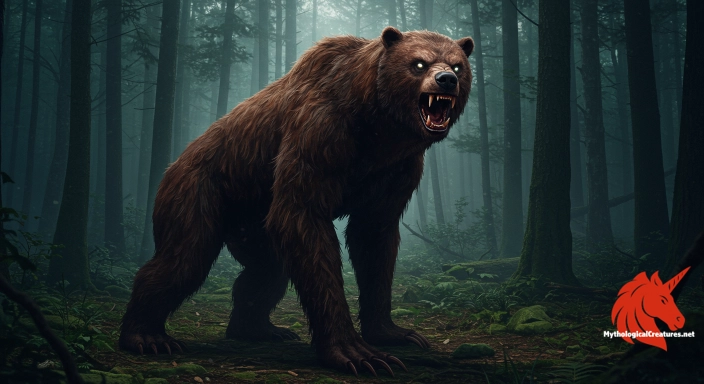
Dare to Meet the Onikuma....
The Mythological Creatures Book Series
Yokai, Greek, Norse, Egyptian & Chinese. Five illustrated field guides to the creatures the old stories either warned or told you about.
Curated by the Mythological Creatures Team
Series editor: Mythological Creatures Directory
Primary desk: Hellenic & Ancient Mediterranean Desk
(rev. November 2025)