
Ungaikyō: The Ungaikyō, or 'mirror beyond the clouds', is a yōkai from Japanese folklore depicted as a possessed mirror.
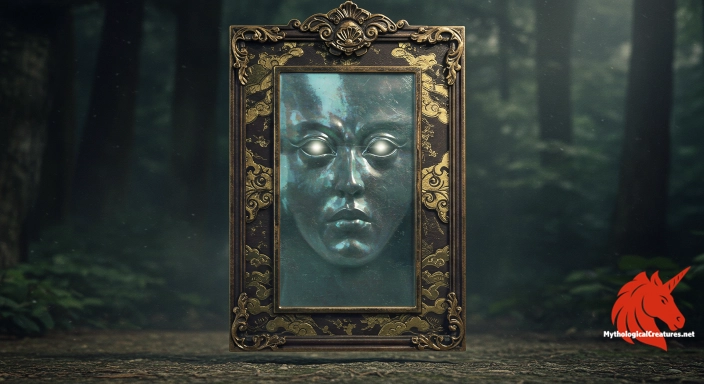
Ungaikyō
Ungaikyō - Embodies the mysterious and transformative power of reflection in Japanese folklore, blurring the boundaries between reality and illusion.
the legend in five swipes.
the legend in five swipes.
How did the Ungaikyō enter folklore?
The ungaikyō, known as the "mirror beyond the clouds," occupies a singular niche within Japanese mythology. Emerging from the richly imaginative Edo period, this yōkai first appeared in the Gazu Hyakki Tsurezure Bukuro, a celebrated collection of paintings that brought many supernatural entities to life. Its very name evokes an ethereal quality, suggesting a realm where the ordinary is overlaid with mystical significance. Emerging from an era in which everyday objects could be imbued with a spirit of their own, the ungaikyō bridges the material and the symbolic. It is said to offer reflections that reveal hidden truths as much as they distort the self. The mirror’s ambiguous nature invites both admiration and caution, encapsulating cultural preoccupations with vanity and self-deception. As a figure rooted in historical artistic expression, its presence has animated discussions on the nature of reflection and reality. The ungaikyō continues to capture the imagination, symbolising the delicate balance between beauty and menace in the world of the supernatural. Its layered origins serve as a testament to the enduring interplay between art, myth, and the mysteries of the human psyche.
Which texts first mention the Ungaikyō?
The primary record of the ungaikyō is embedded in the pages of the Gazu Hyakki Tsurezure Bukuro, where its enigmatic form is painted with both elegance and foreboding. This seminal work by Toriyama Sekien laid the groundwork for subsequent mythological interpretations and narrative traditions. Over time, various texts and oral folklores have added layers of complexity, expanding its role from a mere fantastical object to a potent symbol of transformation. Different folktales narrate visual anecdotes in which the mirror manipulates its onlookers’ perceptions, blending the lines between beauty and horror. Complementary sources, ranging from regional compilations of supernatural lore to later artistic reinterpretations, highlight the diverse ways in which the ungaikyō has been understood. These accounts often speak of its mysterious ability to alter reflections into monstrous imitations of the self. As such, the mirror is not only a repository of ancient magic but also a dynamic element in the ever-evolving landscape of Japanese myth. The multiplicity of sources reveals an ongoing dialogue between tradition and reinterpretation, ensuring that the creature remains both ambiguous and fascinating. This rich tapestry of written and oral records underscores the ungaikyō’s importance in the broader spectrum of folkloric narratives.
Ungaikyō: Physical Form and Supernatural Powers
The physical manifestation of the ungaikyō is typically rendered as an exquisitely crafted mirror that exudes a spectral glow. Its surface is often illustrated with a slight distortion, as if the glass itself is infused with shifting, cloudlike vapours. Elaborate carvings and intricate decorative patterns embellish its frame, suggesting both artistry and an underlying arcane significance. Some depictions include mysterious inscriptions that hint at ancient incantations and secret rites. The mirror’s reflective quality is not static; it appears to ripple and warp, conveying a sense of unease and unpredictable power. Varying in size from modest, hand-held objects to magnificent, temple-like structures, its form is as variable as the legends that describe it. The interplay of light and shadow on its surface seems to unveil different aspects of the observer’s inner self. Such detailed descriptions underline how the artefact's tangible aesthetics are inextricably linked to its supernatural function. This careful synthesis of art and magic gives the ungaikyō a compelling, otherworldly presence that continues to intrigue and unsettle.
How does the Ungaikyō legend change from place to place?
Across Japan, the folklore surrounding the ungaikyō has been adapted to fit local traditions and cultural aesthetics, thereby generating a spectrum of regional interpretations. In mountainous areas and rural provinces, it is sometimes interwoven with local rites and legends that celebrate natural spirits and ancestral guardians. Northern regions, with their austere and ethereal landscapes, lend the mirror an air of quiet menace and reflective melancholy. In contrast, more metropolitan areas have often portrayed it as a refined, albeit mysterious, artefact of cultural heritage. Regional storytellers emphasise its dual role as both a beautifully ornate collector’s object and a dangerous harbinger of distorted self-reflection. Local adaptations introduce unique embellishments and even assign protective functions to the mirror in specific community rituals. These variations are reflective of Japan’s broader animistic traditions, where objects are believed to acquire spirits over time. Each regional narration enriches the ungaikyō myth by tailoring its attributes to locally resonant themes of identity and transformation. The multiplicity of these traditions underscores how a single mythic object can evolve to capture varied cultural imaginations across different locales.
Ungaikyō: Related Figures Across Cultures
The ungaikyō shares thematic resemblances with other reflective artefacts found throughout world mythologies, offering a fascinating ground for comparative discussion. In Western lore, for example, enchanted mirrors are often depicted as conduits to other realms or as instruments that reveal a person’s inner nature, albeit usually with a simpler, more moralistic overtone. Similar to the enchanted mirror in European fairy tales, the ungaikyō serves as a metaphor for inner truth and the pitfalls of vanity. While the Japanese concept of tsukumogami, where seemingly mundane objects become animated with a spirit, is unique, it resonates with global notions of imbuing everyday items with supernatural qualities. In Chinese folklore, reflective surfaces are sometimes seen as portals to alternate realities, a concept that subtly mirrors the ungaikyō’s ability to distort reality and identity. Both Eastern and Western traditions utilise mirrors as symbols of self-knowledge and the dangers inherent in introspection. This cross-cultural dialogue between mythologies highlights a universal fascination with reflections as not merely images, but as mirrors of the soul. The comparative analysis of such myths reveals how different societies grapple with the concept of identity, offering a rich field of exploration for scholars of myth and folklore.
The Lasting Influence of the Ungaikyō
The legacy of the ungaikyō has evolved significantly from its early depictions in Edo-period art to its vibrant reinterpretation in contemporary media. Initially immortalised in classic prints and folktales, it has since transcended time to become a powerful symbol of the duality inherent in all reflective surfaces. Modern literature, film, and digital art have embraced the concept of a possessed mirror, often emphasising its role in manipulating self-perception and inner demons. This reinterpretation connects ancient cultural fears with contemporary anxieties concerning identity and self-image. As a tsukumogami, the ungaikyō now represents the idea that even everyday objects can harbour potent, hidden energies. Contemporary creators frequently integrate themes of transformation and metamorphosis, portraying the mirror as an active force capable of both benevolence and malevolence. Its presence in modern narratives underscores the continuing allure of myth in exploring human frailties and aspirations. This enduring legacy, balancing beauty with a sense of enigmatic danger, ensures that the ungaikyō remains a compelling subject for both traditional mythologists and modern storytellers alike. In continually adapting to new cultural contexts, the mirror beyond the clouds persistently invites audiences to explore the boundaries between reality and illusion.
Interesting Fact
The Ungaikyō uniquely blurs the line between a mundane object and a supernatural force, making it a profound symbol of reflection and transformation in Japanese mythology.
Mythological Treasures
Japanese Yokai: A field guide to the spirits and demons of Japanese folklore
Fifteen spirits, with the signs to watch for and what the old tales say to do if you meet one.
Egyptian Legends: A field guide to the gods and monsters of ancient Egypt
Guardians of the living and devourers of the dead, with the role each played in judgement.
Chinese Beasts: A field guide to the dragons and demon kings of Chinese myth
From river dragons to demon kings, with the legends that shaped five thousand years of storytelling.
the legend in five swipes.
For serious myth projects
Feature your work alongside the legends
From academic works to story-rich games, we highlight projects that respect world mythologies. Talk to us about a measured, long-term placement.
Start a conversationQuick Creature Info
Features:
Our Mythic Legendary Rating:

Also Sometimes Known As:
Habitat:
Supernatural Powers:
Physical Attributes:
Abilities:
Behavior:
Lore:
Related Creatures, Tales or Lore
- KKarakasa-obake
- BBakezōri
- CChōchin-obake
References
Discover Another Mythical Legend You May Not Have Heard Of?
Uncover the mysteries of ancient folklore and expand your knowledge of legendary beings from cultures around the world.
Dare to Meet the Hāhau-whenua....
The Mythological Creatures Book Series
Yokai, Greek, Norse, Egyptian & Chinese. Five illustrated field guides to the creatures the old stories either warned or told you about.

Curated by the Mythological Creatures Team
Series editor: Mythological Creatures Directory
Primary desk: Asian & Pacific Myth Cycles Desk
(rev. November 2025)