
Vanant: Vanant is a minor Zoroastrian divinity representing the star of the west.
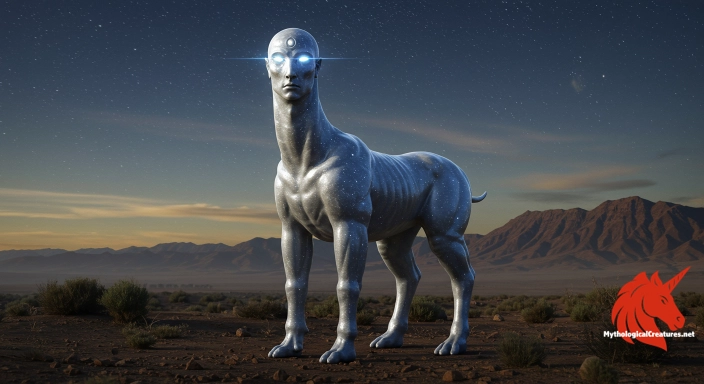
Vanant
Vanant - Vanant plays a crucial role in combating evil through divine intervention and is revered in Zoroastrian tradition.
the legend in five swipes.
the legend in five swipes.
The Beginnings of Vanant
Vanant emerges as a luminous figure in the ancient tapestry of Zoroastrian divinities, embodying the conquering spirit through his name, which translates as ‘conqueror’. His earliest mentions are rooted in the Avestan hymns, where he is revered as the personification of the western star. The divinity's role has been intricately woven into ritual practices and liturgical invocations, emphasising his position as a guardian of goodness. Over time, Vanant has come to symbolise the eternal struggle between the forces of light and darkness, a theme central to Zoroastrian cosmology. His character is repeatedly celebrated in sacred texts, reflecting both cosmic majesty and moral fortitude. The reverence for Vanant is intermingled with an acknowledgement of his astral nature, as he is identified with bright stars such as Altair and Vega. His invocation during the early days of the month underlines his continued importance in the religious calendar, despite his minor status. Across centuries, the imagery associated with Vanant has reinforced his depiction as both a celestial protector and a divine conqueror. The enduring qualities of his myth continue to resonate with those seeking spiritual strength and cosmic balance.
Vanant in the Historical Record
The primary source of Vanant’s mythic character lies within the Avestan Yashts, where Yasht 21 is dedicated specifically to his exalted attributes. Ancient texts preserve his image not only in isolation but also in close association with other star divinities, particularly Tishtrya, whose hymns repeatedly mention him as a celestial companion. The ritual invocations of Vanant on the second and third days of the month highlight a deliberate calendrical structure that underlines his spiritual vigour. Supplementary narratives within the corpus of Zoroastrian literature offer variant insights into his role as a defender against evil. Though the extant texts provide only a glimpse of his broader mythos, later Pahlavi writings and interpretative commentaries have sought to expand his narrative. Some sources suggest a dynamic interaction between Vanant and other astral forces, presenting him as an essential component in the cosmic order. The multiplicity of accounts reflects a tradition that was not monolithic but fluid, adapting to the changing devotional needs of its adherents. Even with limited detailed stories devoted entirely to him, the intertextual references spread throughout the sacred corpus have cemented his role as a protector. This interweaving of texts has allowed Vanant’s myth to sustain its symbolic potency across different eras.
What powers did Vanant have?
Even though ancient descriptions of Vanant's physicality are sparse, artistic imaginings frequently imbue him with an ethereal and radiant quality. He is typically envisaged as a luminous embodiment of celestial splendour, drawing parallels with the glittering brilliance of the western stars he represents. In many visual interpretations, his form is cloaked in a diaphanous light that seems to shift with the phases of the cosmos. Symbolic details such as a glowing aura or soft, radiating beams have been attributed to him, reinforcing his status as a conqueror of darkness. Interpretations often suggest that his appearance is both majestic and enigmatic, representing the intersection of myth and the astral realm. Some artistic renditions even portray him draped in regalia that mimics the starry heavens, complete with intricate motifs that evoke the vastness of the night sky. Although definitive details about his physical structure remain elusive, the consistent theme is one of penetrating luminosity and profound asylum for the virtuous. Later iconography has sought to capture this transient brilliance through subtle variations in style and medium, thereby keeping his image both intact and evolving. Overall, Vanant’s visual portrayal has come to symbolise an unyielding presence that bridges the mortal and divine under the cloak of starlight.
Vanant: Local Variations in the Story
Interpretations of Vanant vary subtly across different regions, reflecting a diverse cultural reception of his astral character. In the heartland of ancient Persia, he is deeply integrated into the cosmological framework, often celebrated for his role in signifying hope and moral strength. Among the Zoroastrian diaspora, particularly within the Parsi community in India, Vanant’s attributes have occasionally merged with indigenous celestial symbolism, creating a unique blend of tradition and local folklore. His identification with a range of bright stars such as Altair, Vega, and Fomalhaut allows for a versatile interpretation that adapts to regional astronomical observations. Ritual practices in different locales sometimes accentuate his protective qualities, portraying him as a personal guardian against misfortune as well as a cosmic force. In some traditions, there is an emphasis on his luminous presence during seasonal transitions, linking him to agricultural cycles and the natural rhythm of the land. Local artistic expressions have adopted varied iconographic motifs, each echoing distinct cultural aesthetics while remaining true to the theme of stellar guardianship. Despite these regional adaptations, the core symbolism of Vanant as a conqueror of darkness and defender of righteousness remains remarkably consistent. The regional variations serve to enrich his myth, making him a multi-faceted emblem of both universal and localized cosmic order.
What makes Vanant different from similar figures?
Vanant’s role as an astral guardian invites comparisons with similar figures in varied mythological traditions around the globe. His depiction as a radiant force that overcomes darkness bears a resemblance to the celestial deities in Greco-Roman lore, where gods and goddesses often personify the triumph of order over chaos. In Mesopotamian mythology, for example, astral entities endowed with protective powers share thematic similarities with the Zoroastrian portrayal of Vanant. Across diverse cultures, the motif of the luminous conqueror recurs as a powerful metaphor for the struggle between light and dark, a narrative that resonates universally. In South Asian traditions, hybrid deities occasionally emerge from the mingling of indigenous beliefs and imported Zoroastrian ideas, reflecting a convergence of astral symbolism. Moreover, medieval European astrology, with its attribution of divine qualities to specific stars, mirrors the conceptual framework underpinning Vanant’s mythos. This cross-cultural perspective illustrates how different societies have interpreted the celestial realm in ways that underscore perennial human concerns for protection and moral integrity. Comparative mythology reveals that Vanant stands shoulder to shoulder with many revered figures, each embodying the shared sentiment of hope and resilience. The parallels drawn with these international figures highlight the enduring appeal of star deities and the universal search for light in dark times. Through such analysis, Vanant is seen not merely as an isolated divinity but as part of a broad constellation of mythic guardians across the world.
Vanant: Modern Retellings and Reinventions
Throughout history, the depiction of Vanant has undergone considerable transformation, adapting to reflect evolving religious and cultural paradigms. In early Zoroastrian texts, he was a relatively minor divinity primarily identified with the luminous power of the western skies. As interpretations deepened, his role as a guardian against the forces of evil became more pronounced, with his emblematic attributes being linked to cosmic order and moral fortitude. Over the medieval period, local folklore and ritual practices began incorporating additional layers to his myth, sometimes portraying him as a more personalised protector. In modern times, artistic reinterpretations have revitalised his image, often portraying him in a style that merges ancient symbolism with contemporary aesthetics. The evolution of Vanant’s iconography is mirrored in scholarly discussions that position him as both a historical artefact and a continuing source of spiritual inspiration. His symbolism—as a beacon of hope and resistance against living darkness—remains influential in both academic circles and among practitioners of traditional rites. Modern ritual invocations and artistic expressions often draw on the imagery of Vanant to evoke a sense of cosmic harmony and resilience. His legacy endures as a testament to the dynamic interplay between myth and modernity, embodying a timeless message of the triumph of light over darkness. In this way, Vanant continues to inspire reverence and creative reinterpretation, ensuring that his myth remains a vibrant part of the contemporary cultural ethos.
Interesting Fact
An intriguing aspect of Vanant is his dual identity as both a conquering force and a protective guardian, demonstrating the complex interplay of power and benevolence in Zoroastrian mythology.
Mythological Treasures
Norse Sagas: A field guide to the beasts of the Viking world
Drawn from the saga accounts themselves, with the powers, weaknesses and doom of each being set out.
Egyptian Legends: A field guide to the gods and monsters of ancient Egypt
Guardians of the living and devourers of the dead, with the role each played in judgement.
Chinese Beasts: A field guide to the dragons and demon kings of Chinese myth
From river dragons to demon kings, with the legends that shaped five thousand years of storytelling.
the legend in five swipes.
For indie creators
Give your myth project a permanent home
Indie authors, artists, small studios, and makers can secure an annual, non-intrusive sponsor slot that meets readers where they explore.
Obtain more informationQuick Creature Info
Origin:
Associations:
Our Mythic Legendary Rating:

Also Sometimes Known As:
Habitat:
Supernatural Powers:
Physical Attributes:
Abilities:
Behavior:
Lore:
Related Creatures, Tales or Lore
- TTishtrya
- AAltair
- FFomalhaut
References
Discover Another Mythical Legend You May Not Have Heard Of?
Uncover the mysteries of ancient folklore and expand your knowledge of legendary beings from cultures around the world.
Dare to Meet the Anggitay....

The Mythological Creatures Book Series
Yokai, Greek, Norse, Egyptian & Chinese. Five illustrated field guides to the creatures the old stories either warned or told you about.

Curated by the Mythological Creatures Team
Series editor: Mythological Creatures Directory
Primary desk: Asian & Pacific Myth Cycles Desk
(rev. November 2025)