
Vanapagan: Vanapagan is a devil and giant farmer from Estonian mythology known for his foolish nature.

Vanapagan
Vanapagan - A central figure in Estonian folklore representing the archetype of the stupid ogre and a comical devil.
Origins & First Encounters
Vanapagan, also known by the evocative name Vanatühi or Old Devil, occupies a singular niche in Estonian mythology, straddling the domains of humour and the supernatural. His origins are nestled in the oral traditions of ancient rural communities, where narratives of a giant farmer with a baffling blend of power and folly emerged. Early attestations place him in a mythic space that merges pagan rituals with the evolving moral frameworks of the region. His portrayal as a devil or a god of the underworld is intriguingly tempered by the depiction of his inherent simplicity and occasional buffoonery. Unlike conventional demonic figures, Vanapagan’s intentions are more misguided than malevolent, reflecting a cultural ethos where the absurd often camouflages the profound. The character’s dual identity—as both a potent symbol of the underworld and a comical figure—has made him a fixture in the realm of folklore. His enduring presence in tales underscores the interplay between cosmic power and human frailty. The narratives surrounding him have empowered communities to both confront and laugh at the darker aspects of existence. Over time, Vanapagan has become an emblem of paradox, balancing the terrors of myth with the comforts of irony. This unique combination of traits continues to resonate with audiences, offering insights into the shifting moral and cultural landscapes of Estonia.
Source Texts & Tale Variants
The narrative corpus of Vanapagan is preserved in a rich array of ancient oral traditions and later transcriptions that capture his many exploits. Multiple folk tales, catalogued within the Aarne–Thompson classification system under tale types 1000–1199, provide detailed accounts of his misadventures. One notable story recounts his audacious theft of the musical instrument belonging to the god of lightning, Pikne, a theme that finds echoes in international folklore. Regional manuscript collections and ethnographic recordings from the 19th and early 20th centuries have immortalised his character as a bumbling giant often outsmarted by his own servant, Kaval Ants. Diverse versions of these stories illustrate how local storytellers imbued him with different degrees of both charm and menace. In some retellings, his actions serve as allegories for the unpredictable forces of nature, while in others, they highlight a humorous subversion of authority. The primary sources reflect a deliberate layering of both pagan and later Christian motifs, resulting in a multifaceted character. Over the years, these narratives have been refined and adapted across generations, ensuring that Vanapagan remains integral to Estonian folklore. The interplay between written records and oral performance has enriched his myth, providing a spectrum of interpretations that continue to influence modern retellings. As a result, his story is not static but a living tradition that adapts to the changing cultural milieu.
Form & Powers
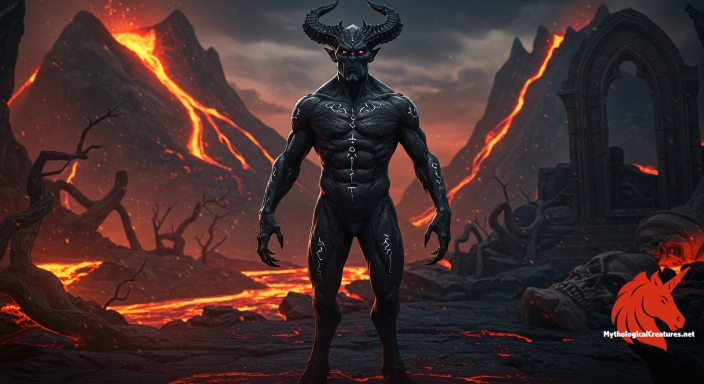
Vanapagan is typically envisioned as an imposing figure whose physical presence is as paradoxical as his character, combining elements of both earthly robustness and supernatural oddity. His stature is that of a giant farmer, with a broad and rugged frame that speaks to the agrarian roots of his myth. Legends often describe him with features that are deliberately unrefined, displaying a physical clumsiness that mirrors his often bungling nature. Central to his iconography is the distinctive hat fashioned from fingernails, a bizarre accessory that imbues him with the power of invisibility and adds an element of uncanny mystique. His face is usually rendered with deep-set eyes and a dishevelled beard, capturing an expression that oscillates between benign confusion and obstinate determination. In artistic depictions, the contrast between his massive build and his comically inept demeanour is starkly apparent. Some portrayals emphasise his weathered skin and unkempt appearance, as though he is a relic of a more primal, untamed world. His clothing, often inspired by archaic agricultural garb, further underscores the blend of the mythical and the mundane. Variations in size and detail across different artworks suggest that his form is as mutable as the stories in which he appears. Every element of his physical description serves to reinforce his role as both a fearsome underworld figure and a humorous miscreant.
Regional Faces
Throughout Estonia, Vanapagan’s character adapts to reflect the specific cultural and geographical textures of various regions. In rural heartlands, he is often seen as a benign yet unwitting overseer of the underworld, his comedic misadventures resonating with agrarian communities. In coastal areas and particularly on the island of Saaremaa, the narratives surrounding him take on distinctive local flavours, where he is depicted as the archenemy of the heroic giant Suur Tõll. These regional interpretations highlight a rivalry between chaotic and orderly forces, hinting at the underlying tensions within local mythologies. Variations in his portrayal—ranging from a figure of ridicule to one imbued with a latent, if dysfunctional, power—underline the adaptability of his myth. In some local traditions, his iconic hat of fingernails is ascribed additional magical properties, further deepening his regional mystique. The local adaptations of his story often mirror the everyday struggles and humour found in the community, making him a relatable, if larger-than-life, character. Collectors of folklore in different regions have noted that while his core traits remain constant, the nuances of his depiction vary to suit local tastes and historical experiences. Through these regional lenses, Vanapagan transcends the monolithic image of a devil, becoming instead a multifaceted symbol reflective of Estonia’s diverse cultural geography. The blending of universal themes with uniquely regional details ensures that his myth remains dynamic and culturally resonant.
Cultural Parallels
When examined alongside other mythological tricksters and ogres, Vanapagan occupies a distinctive position that marries the themes of cosmic misrule and comic ineptitude. His portrayal finds common ground with Scandinavian trolls, whose depictions often oscillate between elemental might and clumsy, human-like failings. In the broader European folklore, there exists a recurring motif of the inept devil—a figure that, while possessing great power, is frequently undone by his own foolishness, reminiscent of Vanapagan’s adventures. This similarity extends to figures such as the British Old Nick, although Vanapagan’s character is typically less malevolent and more satirical in nature. Like many trickster figures, his story emphasises that intellect and cleverness can triumph over brute strength, a theme echoed in the tales of his servant, Kaval Ants. The comparative analysis reveals that while many cultures elevate their demonic figures to symbols of true evil, Estonian mythology prefers a more ambivalent reading in which humour and weakness are central. Such cross-cultural parallels highlight the flexibility with which human beings interpret the nature of power and the subversion of authority. The interplay between fear and farce in his narrative is a shared characteristic that binds him to various global mythic figures. His multifaceted character, therefore, not only serves as a local emblem of misplaced might but also contributes to a broader dialogue about the role of the trickster in mythology. The enduring appeal of these themes underscores the universality of stories that champion wit over might.
Legacy & Modern Evolution
Throughout history, Vanapagan has undergone a remarkable transformation—from a fearsome underworld figure to a character celebrated for his ironic and often playful legacy. Initially envisioned as a looming presence in the darker recesses of pagan belief, he later became a subject of reinterpretation as cultural values shifted. Over the centuries, changes in societal mindset have seen his image softened and imbued with a humorous touch, making him accessible to a modern audience. Contemporary artists and writers reimagine his character in literature, theatre, and even animated media, positioning him as an emblem of ancient mischief and national identity. His presence in modern retellings often carries subtle critiques of authority and tradition, inviting both laughter and reflection. Modern festivals and cultural events in Estonia sometimes feature Vanapagan as a beloved antihero, bridging the gap between the old mythic past and the present day. His evolution reflects the broader trend of reinterpreting mythological figures in ways that resonate with current societal sensibilities. Today, Vanapagan is celebrated not only for his role in traditional folklore but also as a symbol of the enduring power of narrative and cultural memory. By retaining the core elements of his myth while evolving to meet new cultural demands, he remains a dynamic figure in Estonian art and popular culture. His legacy, therefore, is one of continual reinvention, a testament to the timeless appeal of a character who is as enigmatic as he is entertaining.
Interesting Fact
An intriguing aspect of Vanapagan is that, despite his title as a devil, he is driven more by stupidity than genuine malice, setting him apart from typical depictions of devils in mythology.
For serious myth projects
Feature your work alongside the legends
From academic works to story-rich games, we highlight projects that respect world mythologies. Talk to us about a measured, long-term placement.
Start a conversationQuick Creature Info
Associations:
Our Mythic Legendary Rating:

Also Sometimes Known As:
Habitat:
Supernatural Powers:
Physical Attributes:
Abilities:
Behavior:
Lore:
Related Creatures, Tales or Lore
- KKrampus
- OOld Nick
- SStupid Ogre Archetype
References
Discover Another Mythical Legend You May Not Have Heard Of?
Uncover the mysteries of ancient folklore and expand your knowledge of legendary beings from cultures around the world.
Dare to Meet the Duke....
Curated by the Mythological Creatures Team
Series editor: Mythological Creatures Directory
Primary desk: Northern & European Folklore Desk
(rev. November 2025)