
Watatsumi: Watatsumi is a legendary Japanese kami known as a dragon and tutelary water deity, revered for his control over the seas.
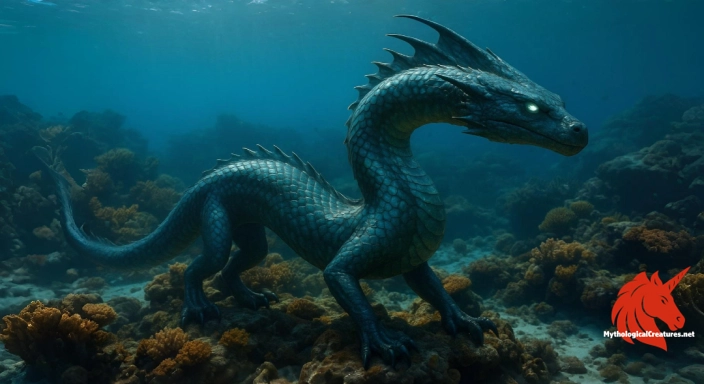
Watatsumi
Watatsumi - Watatsumi is revered as a protector of the marine realm and is intrinsically linked to the natural order and fertility of Japan's waters.
Origins & First Encounters
Watatsumi is one of the most illustrious kami in Japanese mythology, celebrated as a legendary water deity and dragon whose lore has intrigued generations. Born from the primordial mists of ancient Shinto belief, his origins are intertwined with the potent rituals of creation and purification. His early attestation appears in the venerable chronicles of Japanese myth, where he is depicted as a living embodiment of the sea’s ever-changing nature. The deity is known by several names, including Wadatsumi and Watatsumi no kami, each evoking an aspect of his vast, watery dominion. Integral to the legend is his transformation during Izanagi’s ritual cleansing after emerging from Yomi, a narrative that underscores both rebirth and the cyclical nature of existence. His myth not only captures the dynamic and sometimes fearful attributes of the ocean but also celebrates its capacity for nurturing life. Across centuries, Watatsumi has maintained an aura of mystery and reverence, symbolising the balance between creation and destruction. His myth remains a cornerstone of Shinto tradition, embodying the profound connection between the spiritual and natural worlds. In the tapestry of Japanese folklore, Watatsumi is revered as a guardian of the sea and an enduring symbol of nature’s majesty.
Source Texts & Tale Variants
The narrative of Watatsumi finds its roots in some of Japan’s earliest written records, where his legend is interwoven with the foundational myths of the land. Ancient texts such as the Kojiki and Nihon Shoki record his emergence and subsequent role within the mythological hierarchy of deities. These chronicles provide a glimpse into a time when nature, spirit, and divine intervention merged seamlessly. Alongside literary sources, a rich array of oral traditions has evolved in coastal communities, each adding nuances to his character. Variants of his story suggest that his blood was instrumental in shaping not only the sea but also its countless mysteries. In several versions, his identity becomes conflated with that of Ryūjin, the Dragon God, creating a multifaceted persona. Local folklore enriches his tale by linking him to everyday experiences of fishermen and seafarers who depended on his benevolence for safe voyages. This diversity of storytelling traditions highlights how Watatsumi's legend has been adapted over time, resonating with different audiences across regions. Together, these sources reaffirm his status as a linchpin in the vast network of Japanese myth and maritime ritual.
Form & Powers
Visual depictions of Watatsumi evoke a sense of awe, portraying him as a majestic dragon with a sinuous, serpentine form that mirrors the undulating surface of the sea. His massive, elongated body is often covered in shimmering scales that reflect the myriad hues of the ocean, from deep indigo to brilliant turquoise. In many artistic renditions, his eyes are described as luminous orbs, hinting at an otherworldly power and a reflective quality akin to moonlight dancing on water. Intricate details such as flowing fins and graceful tendrils accentuate his connection to both water and sky, imbuing him with a fluid dynamism that is both elegant and formidable. Some accounts also describe delicate, bioluminescent patterns along his dorsal ridge that highlight his dual role as a guardian of light and dark forces. The creature’s size is depicted variably, sometimes as an immense dragon that spans vast distances across the sea, and at other times as a more intimate, almost tangible presence. His physical form, while majestic, is mutable, reflecting the shifting moods of the ocean itself—from tranquil serenity to tempestuous fury. This ever-changing, enigmatic appearance serves as a metaphor for the natural world’s capacity for transformation. Every depiction reinforces Watatsumi’s role as an essential mediator between the physical realm and the spiritual, making his image a powerful symbol of both awe and reverence.
Regional Faces
Across the diverse landscapes of Japan, the portrayal of Watatsumi adapts to local cultural nuances, reflecting regional interpretations of his vast dominion. In northern locales, he is often envisioned as a formidable dragon whose presence commands respect amid rugged, turbulent seas. Conversely, in southern coastal regions, local traditions tend to focus on his gentler aspects, depicting him as a benevolent guardian whose favour ensures bountiful catches and safe harbour. Some rural communities revere him as a singular, omnipotent force, while others incorporate him into the triadic framework of the Watatsumi Sanjin, which delineates the upper, middle, and lower realms of the sea. The regional festivals dedicated to him often display creative iconography, blending ancient motifs with locally inspired symbolism to mark seasonal changes and natural phenomena. In areas influenced by Ryukyuan culture, elements of indigenous sea dragon legends merge seamlessly with Watatsumi’s narrative, highlighting fluid intercultural exchanges. Local artisans sometimes depict him with distinctive stylistic features that resonate with the colours, shapes, and spiritual ethos of their native lands. Such regional variations underscore not only the adaptability of his legend but also the enduring impact of the sea’s mysteries on local identity. These diverse depictions collectively enrich his myth, underscoring how a singular divine essence can embody a spectrum of cultural values and environmental realities.
Cultural Parallels
Watatsumi’s myth finds compelling echoes in various mythological traditions that celebrate the mystique of water deities. In Chinese folklore, for example, the Lung represents similar attributes of strength, wisdom, and a deep connection with the elements, often serving as a harbinger of rain and prosperity. Korean legends too are adorned with tales of serpentine water dragons that safeguard vital water sources, mirroring many aspects of Watatsumi’s protective nature. In European myth, the Leviathan is sometimes invoked as a colossal sea creature whose vastness and power mirror the unpredictable and untamable essence of the deep. These legendary creatures, though varied in form and function, share a common lineage of symbolism that celebrates the sea as a source of life and mystery. Artistic expressions in many cultures intertwine the imagery of dragons with the elemental forces of water, thereby bridging Eastern and Western mythological motifs. This cross-cultural resonance underscores a universal human fascination with nature’s enigmatic power, as well as the desire to personify it through divine forms. By comparing these myths, one can appreciate the unique yet interconnected ways in which societies have sought to understand and venerate the forces of the natural world. Such comparative analysis not only highlights shared themes but also accentuates the distinct cultural nuances that shape each tradition’s portrayal of a water deity.
Legacy & Modern Evolution
Over the centuries, the legend of Watatsumi has evolved, bridging ancient myth with modern cultural expressions and environmental consciousness. His ancient depictions, once confined to the pages of shinto texts and temple carvings, continue to inspire contemporary interpretations across various media. Modern Japanese literature, cinema, and visual arts often invoke his image to explore themes of nature’s grandeur and humanity’s interwoven fate with the ocean. Watatsumi’s enduring legacy is embraced during local festivals and coastal rituals, where communities celebrate his myth as a reminder of the sea’s powerful presence and bounty. Contemporary reinterpretations also reflect a growing awareness of marine conservation, casting him in a light that symbolises the delicate balance between nature and human progress. His motif has transcended geographical and temporal boundaries, resonating with audiences who value both cultural heritage and ecological sustainability. As academic and popular interest in myth continues to flourish, Watatsumi is frequently revisited by scholars and artists alike, ensuring that his stories remain a vibrant part of Japan’s cultural dialogue. His portrayal has shifted from an ancient divine power to a dynamic emblem of modern environmental stewardship and artistic inspiration. Today, the myth of Watatsumi stands as a living testament to how timeless narratives can evolve, merging tradition with contemporary ideals and continuing to inspire awe across generations.
Interesting Fact
An intriguing aspect of Watatsumi is his identification with multiple forms, including Ryūjin and the Watatsumi Sanjin, reflecting the layered and complex nature of water deities in Japanese mythology.
For serious myth projects
Feature your work alongside the legends
From academic works to story-rich games, we highlight projects that respect world mythologies. Talk to us about a measured, long-term placement.
Start a conversationQuick Creature Info
Features:
Associations:
Our Mythic Legendary Rating:

Also Sometimes Known As:
Habitat:
Supernatural Powers:
Physical Attributes:
Abilities:
Behavior:
Lore:
Related Creatures, Tales or Lore
- RRyūjin
- WWatatsumi Sanjin
- DDragon King (Chinese)
References
Discover Another Mythical Legend You May Not Have Heard Of?
Uncover the mysteries of ancient folklore and expand your knowledge of legendary beings from cultures around the world.
Dare to Meet the Oeonae....
Curated by the Mythological Creatures Team
Series editor: Mythological Creatures Directory
Primary desk: Asian & Pacific Myth Cycles Desk
(rev. November 2025)