
Wirry-cow: The wirry-cow is a frightful folkloric entity from Scotland, often described interchangeably as a bugbear, goblin, ghost, or ghoul.
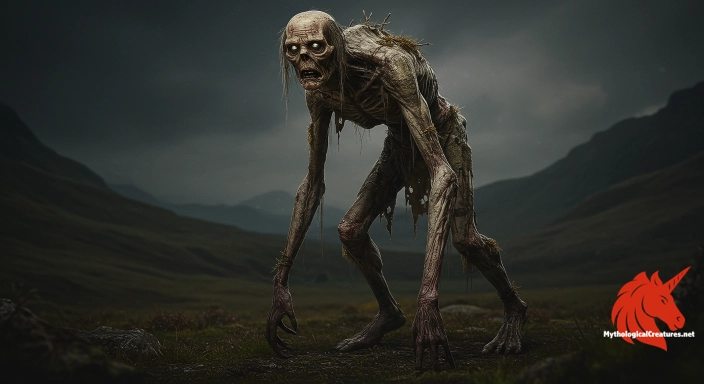
Wirry-cow
Wirry-cow - Functions as a cultural symbol of terror and serves as a cautionary figure in Scottish tradition.
Origins & First Encounters
The wirry-cow emerges from the vibrant tapestry of Scottish folklore as a creature that defies a singular definition, embodying aspects of a bugbear, goblin, ghost, and ghoul in one eerie form. Its origins are intricately tied to the linguistic heritage of the Scots, where the term evolved from words connoting relentless harassment and spectral menace. Early literary figures and local storytellers played a key role in cementing its reputation as a frightful object steeped in both physical and metaphysical dread. The creature’s first attestation can be traced to the works of Sir Walter Scott in the early 19th century, where its enigmatic presence added to an atmosphere of uncanny mystery. It stands as a symbol of rural superstitions and the human tendency to embody fears in tangible forms. In many communities, the wirry-cow was invoked as a reminder of the limits of human control over nature and the supernatural. Its dual role as both a tangible scarecrow and an abstract representation of evil adds depth to its portrayal in myth. This creature encapsulates the rich interplay between language, fear, and cultural identity that defines much of Scotland’s legendary narrative.
Source Texts & Tale Variants
The wirry-cow’s story is interwoven with a range of texts and oral traditions that have enriched its myth over time. Its most notable literary appearance in Sir Walter Scott’s Guy Mannering provided an early descriptive anchor that ensured its survival in the collective memory. Folktales preserved through local storytelling have recounted its various roles as both a ghostly apparition and a living embodiment of terror. Historical glossaries, particularly those examining the etymology outlined by John Jamieson, have helped decode its name into elements that imply ceaseless harassment. In some manuscripts and broadsides, the creature appears under different guises, reflecting the mutable nature of oral tradition. Regional storytellers have shared variant narratives that sometimes cast the wirry-cow as a guardian of the thresholds between the natural and supernatural worlds. Diverse accounts offer contrasting interpretations, with some emphasising a more malevolent character while others hint at a trickster’s mischief. Such a rich diversity of stories highlights the creature’s capacity to adapt to various narrative needs and cultural nuances. The surviving body of literature continues to serve as a valuable window into the evolving social and spiritual landscape of historical Scotland.
Form & Powers
The physical description of the wirry-cow is as complex and varied as the folklore that surrounds it, blending natural animalistic traits with elements of spectral horror. Visually, it is often depicted with a patchy, draggled appearance, as though coated in muck and strewn with stony fragments that evoke a sense of decay. Its eyes sometimes shine with an eerie luminescence, reminiscent of the ghostly flicker of candlelight in a darkened hall. Some accounts hint at the presence of ragged, tangled hair that obscures a frame both disfigured and unsettling. The wirry-cow may manifest in differing sizes, ranging from a diminutive, unsettling presence to a towering figure that looms ominously over its surroundings. Its limbs, occasionally equipped with cloven hooves, contribute to a hybrid appearance that is both animalistic and otherworldly. Textures described in local narratives often emphasise a coarse, damaged hide, suggestive of the burden of ancient curses. Certain depictions include twisted or even horned features that further enhance its demonic allure. Overall, each physical detail serves to reinforce its role as an embodiment of lurking, primordial dread.
Regional Faces
Across the varied landscapes of Scotland, the wirry-cow takes on multiple regional identities that mirror local beliefs and environmental contexts. In the Scottish Lowlands, it is primarily seen as an ethereal spectre that haunts the fringes of rural settlements and isolated farms. In these areas, the creature often assumes the role of a supernatural scarecrow amidst the agricultural backdrop, its form warning of the unseen dangers that lie in wait. Some communities have softened its image, portraying it as a mischievous spirit rather than a purely malevolent force, thus incorporating it into seasonal festivals and local traditions. Variations in its story also emerge from oral narratives where parallels are drawn with figures like the wirry hen or wirry-boggle, each adapted to suit the nuances of the local dialect and social mores. These adaptations reveal the creature’s flexibility as a mythic symbol, capable of embodying both fear and playful caution. Exchanges between neighboring regions have also led to overlaps in description and function, enriching its mythological dossier. The cultural landscape of each region strongly influences how the wirry-cow is visualised, ensuring that its legacy remains deeply personal and varied throughout Scotland. In many respects, these regional differences highlight how folklore evolves to mirror the distinctive challenges, hopes, and fears of localized communities.
Cultural Parallels
The wirry-cow shares striking similarities with other mythological beings that traverse the boundaries between tangible and supernatural terror. Much like the bugbears of English lore, it serves as an embodiment of the unknown, designed to invoke caution and discipline among the vulnerable. Its ghostly features resonate with the spectral figures of Gaelic and Celtic traditions, where apparitions are often used to represent the disruptive forces of nature. In continental folklore, similar creatures appear as haunted constructs that merge animalistic features with demonic embellishments, underlining a shared temper of fear that unites diverse cultures. The creature’s dual identity as both scarecrow and spectre finds echoes in other European traditions where inanimate symbols are imbued with ominous vitality. Additionally, its hybrid nature strongly parallels figures from Scandinavian and Northern European myths, where the crossing of natural and supernatural boundaries is a recurring theme. These cultural parallels suggest that the wirry-cow is not a unique anomaly but part of a broader mythic archetype concerned with the human response to the inexplicable. Comparative analysis reveals that while the specifics may vary, the universal impulse to personify dread finds a multifaceted expression in this eerie entity. Such cross-cultural connections underscore the enduring power of folklore to address shared human anxieties through symbolic figures.
Legacy & Modern Evolution
The evolution of the wirry-cow’s depiction reflects a fascinating journey from a feared, shadowy presence to a celebrated symbol of regional heritage. In earlier centuries, its image was a potent warning, a tangible interpretation of the mysterious and often perilous forces that could disrupt everyday life in rural communities. As literature flourished, particularly through the medium of Sir Walter Scott’s influential works, the creature began to occupy a liminal space between terror and cultural emblem. In modern retellings, its depiction has softened in certain contexts, transitioning from a monstrous spectre to a character imbued with nostalgic charm and symbolic depth. Contemporary artists and cultural historians have re-examined its role, recognising it as a repository of communal fears and local identity rather than merely an object of dread. Modern festivals and theatre productions have embraced the wirry-cow, transforming it into a celebrated figure that bridges the old and new. Its legacy now includes interpretations that blend humour with horror, reflecting a more layered understanding of myth. The ongoing re-imagination of this folkloric figure illustrates the dynamic nature of myth, continually adapting to the cultural sensibilities of each new generation. Ultimately, the wirry-cow endures as a resilient icon, emblematic of the transformative power of storytelling in rearticulating ancient fears for modern audiences.
Interesting Fact
An interesting aspect of the wirry-cow is its fluid identity, which allows it to represent a range of entities from ghostly apparitions to devilish figures, reflecting the versatile nature of folklore in adapting to societal fears.
For myth educators and toolmakers
Built a resource for mythology learners?
If you offer courses, teaching tools, or research platforms focused on myth and folklore, consider a discrete placement on our reference pages.
Introduce your resourceQuick Creature Info
Features:
Our Mythic Legendary Rating:

Also Sometimes Known As:
Habitat:
Supernatural Powers:
Physical Attributes:
Abilities:
Behavior:
Weaknesses:
Lore:
Related Creatures, Tales or Lore
References
Discover Another Mythical Legend You May Not Have Heard Of?
Uncover the mysteries of ancient folklore and expand your knowledge of legendary beings from cultures around the world.
Dare to Meet the Erlking....
Curated by the Mythological Creatures Team
Series editor: Mythological Creatures Directory
Primary desk: Northern & European Folklore Desk
(rev. November 2025)