
Wurdulac: Wurdulac is a vampiric entity rooted in Slavic folklore, notorious for its cursed immortality and blood-feeding nature.
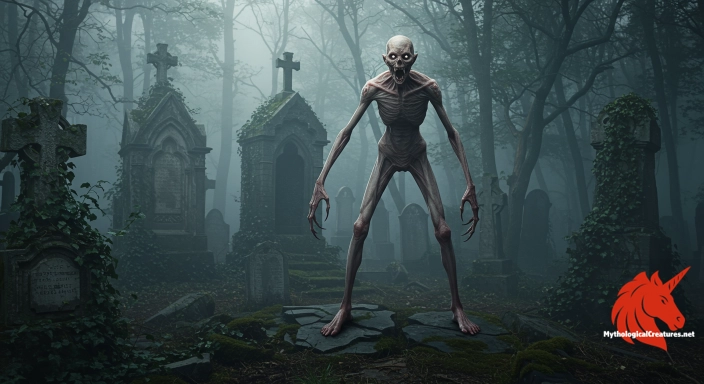
Wurdulac
Wurdulac - Symbolises the insidious spread of curse and corruption within families, blending vampire and werewolf lore.
Origins & First Encounters
The Wurdulac emerges from the mists of Eastern European folklore as a being both mysterious and fearsome, its origins deeply rooted in ancient tales of the undead. This creature is enveloped in layers of myth, woven from the threads of traditional vampire legends and darker, werewolf motifs. Its narrative has been reshaped over centuries, reflecting the evolving anxieties and preoccupations of Slavic communities. The earliest attestations of the Wurdulac can be found in oral traditions and early literary works that hinted at forbidden transformations and cursed existences. Legends portray it as a soul condemned to walk the earth in longing and horror, a fate that carries the weight of ancestral sin and mystical retribution. The creature’s many names—Wurdulac, Wurdalak, and Vurdulak, among others—speak to its fluid identity as it traverses different cultural landscapes. Its presence in literature, notably emerging through poetic depictions in the 19th century, marked a turning point in how folklore and literary art converged. Uniting themes of corruption, revenge, and tragic loss, the Wurdulac has come to symbolise the blurred line between humanity and monstrosity. In contemporary retellings, its legacy is not just one of terror but also of a poignant, eternal lament, echoing the human struggles against fate and the unknown. This enduring myth continues to capture imaginations by remaining both a relic of the past and a mirror to societal fears.
Source Texts & Tale Variants
Ancient manuscripts and folk narratives form the backbone of the Wurdulac’s storied past, offering a kaleidoscopic view of the creature’s evolution. Early Slavic texts and regional lore provide fragmented accounts that together piece a picture of a being steeped in mystery and dread. The narrative gained significant literary momentum through works by authors such as Alexey Tolstoy, whose novella illustrated the curse of turning one’s kin into living nightmares. Alexander Pushkin’s 1836 poem further embroidered the myth, cementing its place in the canon of Western Slavic literature and popularising the creature beyond its traditional borders. Various folklore compilations reveal that the Wurdulac was once considered distinct from other vampiric entities like the upyr, though this separation blurred over time. Some accounts even intertwine its legend with that of cursed families and forbidden love, expanding its narrative scope. Western sources have occasionally reframed the myth, interpreting the Wurdulac through the lens of horror and romantic tragedy. Footnotes in works like Lord Byron’s “The Giaour” have added layers of complexity by linking the creature with ancient Greek and broader Mediterranean legends. The multitude of story variants demonstrates how oral traditions and literary interpretations have collectively enriched its mythos, ensuring that every retelling adds a new dimension to its character.
Form & Powers
The physical manifestation of the Wurdulac is as enigmatic as its lore, commonly depicted as a pallid figure that embodies both human refinement and primal savagery. Observers in myth describe it with penetrating, almost luminescent eyes that seem to shine with an unholy light during the nocturnal hours. The creature’s countenance is often marked by an unsettling blend of elegance and decay, where sharply defined features give way to an aura of spectral fluidity. Hints of lupine attributes are evident in accounts, with suggestions that a shaggy, wolf-like fur may emerge along its shoulders or neck. Its elongated fangs and slightly contorted facial structure add to the impression of a being that is neither entirely human nor completely beastly. Artistic renditions sometimes illustrate a gradual transformation, where normal human contours dissolve into more animalistic shapes under the moonlight. In certain portrayals, the Wurdulac is both gaunt and towering, while in others it exudes a robust yet eerie physical presence. The variability in its size and build seems to underscore its ability to shift between forms, adapting its terrifying visage to the needs of its haunting narrative. Such descriptions serve as a vivid reminder of the creature’s dual nature—caught between the realm of the living and the forces of the supernatural. Ultimately, its physical details, though varied, persistently evoke a sense of dread and timeless otherness.
Regional Faces
The myth of the Wurdulac has diversified remarkably across different Slavic regions, with each culture adorning the creature with unique local attributes. In Russia, the creature is often conflated with the concept of the upyr, a figure sometimes said to have been a cursed witch, a sinning outcast, or even a werewolf. Ukrainian folklore, on the other hand, imbues it with an almost apocalyptic quality, warning that these beings could trigger droughts and epidemics as harbingers of divine retribution. In some local traditions, the narrative stresses the familial curse aspect, where the Wurdulac’s bite is believed to spread a sinister legacy within bloodlines. The term itself, stemming from the West Slavic word for wolf, reveals regional subtlety, as some communities blend the predator’s vitality with vampiric hunger. Artistic representations and storytelling vary widely, with some regions opting for a more humanised portrayal while others underscore its monstrous, bestial traits. Despite the variances, the core elements—blood consumption, transformation, and a link to moral decay—remain consistent across borders. These regional adaptations reflect each community’s specific fears and social mores, which have been instrumental in preserving the myth over generations. Through these varied depictions, the legend adapts to local cultures, ensuring that the essence of the Wurdulac is both universally recognisable and richly diverse. The nuanced regional differences serve as a testament to how folklore evolves and moulds itself to the contours of communal memory.
Cultural Parallels
The legend of the Wurdulac shares a fascinating kinship with numerous mythological creatures from different cultural landscapes. Echoes of its dual nature are apparent in Greek legends of the vrykolakas, which, like the Wurdulac, embody the intersection between the mortal and the damned. Similar traits can be found in Romanian vampire lore, where the blend of human fragility and supernatural menace creates a powerful symbol of corruption and retribution. Like the Western vampire archetype popularised in gothic narratives, the Wurdulac provokes both dread and a perverse fascination. What sets it apart, however, is its explicit linkage to lupine imagery, a feature it shares with werewolf myths that abound in European folklore. This amalgamation of traits, where bloodlust meets the wild instincts of the wolf, speaks to broader human anxieties about the dual nature of civilisation and savagery. Comparative studies often draw parallels with other nocturnal predators in mythology that serve as metaphors for the ultimate loss of humanity. These cultural intersections highlight recurring themes such as transformation, familial curse, and the inescapable pull of ancient sin. As the creature’s myth transcends its Slavic origins, it resonates with universal narratives about the fears inherent in human nature and the supernatural. This cross-cultural dialogue enriches the legacy of the Wurdulac by positioning it within a global framework of myth and terror.
Legacy & Modern Evolution
The historical evolution of the Wurdulac reveals a journey from the murky depths of regional myth to a prominent figure in modern horror lore. Early depictions in folklore and literature painted the creature in broad strokes of terror, often as a punitive force against moral transgressions. As the narrative was retold through the works of Pushkin, Tolstoy, and their contemporaries, the figure gained an added layer of literary sophistication that resonated well beyond its geographic origins. In the modern era, the Wurdulac has experienced a transformation as filmmakers, novelists, and game designers revisit and reinterpret its myth through new cultural lenses. Contemporary portrayals often imbue the creature with complex emotional dimensions, showing it as both a cursed victim and a remorseless predator. Its image is frequently utilised to explore themes of alienation, the erosion of tradition, and the encroachment of modernity upon ancient beliefs. The Wurdulac now stands alongside other iconic beings of horror, symbolising the enduring power of myth in reflecting human fears and the darker corners of our collective psyche. This evolution from a regional cautionary tale to a globally recognised symbol of supernatural dread highlights the dynamic nature of folklore. As modern audiences seek fresh narratives that challenge conventional perceptions of evil, the Wurdulac continues to inspire reinterpretation and innovation. Ultimately, its legacy is a vibrant tapestry that connects past mythologies with contemporary cultural expressions, ensuring its relevance for generations to come.
Interesting Fact
Wurdulac’s etymology reveals a complex interplay between Slavic, Russian, and even Greek mythological traditions, making it a uniquely hybrid creature in folklore.
Support the directory
Promote your myth project and fund more research
Sponsor placements help keep this directory growing and free to use while giving your work a focused, relevant audience.
Learn how sponsorship worksQuick Creature Info
Associations:
Our Mythic Legendary Rating:

Also Sometimes Known As:
Habitat:
Supernatural Powers:
Physical Attributes:
Abilities:
Behavior:
Weaknesses:
Lore:
Related Creatures, Tales or Lore
- UUpir
- SStrigoi
- NNosferatu
References
Discover Another Mythical Legend You May Not Have Heard Of?
Uncover the mysteries of ancient folklore and expand your knowledge of legendary beings from cultures around the world.
Dare to Meet the Alpos....
Curated by the Mythological Creatures Team
Series editor: Mythological Creatures Directory
Primary desk: Northern & European Folklore Desk
(rev. November 2025)