
Xiuhcoatl: Xiuhcoatl is a mythological Aztec fire serpent intimately tied to the deity Xiuhtecuhtli.
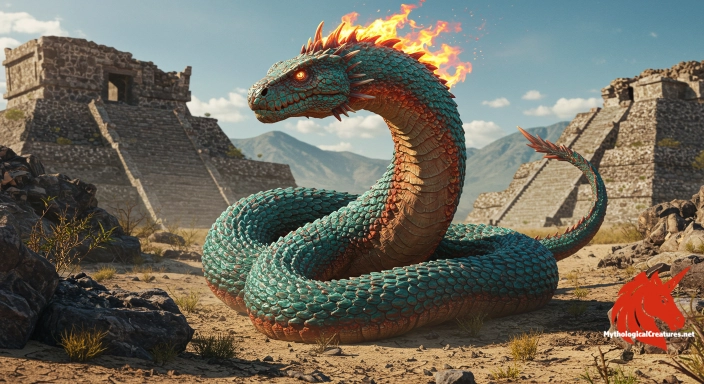
Xiuhcoatl
Xiuhcoatl - Represents the transformative and purifying power of fire in Aztec culture
Origins & First Encounters
Xiuhcoatl emerges as a vibrant figure in Aztec cosmology, celebrated as the fiery embodiment of transformation and renewal. Its origins are deeply rooted in the elemental forces of fire and the celestial might of the sun, a motif that resonated profoundly with the Aztec understanding of the natural world. Historical records and codices attest to its early presence, where its image intertwined with that of Xiuhtecuhtli, the revered deity of fire. The creature’s depiction is not merely ornamental, but a potent symbol that delineates the passage of the dry season and the relentless energy of the sun. Its form was intricately woven into the fabric of royal iconography, serving both as divine protection and as a mark of imperial authority. Such depictions in art and ritual objects illustrate a complex interplay between mythology and governance. The integration of Xiuhcoatl’s image into daily and ceremonial life reflects the Aztec commitment to harmonising the cosmic with the terrestrial. Over time, the serpent has also come to represent the undying cycle of destruction and rebirth that fires the spirit of creation. Its enduring legacy continues to challenge and inspire contemporary interpretations of ancient power.
Source Texts & Tale Variants
Ancient Aztec codices, including revered manuscripts like the Codex Mendoza and the Codex Borgia, offer some of the earliest depictions of Xiuhcoatl. These primary sources not only capture its visual essence in vivid illustrations but also embed it within narratives of cosmic warfare and ritual significance. The serpent is portrayed variably as both an ethereal spirit and a formidable weapon, underscoring the multifaceted nature of its symbolism. Different versions of the myths highlight its role as a divine instrument wielded by the sun and associated deities, often blurring the lines between mortal weaponry and celestial power. Early colonial chroniclers, interpreting Aztec traditions through their own viewpoints, preserved variants of these myths, thereby contributing further layers to its story. The convergence of iconographic evidence from disparate codices reinforces the idea of Xiuhcoatl as a dynamic and adaptable symbol. Embedded within these illustrations, the motif of the turquoise and fiery serpent invites a deeper exploration of its ritualistic and political connotations. As a narrative element, the serpent’s recurring appearance in folklore and ceremonial art speaks to a collective cultural memory that spans generations. Overall, the primary sources paint a complex portrait of a myth that was both sacred and instrumental in expressing celestial forces.
Form & Powers
The physical form of Xiuhcoatl is rendered with an arresting blend of naturalistic detail and symbolic exaggeration. Its body is typically depicted as a long, sinuous serpent whose scales shimmer in vibrant hues of turquoise and fiery orange, reflecting the dual essence of its name. The head is often adorned with intricate, flame-like motifs that lend an immediate impression of divine heat and kinetic energy. Artists have captured the creature’s twisting form with dynamic lines that evoke both the fluidity of water and the flickering movement of flames. The tail, in particular, is portrayed as a pointed, blazing appendage, reminiscent of the royal diadem known as xiuhuitzolli. While some representations show an elongated, almost serpentine spiral, others emphasize sharper, angular elements that mirror the unpredictable nature of fire. The texture and contrast in its design suggest that every scale was imbued with a story of both destruction and regeneration. Variations in size and detail across artistic renditions underscore its adaptive symbolism, tailored to the needs of diverse ritual contexts. The visual complexity of Xiuhcoatl’s anatomy ultimately serves as a metaphor for the intricate relationship between man, nature, and the divine.
Regional Faces
Although Xiuhcoatl is most prominently a symbol within the Aztec tradition, its influence ripples across various Mesoamerican regions, subtly interweaving with local mythologies. In central Mexico, for example, the serpent often appears in royal regalia and temple art, underscoring the breadth of its cultural reach. Peripheral communities sometimes adapted its imagery, infusing the fiery serpent with characteristics that resonated with indigenous environmental elements. In certain highland artistic traditions, the serpent’s turquoise hue is emphasised to symbolise preciousness and sanctity, blending local colour symbolism with its fiery essence. Moreover, the motif of a fire-associated serpent can also be discerned in neighbouring cultures, albeit under differing names and interpretative frameworks. These regional adaptations allowed for a more diverse exploration of seasonal and cosmic changes, with each locale interpreting the serpent’s power in contextually meaningful ways. The local integration of Xiuhcoatl in ritual masks, murals, and other artefacts further attests to its broad regional significance. As a result, while its core symbolism remains tied to fire and transformation, the nuances of its depiction evolve to express unique regional identities and cosmologies.
Cultural Parallels
Xiuhcoatl shares a rich tapestry of symbolic parallels with serpentine figures that span across world mythologies. Its intense association with fire differentiates it from other Mesoamerican serpents like Quetzalcoatl, whose feathers and avian attributes symbolise wisdom and fertility rather than impending flame. In a broader cross-cultural context, the fiery aspect of Xiuhcoatl finds echoes in the European dragon, an emblem of both creative energy and destructive force. Comparable to the transformative power attributed to serpents in Indian traditions—where nagas serve as both protectors and symbols of rebirth—Xiuhcoatl similarly bridges the natural with the divine. Each culture seems to revere such creatures for their capacity to mediate between earthly existence and celestial dynamism. In art and literature alike, the contention between creation and annihilation is a recurring theme that these figures embody. The common thread among these diverse myths is an appreciation of duality: a creature that is as much a guardian of life as it is a harbinger of change. By contrasting and comparing these symbols, one can discern the universal allure of serpentine imagery, fostering an enriched dialogue on how different societies understand and revere elemental forces. Ultimately, Xiuhcoatl’s distinctive fiery character and its symbolic resonance with broader mythological themes mark it as a unique yet globally inspired archetype.
Legacy & Modern Evolution
The incarnations of Xiuhcoatl have undergone significant transformations from the heights of Aztec civilisations to modern cultural expressions. Originally, the fire serpent served as a potent emblem of divine authority, intimately linked with ritualistic practices and royal symbolism. With the advent of colonial disruption, many of its traditional symbolisms were reinterpreted or obscured, yet the core imagery of the serpent survived through indigenous resistance and cultural memory. In contemporary times, Xiuhcoatl has experienced a renaissance as artists and scholars alike seek to reclaim and reinterpret pre-Columbian heritage. Its vibrant imagery now appears in modern art, literature, and even digital media, symbolising both a connection to ancient traditions and the enduring human fascination with the elemental forces of nature. Modern interpretations often cast it as a symbol of transformation and resilience, resonating with themes of environmental change and cultural revival. Archaeological findings and renewed academic focus have further enriched our understanding of its historical complexities. Exhibitions and educational programmes continue to celebrate the fire serpent, ensuring that its mythic legacy remains a living tradition. Today, Xiuhcoatl stands as a testimony to the enduring power of myth to bridge past and present, inspiring a continuous dialogue on identity, spirituality, and the natural world.
Interesting Fact
An intriguing aspect of Xiuhcoatl is its dual role as both a divine spirit and a concrete symbol in royal regalia, bridging celestial might with earthly authority.
Sponsor this space
Tasteful, fixed-fee placements for myth projects
No bidding wars or flashing banners. We offer simple placements for a small set of creators and brands aligned with our readers.
Request further detailsQuick Creature Info
Origin:
Associations:
Our Mythic Legendary Rating:

Also Sometimes Known As:
Habitat:
Supernatural Powers:
Physical Attributes:
Abilities:
Behavior:
Lore:
Related Creatures, Tales or Lore
- QQuetzalcoatl
- KKukulkan
- QQ'uq'umatz
References
Discover Another Mythical Legend You May Not Have Heard Of?
Uncover the mysteries of ancient folklore and expand your knowledge of legendary beings from cultures around the world.
Dare to Meet the Kasogonagá....
Curated by the Mythological Creatures Team
Series editor: Mythological Creatures Directory
Primary desk: Americas & Indigenous Traditions Desk
(rev. November 2025)